 Cirius Petpedia
 Puppy Socialization Timeline: 7 Critical Stages from 3 to 16 Weeks
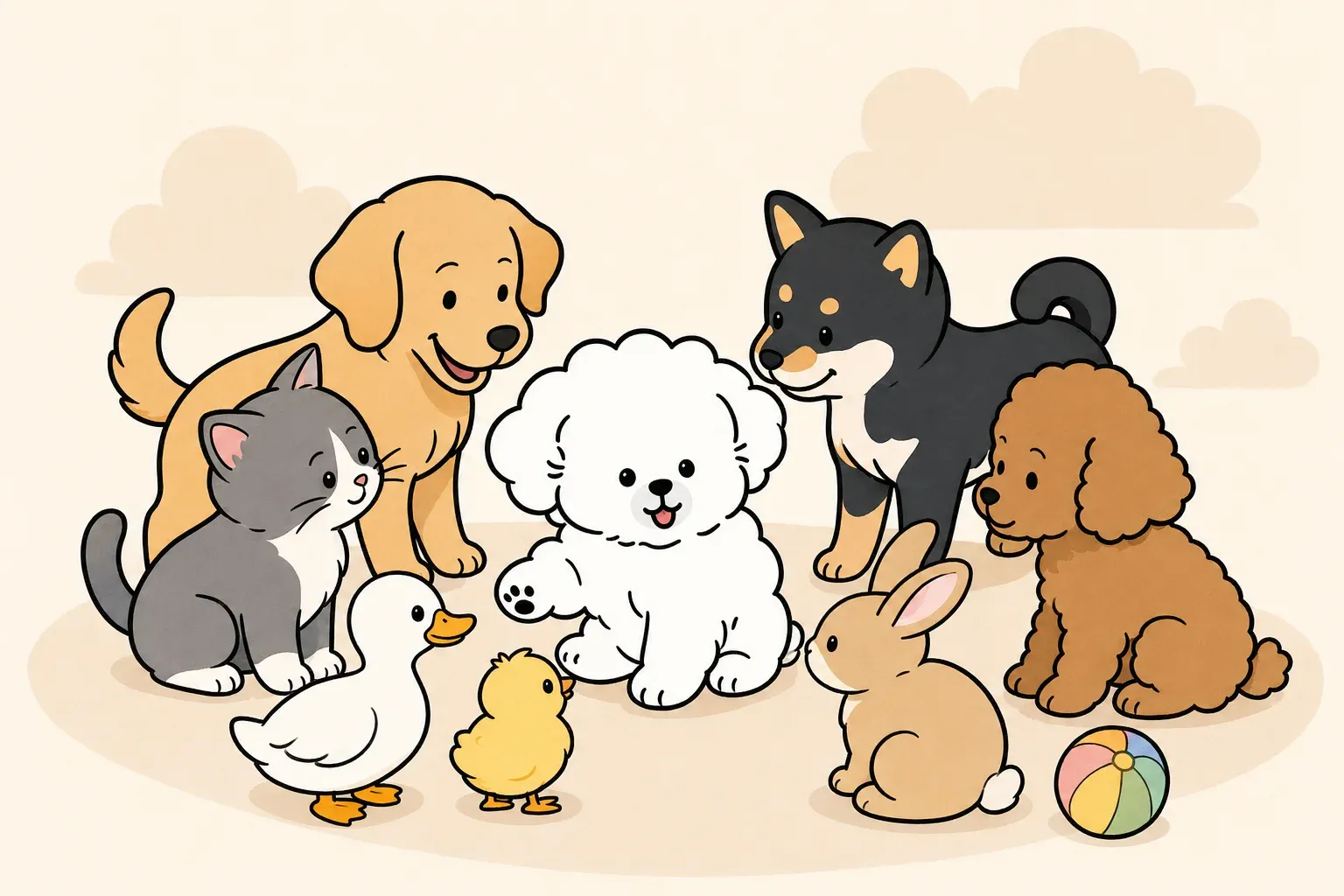
Bring home a new puppy and you’ll quickly discover there are two competing sets of advice: “Keep your puppy inside until fully vaccinated” and “Socialize your puppy now before it’s too late.” Both feel urgent. Both feel right. And both reflect a genuine tension that every new puppy owner faces.
The science is clear — and might surprise you. The American Veterinary Society of Animal Behavior (AVSAB) concluded in their landmark position statement that the risks of behavioral problems from under-socialization outweigh the risks of disease from early, controlled exposure. Missing the socialization window is not a minor inconvenience; it is one of the leading reasons dogs are surrendered to shelters.
This guide gives you a week-by-week puppy socialization timeline, explains what’s happening neurologically at each stage, walks through the vaccination dilemma with evidence-based solutions, and provides a complete category-by-category checklist. By the end, you’ll know exactly what to do, when to do it, and — critically — how to recognize when your puppy is telling you to slow down.
What Is Puppy Socialization and Why Does Timing Matter?
Defining socialization beyond just meeting other dogs
Puppy socialization is often reduced to “let your puppy play with other dogs.” That’s one small piece of a much larger picture.
True socialization means systematically exposing a puppy to the full range of people, animals, environments, sounds, surfaces, and objects they will encounter throughout their life — while their brain is still wiring itself to classify those stimuli as normal and safe. A puppy that has met 100 dogs but never seen a man in a hat, a stroller, or a slippery tile floor is not fully socialized.
The goal is not merely exposure. It is positive exposure: encounters paired with calm handler energy, high-value rewards, and a pace the puppy can tolerate. Flooding a puppy with overwhelming stimuli — taking them to a crowded dog park at 8 weeks and calling it socialization — can produce the opposite of the intended effect.
The neuroscience of the critical period
In their landmark 1965 work Genetics and the Social Behavior of the Dog, researchers Scott and Fuller identified a specific developmental window during which puppies form their core attachments and learn to classify the world around them. Their research, replicated and refined over the following decades, established what we now call the primary socialization period: roughly 3 to 12 weeks of age, with effects extending to 16 weeks.
During this window, the puppy brain is in an exceptional state of neuroplasticity. Novel stimuli trigger curiosity rather than fear. Stress hormone (cortisol) responses are naturally blunted. New experiences are encoded rapidly and durably. After this window closes, the default response to unfamiliar stimuli shifts from “investigate” to “avoid.” The brain can still learn — but it requires more repetitions, higher-value reinforcement, and more time.
Research by Serpell and Jagoe (1995) further demonstrated that experiences during this period shape the dog’s long-term behavioral phenotype in ways that persist into adulthood regardless of later training. This is not a matter of opinion or training philosophy. It is developmental neuroscience.
The 7 Critical Stages of Puppy Socialization (3 to 16+ Weeks)
The following timeline reflects Scott and Fuller’s foundational framework, updated with contemporary behavioral research. Understanding what’s happening neurologically at each stage helps you decide what to introduce and how to approach it.
| Stage | Age | Key Focus |
|---|---|---|
| 1 – Neonatal | 0–2 weeks | Warmth, touch, maternal bond |
| 2 – Transitional | 2–3 weeks | Eyes and ears open; first startle responses |
| 3 – Primary Socialization | 3–5 weeks | Dog-to-dog communication; bite inhibition begins |
| 4 – Human Socialization Peak | 5–8 weeks | Most receptive window for human bonding |
| 5 – Environmental Exploration | 8–10 weeks | Curiosity peaks; first fear period begins |
| 6 – Peak Learning Window | 10–12 weeks | Highest absorptive capacity; consolidation |
| 7 – Extended Socialization | 12–16 weeks | Window closing; second fear period approaching |
Stage 1: Neonatal Period (0–2 weeks)
Puppies are born blind and deaf. Their world is limited to warmth, smell, touch, and taste. While formal socialization hasn’t begun, responsible breeders practice early neurological stimulation (ENS) during this period — brief daily handling exercises (holding upright, placing on cold surfaces, tickling feet) that prime the stress response system and produce slightly more confident adult dogs.
If you’re adopting rather than purchasing, you won’t be involved at this stage. But it’s worth asking a breeder whether they practice ENS — it’s a meaningful indicator of how carefully they’ve managed early development.
Stage 2: Transitional Period (2–3 weeks)
Eyes open around day 13–15; ears open around day 18–20. Puppies begin responding to visual and auditory stimuli for the first time. They start to wobble away from the whelping box and engage in primitive social play with littermates. Their first startle responses emerge, but the fear circuitry is not yet fully functional — frightening stimuli produce surprise rather than lasting aversion.
Stage 3: Primary Socialization (3–5 weeks)
The socialization sensitive period officially opens around 3 weeks. Puppies are learning dog language: bite inhibition from littermate and maternal feedback, reading body postures, understanding play signals. This is why puppies should not be separated from their mother and littermates before 7–8 weeks at the earliest — early separation disrupts the acquisition of canine social skills and predicts adult reactivity toward other dogs.
For breeders: begin introducing a gentle range of human contact, household sounds, varied surfaces, and safe novelty during weeks 4–5. Puppies exposed to the sound of a vacuum cleaner, kitchen appliances, and multiple human voices at this age adapt far more readily than those raised in quiet kennels.
Stage 4: Human Socialization Peak (5–8 weeks)
This is the window most critical for human bonding. Puppies are at peak receptivity to forming positive associations with people. The AVSAB recommends that puppies have contact with a minimum of 100 different people before 12 weeks — a number that sounds extreme but is achievable through front porch greetings, neighborhood walks (carried, if unvaccinated), and puppy classes.
Critically, quality matters as much as quantity. Each meeting should be:
- Brief (30 seconds to 2 minutes)
- Positive (treats, gentle handling, the puppy approaching voluntarily)
- Varied (different ages, genders, builds, skin tones, clothing, accessories)
Avoid forcing interactions. A puppy that retreats under a chair is communicating discomfort. Forcing approach creates negative associations; letting the puppy come out on their own timetable builds confidence.
Stage 5: Environmental Exploration (8–10 weeks)
Curiosity is high and the world is enormous. Puppies placed in new environments typically engage with them eagerly — sniffing, climbing, pawing at unfamiliar objects. This is the window to introduce as many surface textures, environments, and novel objects as possible.
There is a critical caveat: the first fear period begins around 8 weeks. This overlaps directly with the typical rehoming window, which is why many new puppy owners encounter what seems like sudden behavioral regression. A puppy that was bold at the breeder’s home may arrive in their new home and hide under the couch for a day. This is normal. It is not a sign of a traumatized puppy — it is a normal neurological checkpoint.
See the dedicated fear period section below for how to navigate this.
Stage 6: Peak Learning Window (10–12 weeks)
This two-week window is arguably the highest-value socialization period available to you. The fear circuitry is present but manageable; the curiosity drive is still strong; the puppy is mobile, vaccinated (or receiving vaccinations), and old enough to attend puppy classes.
Prioritize during this window:
- Meeting at least 10–20 different people outside the household
- Exposure to other vaccinated, healthy dogs in controlled settings
- Introduction to urban environments: cars, buses, bicycles, construction sounds
- Novel surfaces: grates, slippery floors, grass, gravel, carpet, concrete
- Handling exercises: ears, mouth, paws, under belly — preparation for grooming and veterinary care
This is also the window where puppy biting during the socialization period peaks. Bite inhibition training runs in parallel with socialization during these weeks.
Stage 7: Extended Socialization (12–16 weeks)
The window is closing but not closed. Continue broadening exposures, but understand that the ease with which new stimuli are accepted is declining. Puppies who have been well-socialized through week 12 will generally continue to generalize their positive associations through week 16. Puppies with gaps in their socialization will show those gaps more clearly as novelty responses shift from curiosity toward caution.
After 16 weeks, the primary socialization window is effectively closed. This does not mean adult dog socialization training is impossible — but it is categorically different work, requiring more time and professional support.
Socializing Before Vaccinations: What the Science Says
This is the question that confuses more new puppy owners than any other. The answer requires understanding both the disease risk and the behavioral risk — and making an informed, contextual decision.
The AVSAB position on early socialization
In their official position statement, the American Veterinary Society of Animal Behavior (AVSAB) states:
“The primary and most important time for puppy socialization is the first three months of life… In general, puppies can start puppy socialization classes as early as 7–8 weeks of age, as long as they have received at least one set of vaccines at least 7 days prior to the first class, they have been dewormed, and the facility is cleaned and disinfected between groups.”
The AVSAB position is explicit: behavioral risks from under-socialization outweigh disease risks from controlled early exposure. Fear-based behaviors, anxiety, and aggression — the leading reasons dogs are relinquished to shelters — are substantially more common in dogs with insufficient early socialization than in dogs exposed to appropriately managed environments before completing their vaccine series.
This does not mean taking your unvaccinated puppy to a dog park or a pet store where the vaccination status of visiting dogs is unknown.
Safe socialization methods before full vaccination
The following methods carry low disease risk while preserving the socialization window:
Carry your puppy. A puppy in your arms or in a carrier can experience a hardware store, a coffee shop patio, a busy street, or a school pickup without contact with potentially contaminated surfaces or unknown dogs. They see, hear, and smell everything.
Visit vaccinated dogs. The homes of friends with fully vaccinated, healthy dogs are lower-risk environments. Supervised play sessions with known dogs provide critical dog-to-dog interaction.
Attend accredited puppy classes. Reputable puppy socialization classes require proof of vaccination, clean the floor between sessions, and keep group sizes small. These classes offer both socialization and early training, and the AVSAB specifically endorses them for puppies as young as 7–8 weeks.
Invite people to your home. Every visitor — a neighbor, a delivery person willing to spend 2 minutes, a family friend — is a socialization opportunity. Structured visitor introductions at home require no disease risk management.
Balancing disease risk vs behavioral risk
Consult your veterinarian about local disease prevalence. In areas with high parvovirus incidence, the calculus may shift. In suburban areas with low reported parvo rates, the AVSAB recommendations apply straightforwardly.
Check your dog vaccination schedule to understand where your puppy is in their protective timeline and make informed decisions about which environments are appropriate at each stage.
Puppy Fear Periods: When to Push and When to Pause
Fear periods are perhaps the most misunderstood element of puppy development. Many guides mention them briefly; most owners encounter them without knowing what they’re experiencing. Understanding them changes how you navigate the entire socialization process.
First fear period (8–10 weeks)
The first fear period overlaps directly with the typical adoption window. A puppy that seemed bold and outgoing at 6 or 7 weeks in the breeder’s home may arrive in your home at 8 weeks and appear suddenly fearful of things that didn’t bother them before.
This is not regression. It is neurodevelopment. During this period, the amygdala — the brain region responsible for threat detection — becomes more active. The puppy is running a systems check, calibrating what is and is not dangerous. A stimulus that the puppy encounters during a fear period and finds frightening can leave a disproportionately strong negative association.
What this means practically:
- Keep new experiences during this window brief and low-intensity
- Do not force exposure to anything the puppy is actively avoiding
- Use very high-value treats (small pieces of chicken, cheese) to build positive associations
- If your puppy startles at something, stay neutral — do not over-reassure (which can inadvertently reinforce the fear response) but also do not dismiss it
- Move away from the stressor if the puppy is over threshold, then re-approach more gradually
The key metric is whether your puppy can recover. A puppy that startles, pauses, then approaches the novel object with curiosity and accepts a treat is handling the encounter well. A puppy that freezes, shakes, or tries to flee is over threshold — create distance.
Second fear period (6–14 months)
The second fear period is less precisely timed than the first and occurs during adolescence. Dogs that were well-socialized may appear to “regress” — becoming reactive to stimuli they previously ignored, or showing caution in previously familiar environments. This is particularly common in larger breeds and can persist for several months.
Owners are often alarmed by this, fearing their socialization work was wasted. It was not. The second fear period does not erase early socialization; it overlays it. Continuing consistent, positive exposure during adolescence — without forcing — allows previously formed positive associations to reassert themselves.
How to respond when your puppy shows fear
The most common mistakes are the two extremes: flooding (forcing the puppy to remain in the presence of the frightening stimulus until they “get over it”) and over-reassurance (repeatedly soothing the puppy in a way that confirms that the stimulus is indeed concerning).
The evidence-based approach:
- Create distance. Move far enough from the stressor that your puppy can take treats and orient toward you.
- Use counter-conditioning. Present the stressor at low intensity (if it’s a sound, at low volume; if it’s a person, at greater distance) while continuously feeding high-value treats. The puppy learns: this stimulus predicts good things.
- Let the puppy lead. Do not push toward the stressor. Let the puppy choose to approach.
- End on a success. Stop before the puppy is over threshold. Leave wanting more, not exhausted by demand.
Learning to read your dog’s body language during these encounters is an essential skill — the difference between a puppy who is curious-aroused and one who is fear-aroused is not always obvious, but it is readable.
The Complete Puppy Socialization Checklist
A well-socialized puppy has been positively exposed to all of the following categories before 16 weeks. Check off items as you complete them. Prioritize anything your puppy will regularly encounter in their adult life.
People: ages, genders, appearances, accessories
Dogs do not automatically generalize. A puppy socialized to young adults may still be startled by elderly people with walkers, or men with beards, or toddlers who move unpredictably.
- Infants, toddlers, children of various ages
- Men and women
- People with beards, hats, hoods, sunglasses
- People in uniforms (postal workers, construction workers, cyclists)
- People of different ethnicities and builds
- People using mobility aids: wheelchairs, walkers, crutches
- People carrying umbrellas, backpacks, large bags
Sounds: household, outdoor, weather, vehicles
Sound sensitivity is one of the most common triggers for anxiety in dogs, and one of the easiest to address proactively during the socialization window.
- Vacuum cleaner, blender, dishwasher, washer/dryer
- Smoke alarm, doorbell, phone ringtones
- Thunder, rain, fireworks (use recordings at low volume to begin)
- Car engines, motorcycles, truck air brakes
- Children playing, crying, laughing
- TV, music, crowd noise
Surfaces and environments: textures, stairs, elevators
Many dogs develop specific surface fears that limit their daily lives — veterinary clinic floors, outdoor grates, stairs.
- Hardwood, tile, carpet, grass, gravel, mulch, concrete, sand
- Stairs (up and down), ramps, uneven terrain
- Elevators (the sound, the movement, the door)
- Crates and confined spaces (see crate training as a safe space)
- Veterinary clinic flooring — make multiple low-stakes “happy visits” to your vet’s office before any procedure
Animals: dogs of various sizes, cats, other species
Inter-species and intra-species socialization are distinct skills.
- Small dogs, medium dogs, large dogs
- Dogs with different communication styles (floppy-eared breeds communicate differently than pricked-ear breeds)
- Cats, if they will share the home
- Livestock or farm animals if relevant to lifestyle
- Supervised play only — never allow a large adult dog to overwhelm a small puppy
Objects: umbrellas, strollers, bicycles, hats
Novel objects trigger investigation in well-socialized puppies and alarm in under-socialized ones. The list of objects a dog may encounter over their lifetime is essentially infinite — the goal is developing a generalized “novel thing = investigate, not panic” response.
- Strollers, shopping carts, wheelchairs
- Bicycles, skateboards, scooters
- Umbrellas opening suddenly
- Balloons, flags, blowing plastic bags
- Boxes, bags, suitcases (especially relevant given separation anxiety triggers)
What Happens When You Miss the Socialization Window?
The framing of this question matters. Missing the window entirely — a puppy raised in complete isolation from people, dogs, and novel stimuli through 16 weeks — produces profound behavioral deficits that are extremely difficult to remediate. This is rare in owned puppies.
More commonly, owners miss portions of the window: their puppy was socialized to people but not to other dogs; to quiet environments but not to urban noise; to familiar people but not to strangers. These partial gaps produce more targeted behavioral issues.
Why socialization becomes harder after 16 weeks
After the primary socialization window closes, the neophobia (fear of novel stimuli) response is more readily activated. The puppy brain is no longer in acquisition mode. New experiences require more repetitions to acquire neutral or positive valence, and frightening experiences leave deeper imprints.
This is not absolute — adult dogs absolutely can be desensitized to stimuli they fear. But it is more effortful, slower, and more dependent on professional skill than early socialization.
Signs of poor socialization in adult dogs
These behavioral patterns often reflect socialization gaps rather than temperament issues or owner failure:
- Excessive reactivity toward unfamiliar people or dogs on leash
- Inability to settle in novel environments (restaurants, parks, veterinary offices)
- Disproportionate startle response to ordinary sounds
- Generalized anxiety or hypervigilance in daily life
- Persistent hiding or shutdown behavior around visitors
Many of these patterns have meaningful connections to specific socialization gaps. Sound reactivity, for example, often traces to absent sound socialization during the critical window — and can develop into a noise phobia or thunder phobia if left unaddressed. Similarly, poor socialization to separation and novel environments is a documented risk factor for separation anxiety in dogs.
Counter-conditioning and desensitization basics
For dogs with established fears, the standard evidence-based approach is systematic desensitization paired with counter-conditioning (DS/CC):
- Identify the threshold distance — how far from the stimulus the dog can remain calm
- Begin exposures below threshold — at a distance or intensity where the dog notices the stimulus but does not react
- Pair every exposure with a high-value reward — food, play, praise
- Gradually decrease the distance or increase intensity only when the dog is reliably comfortable at the current level
- Never proceed faster than the dog’s comfort allows — setbacks are more costly than slow progress
When to seek professional help
Consult a certified professional trainer (CPDT-KA) or veterinary behaviorist (DACVB) when:
- Fear responses are intense, persistent, or escalating
- The dog is showing aggression (growling, snapping, lunging) toward people or dogs
- Generalized anxiety is affecting the dog’s quality of daily life
- Home desensitization efforts plateau or worsen the behavior
Professional intervention is not a last resort — earlier is better. Behavioral issues become more entrenched over time.
Puppy Socialization Classes: What to Look For
Well-run puppy classes do more than provide socialization opportunities — they give you tools to continue socialization work at home, introduce basic obedience in a distraction-rich environment, and give you a trained observer who can flag concerning behavioral patterns early.
Class size, trainer qualifications, vaccination requirements
Class size: Six to eight puppies is the commonly recommended maximum for effective supervision. In larger classes, trainer attention is diluted and overwhelmed or bullying puppies are harder to manage.
Trainer qualifications: Look for credentials from recognized certifying bodies: CPDT-KA (Certified Professional Dog Trainer – Knowledge Assessed) or KPA-CTP (Karen Pryor Academy Certified Training Partner). These certifications require demonstrated knowledge of learning theory and behavioral science. Avoid trainers who use aversive methods, dominance theory, or physical corrections — these approaches are contraindicated during the critical socialization period and can create lasting negative associations.
Vaccination requirements: Reputable classes require proof of at least one vaccine series at least 7 days prior to the first class. Classes held at veterinary clinics or those specifically designed for young puppies often have the most rigorous protocols.
Facility: Floors should be disinfected between class groups. Outdoor classes on grass reduce disease transmission risk but introduce more environmental variables.
When choosing a puppy class or daycare facility, these criteria serve as a useful evaluation framework regardless of whether you are enrolling a puppy or an adolescent dog.
Red flags in puppy classes
Leave or decline to return if you observe:
- “Alpha rolls” or any physical dominance techniques
- Puppies forced to interact against their clear signals of distress
- Trainers dismissing fear responses as “stubborn” behavior
- Group free-play without trainer supervision managing bully dynamics
- No vaccination requirements
Puppy class quality varies enormously. A poor puppy class is worse than no puppy class — a traumatic experience during the fear-sensitive early weeks can leave a lasting negative association with groups of dogs or unfamiliar environments.
The socialization window is narrow, and it will not come back. But approached thoughtfully — with attention to your puppy’s signals, an understanding of the developmental stages, and a commitment to positive exposure over quantity — these weeks represent the single highest-return investment you can make in your dog’s lifelong wellbeing.
Start today, at the pace your puppy can handle. The weeks pass faster than you expect.
References
- 1. AVSAB Position Statement on Puppy Socialization (2008)
- 2. Scott JP, Fuller JL. Genetics and the Social Behavior of the Dog. University of Chicago Press, 1965.
- 3. Serpell J, Jagoe JA. Early experience and the development of behaviour. In: Serpell J, ed. The Domestic Dog. Cambridge University Press, 1995.
- 4. AKC - Puppy Socialization: Why, When, and How to Do It
- 5. Preventive Vet - Puppy Socialization Checklist
FAQ
When should I start socializing my puppy?
Can I socialize my puppy before all vaccinations are complete?
What is the puppy fear period and how do I handle it?
Is it too late to socialize my puppy at 4 months?
What are the signs of poor socialization in adult dogs?
Related Articles
Bringing Home a New Puppy? The Complete Socialization Training Guide You Need
Learn the science behind puppy socialization windows, get a week-by-week timeline, and discover safe pre-vaccination methods with a practical category-based checklist.
Dog Separation Anxiety Guide: Symptoms, Training, and Help
Learn how to identify dog separation anxiety symptoms, follow a vet-backed step-by-step training plan, and know when medication or a specialist is needed.
Dog Noise Phobia Treatment: Thunder and Fireworks Guide
Step-by-step guide to treating dog noise phobia from thunder and fireworks. Desensitization protocol, tool comparisons, and when to see a vet.