 Cirius Petpedia
 How to Switch Dog Food Safely: A 7-Day Transition Schedule
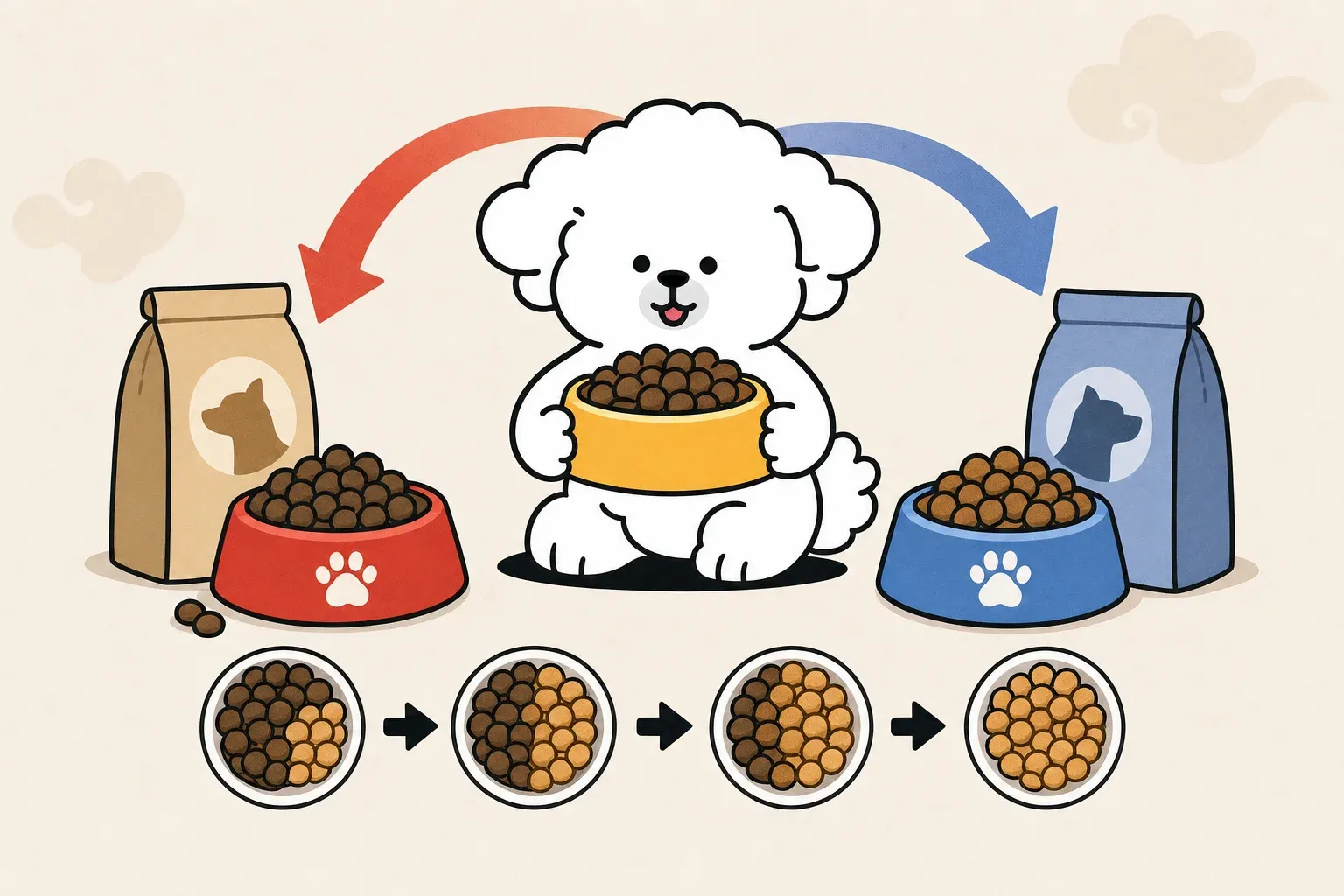
You opened a new bag of food and poured it straight into the bowl. Your dog ate it happily — then spent the next day with loose stool. This scenario plays out constantly, and the fix is straightforward once you understand what’s actually happening in your dog’s gut during a food change.
This guide covers the complete process for how to switch dog food: why gradual transitions matter, a concrete 7-day schedule with ratios, how to monitor your dog’s response, and what to do when things go sideways. It also addresses breed-size differences, senior dog protocols, and transitions between different food types — the details most general guides skip.
Why You Shouldn’t Switch Dog Food Suddenly
The answer isn’t that the new food is necessarily bad. It’s that your dog’s digestive system is tuned to the food it’s currently eating.
How Your Dog’s Gut Microbiome Adapts
Your dog’s gut contains hundreds of billions of bacteria, collectively called the gut microbiome. These microbial communities produce digestive enzymes, synthesize B vitamins, regulate the intestinal immune response, and help break down specific carbohydrates and proteins. Over weeks and months on a given food, the microbiome shifts composition to match the food’s nutrient profile — the dominant bacterial species are the ones best suited to that particular diet.
When you introduce a completely different food — a new protein source, different fiber types, a higher or lower fat content — the microbiome composition is suddenly mismatched. Bacteria that are now being starved die off. Opportunistic bacteria that aren’t well regulated proliferate. This disruption produces the classic signs of a difficult food switch: loose stool, gas, vomiting, and reduced appetite.
A 2022 study in the Journal of Animal Science documented significant shifts in canine fecal microbiome diversity within 72 hours of an abrupt diet change, with most markers returning to stable levels only after 10–14 days. A gradual transition gives the microbiome time to shift composition incrementally, preventing this destabilization.
What Happens When You Switch Too Fast
Beyond microbiome disruption, abrupt changes create a mismatch between digestive enzymes and the new food’s components. The pancreas and small intestine produce enzymes calibrated to current dietary fat and protein levels. When fat content spikes suddenly, for example, the available lipase may be insufficient — fat passes into the large intestine undigested, drawing water osmotically and producing watery diarrhea.
Practically, the consequences of switching too fast range from mild (one day of soft stool) to significant (three or more days of diarrhea, vomiting, inappetence, or in dogs with compromised gut function, a flare of inflammatory bowel disease). The 7-day transition exists to avoid all of this.
When to Switch Your Dog’s Food
Understanding the right timing prevents unnecessary transitions and ensures you’re switching at moments when the new food is genuinely needed.
Life Stage Transitions: Puppy to Adult to Senior
AAFCO (Association of American Feed Control Officials) defines nutrient profiles for two life stages: growth and reproduction (puppy/pregnant/lactating), and adult maintenance. Some foods carry an “all life stages” claim, which must meet the more demanding growth standards.
Puppy food is higher in protein, fat, calcium, and phosphorus to support rapid tissue and bone development. Continuing puppy food past the appropriate age promotes excessive caloric intake and, in large breeds, can contribute to orthopedic problems from too-rapid growth. Conversely, switching too early deprives puppies of nutrients they still need.
Recommended switch timing by breed size:
| Breed size | Adult weight | Switch to adult food |
|---|---|---|
| Small | Under 20 lb | 10–12 months |
| Medium | 20–50 lb | 12 months |
| Large | 50–90 lb | 12–15 months |
| Giant | 90+ lb | 18–24 months |
The adult-to-senior transition is less defined. AAFCO doesn’t have a separate senior life stage category, so “senior” formulas are essentially marketing segmentations. Most veterinary nutritionists (per WSAVA guidelines) recommend evaluating each senior dog’s actual health status — kidney function, weight, mobility — and transitioning to a senior or therapeutic diet only when clinically indicated, not at an arbitrary age cutoff.
Health-Related Switches: Allergies, Weight, Digestive Issues
Some of the most urgent food switches are health-directed. A dog diagnosed with a food allergy may need to transition to a hydrolyzed or novel-protein elimination diet — a process that has its own strict protocol beyond the standard 7-day schedule.
Weight management diets have lower caloric density, which means portion sizes look different from what your dog is used to. Gastrointestinal therapeutic diets (high digestibility, added prebiotics, specific fiber ratios) are often recommended after bouts of acute or chronic diarrhea.
In all health-related switches, follow your veterinarian’s guidance on transition pace. Some prescription gastrointestinal diets are designed to be introduced quickly to resolve symptoms; others need the same gradual approach.
Other Reasons: Palatability, Recalls, Availability
Sometimes food switches happen for practical reasons: your dog stops eating a food they previously liked, a recall is issued, or your regular food is discontinued or unavailable. The same transition principles apply. For FDA recalls, check FDA’s pet food recall database before assuming a voluntary switch is needed.
Before You Start: Preparation Checklist
Two steps before you open the new bag make the whole process easier.
Test the New Food in Small Amounts
Before committing to a full bag, obtain a sample (many manufacturers offer trial sizes) and give your dog 1–2 pieces or a small spoonful alongside their normal food for 2–3 days. This isn’t the transition itself — it’s a palatability check and a quick screen for immediate adverse reactions like facial swelling, hives, or vomiting within an hour of eating, which would suggest an acute food intolerance.
If your dog ignores the new food entirely, address palatability first before building a full transition plan. Picky eating behavior is worth understanding separately.
Record Baseline Health: Weight, Stool Quality, Coat Condition
Write down or photograph the following before starting the transition:
- Body weight (use a scale; your veterinarian can weigh your dog for free)
- Stool consistency using the 1–5 scale described in the monitoring section below
- Coat appearance: shine, shedding level, any dry patches or dandruff
- Energy level and appetite: how quickly your dog finishes their bowl
These baseline notes let you accurately assess whether changes during or after the transition are caused by the new food or are coincidental.
The 7-Day Dog Food Transition Schedule
This schedule applies to healthy adult dogs with no known digestive conditions. Measure by volume (cups) or by weight (ounces/grams) — whichever method you normally use for portioning.
| Day | Old food | New food | Notes |
|---|---|---|---|
| 1–2 | 75% | 25% | Watch stool for any change |
| 3–4 | 50% | 50% | Midpoint check: stool score should be 3–4 |
| 5–6 | 25% | 75% | Most dogs handle this well if earlier phases were fine |
| 7 | 0% | 100% | Transition complete |
Days 1–2: 75% Old Food + 25% New Food
Start here regardless of how confident you are in the new food. Mix thoroughly — simply layering old and new food in the bowl leads to dogs eating selectively. Stool changes at this stage are minimal in most dogs. Slightly softer than baseline stool is common and not a reason to pause.
Days 3–4: 50% Old Food + 50% New Food
The midpoint is where microbiome disruption is most likely to peak. Monitor stool closely. A stool score of 3 (well-formed, moist, minimal residue) is the target; a score of 2 (soft, loses shape) is acceptable but warrants watching. A score of 1 (liquid or watery) means you should pause and hold at this ratio for two additional days before advancing.
Days 5–6: 25% Old Food + 75% New Food
By this phase, most dogs have adapted significantly. If stool has been consistent at 3–4 through the 50/50 phase, advancing here usually causes no visible change.
Day 7: 100% New Food
For the majority of healthy adult dogs, the transition is complete. Monitor stool for another 3–5 days to confirm stability.
For dogs with sensitive digestion: Extend the schedule to 10 or 14 days by spending 3–4 days at each ratio rather than 2. The same ratios apply — just move more slowly through them.
Monitoring Your Dog During the Transition
Tracking specific parameters during the transition gives you objective data to make decisions rather than guessing.
Stool Quality Score Chart (1–5)
| Score | Description | Action |
|---|---|---|
| 1 | Liquid, no form | Revert to previous ratio; call vet if persists >72 hrs |
| 2 | Soft, loses shape, no defined form | Hold current ratio; advance only when reaching 3+ |
| 3 | Well-formed, moist, easy pickup, minimal residue | Target range — advance normally |
| 4 | Firm, dry exterior, slight cracking | Acceptable; monitor hydration |
| 5 | Very hard, pebble-like, straining | May indicate dehydration or too much fiber; review portions |
Check stool once daily. Consistency matters more than a single observation — one loose stool on Day 2 isn’t the same as loose stool on three consecutive mornings.
Tracking Vomiting and Appetite Changes
Occasional soft regurgitation of partially digested food on the day of a ratio change is fairly common and usually resolves within 24 hours. Repeated vomiting — more than twice in a day, or vomiting that continues for two days — is a signal to pause the transition and consult your veterinarian if it doesn’t resolve. Reduced appetite during the first 1–2 days often reflects novelty rather than rejection; most dogs normalize quickly.
If your dog vomits during the transition and you’re unsure whether it’s food-related or something else, the guide to dog vomiting causes helps distinguish between transition-related symptoms and signs that need immediate attention.
Watching for Skin and Coat Changes
Coat changes occur slowly — weeks rather than days — so they’re not a useful signal during the 7-day transition itself. However, if 3–4 weeks after completing the transition you notice increased shedding, dandruff, or dull coat, these can indicate a fat or essential fatty acid content mismatch with the new food. Compare the guaranteed analysis panels of both foods for crude fat percentage and omega-3/omega-6 sourcing.
Troubleshooting Common Problems
Diarrhea or Loose Stool Lasting More Than 3 Days
If diarrhea persists beyond 72 hours despite reverting to the previous ratio (or to 100% old food), the new food may genuinely not suit your dog. This doesn’t necessarily mean the food is poor quality — it may be that the protein source, fat level, or fiber type triggers your dog’s gut. Consider switching to a different formula with a distinct protein source (e.g., from chicken to salmon or lamb) and starting the transition process over.
Adding a probiotic supplement during the transition period has shown modest benefit in some studies. Strains with documented evidence in dogs include Lactobacillus acidophilus, Bifidobacterium animalis, and Enterococcus faecium. Supporting the gut microbiome with probiotics can make transitions easier for chronically sensitive dogs.
Dog Refuses the New Food
Food refusal during a transition is often strategic — your dog learned that holding out results in something more palatable. Common approaches that can help:
- Keep meal times fixed (15–20 minutes, then remove the bowl)
- Warm the mixed food slightly (body temperature, not hot) to increase aroma
- Top-dress with a small amount of low-sodium broth during the first 3–4 days only
- Avoid offering high-value alternatives between meals
If your dog refuses food for more than 48 hours, check with your veterinarian to rule out an underlying health issue before continuing the transition.
Warning Signs That Require a Vet Visit
Contact your veterinarian promptly if you observe any of the following during a food transition:
- Bloody or black, tar-like stool
- Vomiting more than 3 times in 24 hours
- Signs of bloating: distended abdomen, unproductive retching, visible distress (particularly in large and giant breeds)
- Facial swelling, hives, or difficulty breathing (possible allergic reaction — seek emergency care)
- Lethargy, weakness, or collapse
- Diarrhea lasting more than 72 hours despite reverting to the old food
Transition Tips by Breed Size and Age
The 7-day schedule is a baseline. Several factors — breed size and age — reliably predict which dogs need a modified approach.
Small Breeds: More Sensitive Digestion, Slower Transition
Small and toy breeds (Chihuahua, Maltese, Pomeranian, Yorkshire Terrier, etc.) have faster metabolisms and, in many cases, more reactive GI tracts. Portion sizes are also much smaller, which means a measuring error of even a tablespoon represents a significant percentage deviation from the intended ratio.
Use a digital kitchen scale rather than measuring cups for greater accuracy. Extend the transition to 10 days, spending 3 days at each ratio. Small breeds are also more vulnerable to hypoglycemia if appetite is suppressed during a difficult transition — if your small dog refuses food for more than 24 hours, contact your vet.
Large Breeds: Portion Calculation Considerations
Large breeds (Labrador, Golden Retriever, German Shepherd, etc.) require careful portion arithmetic during the transition. If your dog eats 4 cups of food per day, the Day 1–2 ratio is 3 cups old + 1 cup new. Use a consistent measuring method across both foods, especially if transitioning from a kibble with significantly different caloric density.
Large and giant breeds are at higher risk for gastric dilatation-volvulus (bloat), a life-threatening condition. Avoid exercise for at least one hour before and after meals during any food transition, and be alert to signs of bloating: distended abdomen, unproductive retching, or visible distress.
Senior Dogs (7+): Extended 14-Day Protocol
Senior dogs have several factors that argue for a longer, more cautious transition:
- Reduced digestive efficiency: secretion of digestive enzymes and gut motility both decline with age
- More established microbiome: a microbiome built over years is disrupted more significantly by a sudden change
- Concurrent health conditions: many senior dogs have kidney disease, liver issues, or inflammatory conditions that complicate GI stress
Use a 14-day schedule for dogs aged 7 and older, spending 3–4 days at each ratio. If your senior dog is transitioning to a therapeutic diet (e.g., renal diet), follow your veterinarian’s specific protocol, which may differ from the standard approach.
For more on tailoring nutrition to older dogs, the senior dog nutrition guide covers caloric needs, protein adjustments, and key micronutrients by life stage.
Switching Between Food Types
Changing food formats adds a layer of complexity beyond simply changing brands or formulas.
Kibble to Wet Food
Wet food has 70–80% moisture content compared to kibble’s 8–12%, which means the volume needed per meal is substantially higher for equivalent calories. Use the feeding guidelines on the wet food’s label as a starting point, then adjust based on weight monitoring.
Caloric density per cup differs dramatically: most dry kibble runs 350–450 kcal/cup, while wet food typically provides 100–200 kcal per standard can. Calculate your dog’s daily caloric need and convert to the appropriate volume of wet food before starting the transition.
Practical ratio approach for kibble-to-wet:
- Days 1–2: 75% kibble (by calories) + 25% wet
- Days 3–4: 50/50
- Days 5–6: 25% kibble + 75% wet
- Day 7+: 100% wet
Mix wet food and kibble together at the start; some dogs initially mouth-sort around the wet component.
Kibble to Raw (BARF) Diet
Raw diets sit outside the AAFCO and WSAVA mainstream recommendation zone, and the transition process differs from a standard food switch. Many raw-feeding advocates recommend a “cold turkey” switch, arguing that mixing raw and kibble causes different digestion rates to conflict in the stomach. This claim has limited peer-reviewed support, and the risk of digestive upset still exists.
A pragmatic, evidence-informed approach:
- Evaluate the diet’s nutritional completeness against AAFCO or NRC standards before transitioning — home-prepared raw diets are frequently deficient in calcium, zinc, and vitamin D in published analyses
- Transition over 7–10 days using the standard ratio schedule if your dog tolerates the combination
- Monitor food safety rigorously: raw meat carries bacterial contamination risks (Salmonella, Listeria, E. coli) for both dogs and household members; consult your veterinarian about handling protocols
If your interest in raw is driven by grain sensitivity, the grain-free diet guide offers a more detailed look at evidence and considerations before making that choice.
Transitioning to Prescription Diets
Prescription and therapeutic diets prescribed by veterinarians (for kidney disease, liver disease, urinary conditions, severe food allergies) sometimes require a faster transition than usual — particularly if the current diet is actively worsening the condition. Follow your veterinarian’s instructions explicitly.
For allergy elimination diets, the transition protocol is deliberately strict: only the prescribed food and water, with no treats, flavored medications, or table scraps that could contaminate the trial. This single-food strictness typically lasts 8–12 weeks, and the stool-monitoring protocol described earlier in this guide applies equally during that period.
A gradual, monitored transition is the most reliable way to change your dog’s food without digestive disruption. The 7-day schedule works for most healthy adult dogs. Smaller breeds, seniors, and dogs with a history of digestive sensitivity benefit from an extended 10–14 day approach. Track stool quality daily using the 1–5 scoring system, and treat any score below 2 that persists for more than 2–3 days as a signal to slow down or step back — not push through.
When in doubt about a specific food choice or medical transition, your veterinarian or a board-certified veterinary nutritionist is the right resource. The WSAVA’s website maintains a list of foods that have undergone feeding trials and nutritional analysis, which is a useful starting point for evaluating any food’s quality claims.
References
- 1. WSAVA Global Nutrition Guidelines — World Small Animal Veterinary Association
- 2. Dog Food Transitions — VCA Animal Hospitals
- 3. Selecting the Best Food for Your Dog — AKC
- 4. AAFCO Dog Food Nutrient Profiles — Association of American Feed Control Officials
- 5. Microbiome Disruption in the Canine Gut Following Abrupt Diet Change — Journal of Animal Science, 2022
FAQ
Can I switch dog food cold turkey?
How long should a dog food transition take?
When should I switch my puppy to adult dog food?
My dog has diarrhea after switching food — what should I do?
How often can I switch my dog's food?
Related Articles
Dog Diarrhea Causes: Color Guide and Day-by-Day Home Care
Dog diarrhea causes explained by stool color, with a day-by-day home care protocol, vet warning signs, and weight-based pumpkin dosages.
Why Is My Dog Throwing Up? Causes by Vomit Color and When to See the Vet
Learn the most common dog vomiting causes by vomit color, breed risk factors, emergency warning signs, and a step-by-step home care protocol from hours 0–24.
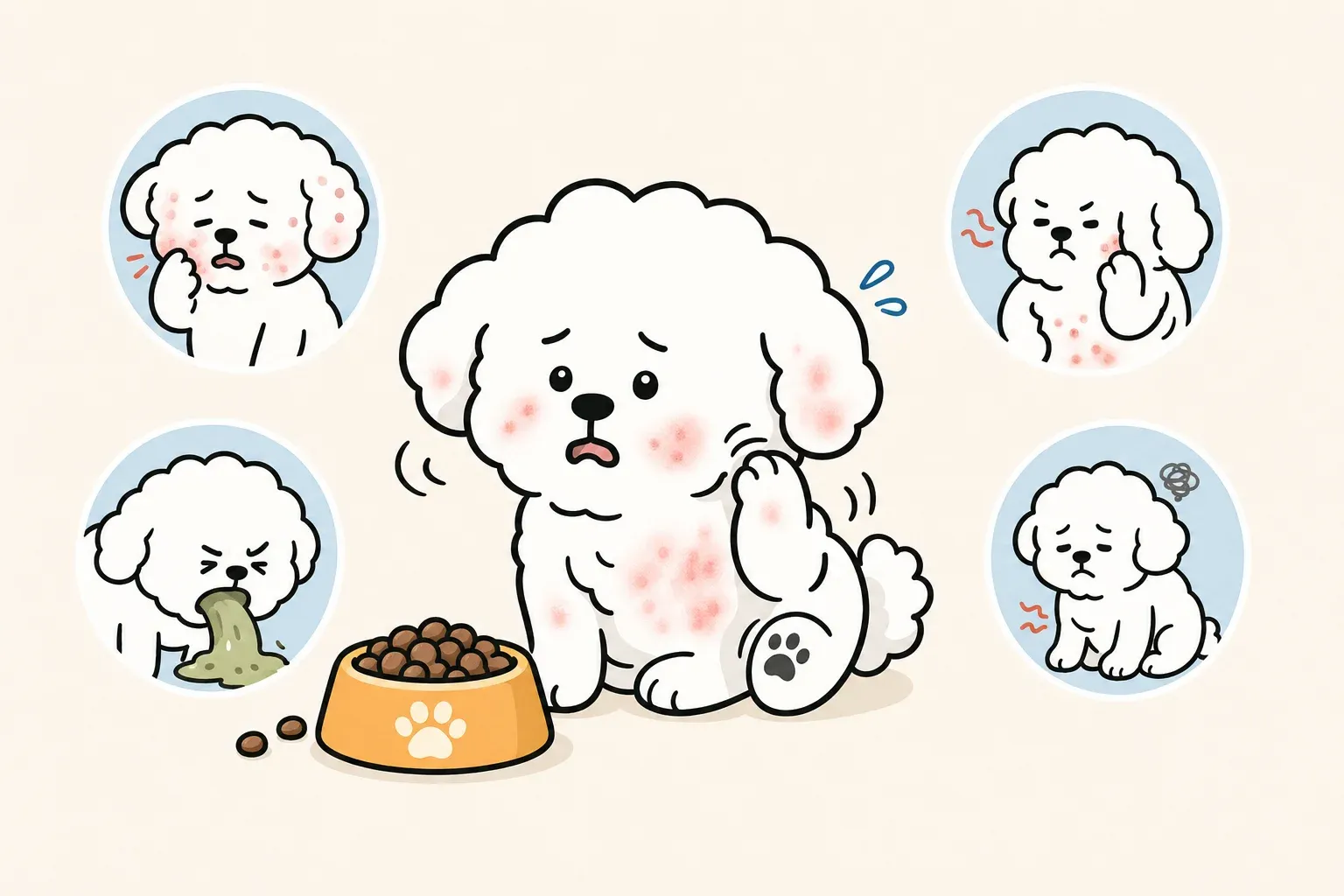
Dog Food Allergy Elimination Diet: Complete 8-Week Protocol
Dog food allergy elimination diet: science-backed 8-week protocol, allergen rankings, rechallenge steps, and multi-dog household management for pet owners.