 Cirius Petpedia
 3 Health Warning Signs Hidden in Your Dog's Tear Stains
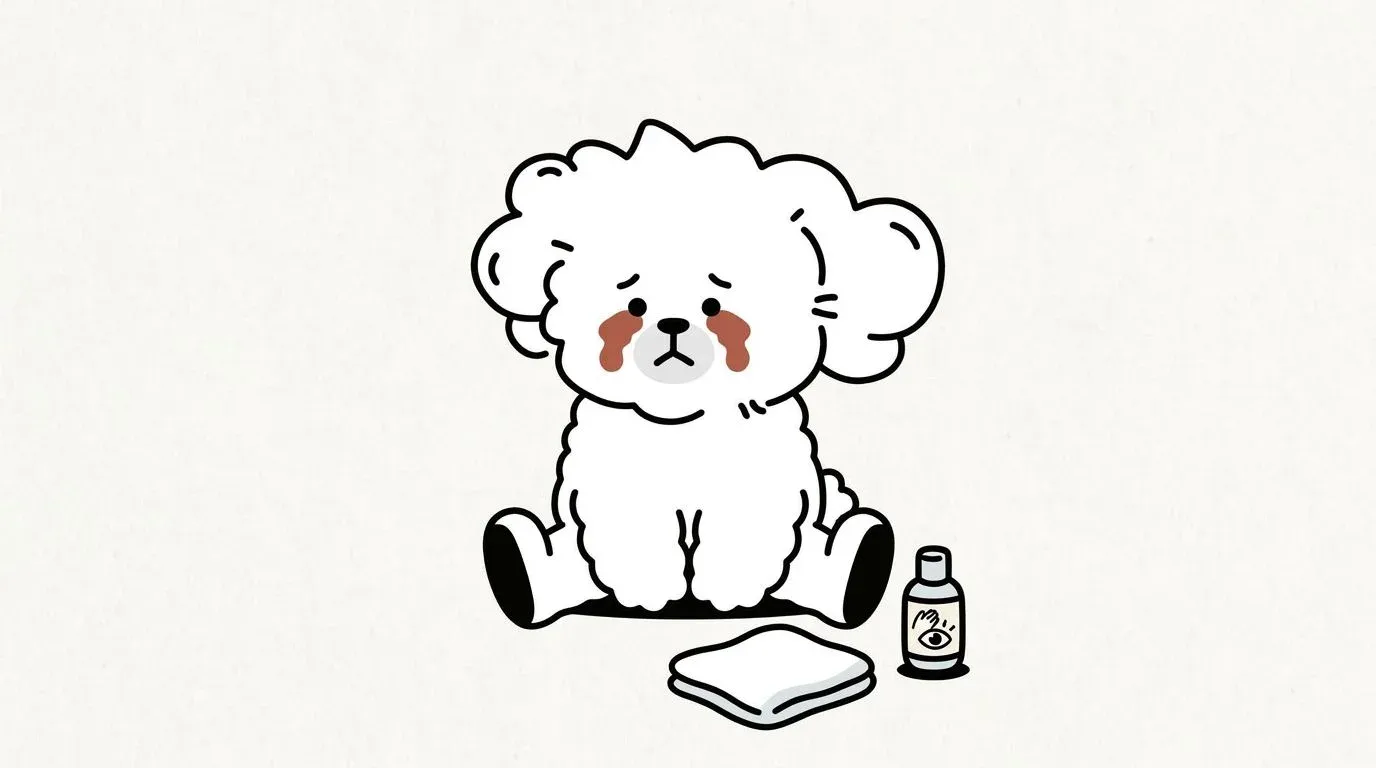
That reddish streak under your dog’s eye — most owners brush it off as a cosmetic quirk, especially in light-coated breeds like Maltese or Bichon Frises. The standard response is to pick up a bottle of tear stain remover and wipe away the discoloration at each bath.
Then the stains come back. And the skin around the eye starts to smell. And no matter how often you clean the area, nothing really changes.
If this cycle sounds familiar, the problem isn’t your cleaning technique. It’s that the underlying reason your dog is producing excess tears has never been identified.
This article reframes dog tear stains as what they often are: health signals, not cosmetic flaws. It walks through root cause differentiation — structural, allergic, dietary, and infectious — with management strategies matched to each cause.
Why You Shouldn’t Ignore Tear Stains
Tear Stains as Health Signals, Not Just a Cosmetic Issue
To understand why tear stains form, it helps to know how a dog’s tear drainage system works. Tears are produced by the lacrimal gland, flow across the surface of the eye, and drain through the nasolacrimal duct — a small channel that runs from the inner corner of the eye down to the nasal cavity. When this system functions properly, tears drain internally and never reach the fur.
Epiphora — the clinical term for overflow tearing — occurs when this drainage pathway is compromised or when tear production exceeds what the duct can handle. When tears spill onto the fur around the eye, porphyrins (iron-containing pigment compounds present in canine tears) oxidize on contact with air, producing the characteristic reddish-brown staining.
The stain itself is not the disease. It’s the visible result of a drainage or production imbalance that deserves investigation.
Skin Problems That Develop When Tear Stains Go Untreated
Chronic moisture around the eye creates a cascade of secondary problems that go well beyond appearance.
- Moist dermatitis: Proteins and moisture in tears weaken the skin barrier, creating ideal conditions for bacterial and fungal overgrowth in the periocular skin folds
- Progressive staining: As porphyrin oxidation accumulates over weeks and months, pigment penetrates deeper into the fur shaft and becomes increasingly difficult to remove
- Secondary infection from Malassezia yeast: In persistently damp environments, Malassezia species thrive, producing a characteristic sweet, musty odor and triggering itching that prompts the dog to rub its face repeatedly
Veterinary dermatology case reports consistently note that dogs presenting with long-standing tear stains frequently have concurrent periocular Malassezia overgrowth or bacterial dermatitis. What starts as a drainage issue can evolve into a skin condition requiring separate treatment.
Tear stain management, at its core, is a hygiene and health issue — not an aesthetic one.
The Common Mistake: Treating Only the Surface
The Limits of Relying on Tear Stain Removers Alone
Most commercial dog tear stain removal products work through gentle bleaching agents or mild acids that oxidize and remove discoloration from stained fur. They are effective at what they are designed to do: clean existing stains.
What they cannot do is reduce the volume of tears flowing onto the fur in the first place.
If excess tearing continues unchecked, stains will re-form within days regardless of how consistently the product is applied. Tear stain removers are a maintenance tool. They have real value in a complete care routine, but they do not substitute for identifying and addressing root causes.
The Vicious Cycle of Ignoring Root Causes
The pattern most owners describe follows a predictable trajectory:
- Tear stain noticed → apply remover, wipe clean
- Stain reappears within a week → clean more frequently, use more product
- Periocular skin becomes irritated from repeated wiping → dog starts rubbing its face
- Face rubbing increases mechanical irritation → discharge volume increases, conjunctiva becomes inflamed
- Staining spreads, skin develops odor, cycle intensifies
Breaking this cycle requires asking a different question: not “how do I clean this faster” but “why is this happening at all.”
Tear stain removers retain their place in the care routine once the root cause is identified and addressed. But leading with remover products and skipping the diagnostic step simply delays resolution while adding unnecessary friction to the skin.
Identifying the Real Cause of Dog Tear Stains
Dog tear stains have four primary root causes, each with a distinct pattern, trigger, and management approach. Accurate identification determines which strategy will actually work.
| Cause Category | Primary Signs | Characteristic Pattern | Red Flag Signs |
|---|---|---|---|
| Structural (nasolacrimal) | Clear, continuous overflow tearing | Present since puppyhood or birth | Bilateral, symmetric; common in brachycephalic breeds |
| Allergic reaction | Tearing + sneezing, itching, or face rubbing | Seasonal or triggered by specific environments | Eye rubbing, concurrent paw licking |
| Dietary factors | Gradual increase in tear volume | Changes correlate with food transitions | Skin condition fluctuates alongside tearing |
| Infection / irritation | Discolored or thick discharge | Acute onset | Yellow/green discharge, squinting, frequent blinking |
Structural Causes — Nasolacrimal Duct Obstruction and Eye Shape
When the nasolacrimal duct is too narrow, malformed, or blocked, tears cannot drain normally and overflow at the medial canthus. Veterinary ophthalmology classifies this as nasolacrimal duct obstruction, and it is among the most common structural explanations for chronic epiphora in dogs.
Congenital anatomy: Brachycephalic breeds — including Shih Tzu, Pug, English Bulldog, Pekingese, and Maltese — are born with shortened, kinked nasolacrimal duct pathways and prominent eyes that shift the geometry of tear drainage. The anatomical mismatch is inherent to the breed. In these dogs, eliminating tear stains entirely is rarely realistic. The management goal is minimizing overflow and preventing secondary skin damage.
Acquired obstruction: Inflammation from allergies or infection, foreign material, or abnormal eyelash growth (ectopic cilia or distichiasis) can block the duct opening in dogs with otherwise normal anatomy. Acquired obstruction tends to present as a sudden increase in tearing, often in one eye only. Nasolacrimal duct flushing performed by a veterinarian resolves many acquired obstructions without surgical intervention.
A unilateral acute onset — one eye suddenly developing significantly more tearing than the other — is a specific indicator that points toward acquired obstruction or a foreign body rather than a breed-related structural issue.
Allergic Reactions — Food and Environmental Allergies
Dog allergies and skin conditions are frequently associated with elevated tear production as the conjunctival mucosa responds to circulating allergens via IgE-mediated reactions, triggering histamine release and stimulating the lacrimal gland.
Environmental allergies: Pollens, dust mites, and mold spores are common triggers. The characteristic pattern is seasonal variation — tearing worsens during specific months or after exposure to particular environments (newly mowed grass, certain park areas, recently carpeted rooms). Dogs with environmental allergies typically also show other atopic signs: facial rubbing, paw licking, and intermittent ear inflammation.
Food allergies: Hypersensitivity to a protein source — commonly chicken, beef, or wheat in dogs — creates systemic mucosal inflammation that can manifest as increased ocular discharge. The gut and ocular mucosae share common IgA immune regulation, so gastrointestinal hypersensitivity can influence tear production even without obvious GI symptoms. Suspect food allergy when tearing is year-round, non-seasonal, and correlates with specific foods or treats.
Distinguishing environmental from food allergy matters practically: environmental allergies fluctuate with season and location, while food allergies tend to be consistent and year-round.
Dietary Factors — How Food and Treats Affect Tearing
Even without a true allergic reaction, diet components can directly influence tear volume and porphyrin content.
- Artificial colorants and preservatives: Some dogs show increased ocular discharge in response to synthetic food dyes or preservatives. Clinical case reports document reductions in tearing after transitioning to additive-free diets, though this effect is not universal
- Mineral content in water: Tap water with high iron or magnesium concentrations can elevate porphyrin levels in tears, intensifying the characteristic reddish staining even without a change in tear volume itself
- High-sodium treats and food: Elevated sodium intake alters osmotic balance and may contribute to increased tear secretion in sensitive individuals
The dietary connection to dog tear stains is often underestimated. It’s worth investigating methodically before attributing persistent staining entirely to anatomy or allergy.
Infection and Irritation — Conjunctivitis, Foreign Bodies, Eyelash Issues
Ocular conditions affecting the eye directly are a distinct category from systemic or structural causes.
- Conjunctivitis: Bacterial, viral, or irritant-induced inflammation of the conjunctiva produces increased tearing alongside discharge that may be cloudy, yellow, or green. The combination of heavy tearing and discolored discharge reliably distinguishes infectious conjunctivitis from other causes
- Foreign bodies: Hair, dust, or plant material lodged against the cornea or conjunctiva triggers intense acute tearing, almost always in a single eye. Sudden unilateral onset with pawing at the eye suggests foreign body involvement
- Ectopic cilia and distichiasis: Eyelashes growing from abnormal locations — inside the eyelid margin or directly from the meibomian glands — create persistent corneal irritation. Dogs with these conditions typically blink frequently and rub their eyes repeatedly. This diagnosis requires slit-lamp examination by a veterinarian
Cause-Specific Management Strategies
Once you’ve identified which category best fits your dog’s presentation, management becomes more targeted and more effective.
For Structural Causes — Daily Hygiene Management
When nasolacrimal anatomy is the underlying issue — particularly in brachycephalic breeds — the goal shifts from elimination to management. Complete resolution of tear staining is unlikely, but the secondary consequences (skin irritation, odor, infection) are preventable.
Practical steps:
- Clean the periocular area once or twice daily using a soft gauze pad moistened with sterile saline or a veterinary-formulated eye rinse. Wipe from the inner corner outward in a single pass — do not rub back and forth
- Schedule regular grooming appointments to keep periocular hair trimmed to under 5mm. Shorter fur reduces the surface area over which tears spread via capillary action and decreases moisture retention against the skin
- Ask your veterinarian whether periodic nasolacrimal duct flushing is appropriate. Many structurally predisposed dogs benefit from annual or biannual flushing to maintain what drainage capacity they have
- Brachycephalic breeds benefit from annual veterinary ophthalmology check-ups to monitor for progressive changes in duct patency and corneal health
For Allergies — Eliminating Triggers and Diet Adjustments
Environmental allergy management focuses on reducing allergen exposure. Wash bedding and soft furnishings frequently, use HEPA filtration in the home if dust mite sensitivity is suspected, and wipe down the face — including the eye area — after walks during high-pollen periods.
If food allergy is the primary suspect, a structured elimination diet trial is the most reliable diagnostic tool. This involves switching to a single novel protein source your dog has never eaten before (common choices include venison, kangaroo, or duck) and maintaining that diet without exception — including treats and flavored medications — for a minimum of 8 weeks.
When addressing allergy-related tearing, eye health nutrition for dogs is worth considering alongside allergen management. Nutrients that support mucosal integrity can help reduce the conjunctival reactivity that amplifies allergy-driven tearing.
Important note: Do not attempt to run an elimination diet alongside other dietary changes simultaneously. Mixing novel protein trials with other modifications makes it impossible to interpret results. If possible, conduct the trial under veterinary guidance.
For Dietary Issues — Food Transition Guide
Investigating the dietary connection to dog tear stains requires a systematic approach rather than random substitution.
What to evaluate when transitioning:
- Simplify the protein source: Switch to a food with a single, novel protein your dog hasn’t eaten previously — move away from chicken if that’s the current staple
- Minimize additives: Choose a food without artificial dyes, BHA/BHT, or other synthetic preservatives
- Switch to filtered water: In areas with high-mineral tap water, replacing tap with filtered water has been associated with reduced tear staining in anecdotal clinical observations. Use the same filtered source consistently for 4–6 weeks to assess impact
- Maintain the transition for at least 6 weeks: Changes in tear production from dietary modification are gradual. Evaluating earlier risks false negatives
- Track consistently: Note tear volume, stain color intensity, and fur condition weekly in a simple log. Clear improvement over weeks confirms a dietary connection; no change after the full period suggests looking elsewhere
If tearing volume improves meaningfully on a dietary change, that’s indirect confirmation of a dietary cause. If nothing changes, shift focus to structural or allergy-based explanations.
For Infections — Treatment and Prevention
Infection-driven tearing requires veterinary treatment — this is the one category in the group where home management is insufficient and potentially risky.
Bacterial conjunctivitis is treated with antibiotic ophthalmic drops, typically prescribed after culture or based on clinical presentation. Delaying treatment risks corneal involvement, which is more serious and harder to treat.
For foreign body removal, eyelid eversion, or ectopic cilia correction, the procedure must be performed by a veterinarian. These are not conditions amenable to home treatment.
If discharge is yellow or green, or if your dog is squinting, pawing at its eye, or showing visible eye swelling, a same-day or next-day veterinary visit is appropriate — not a wait-and-see approach.
Daily Tear Stain Care Routine
Identifying and addressing root causes is the foundation. A consistent daily care routine maintains the gains and protects the periocular skin from secondary damage.
How to Properly Clean Around the Eyes
Correct technique:
- Use sterile saline solution or a veterinary eye rinse applied to a soft gauze pad or cotton round
- Wipe from the inner corner of the eye outward in one smooth pass — never scrub back and forth
- Use a fresh pad for each eye to prevent cross-contamination between eyes
- Allow the area to air-dry fully after cleaning; residual moisture against the skin prolongs the conditions that promote bacterial and yeast growth
What to avoid:
- Human facial wipes, baby wipes, or any product containing alcohol, fragrance, or preservatives not formulated for periocular use
- Shared materials between eyes
- Aggressive rubbing, which traumatizes the periocular skin and stimulates defensive discharge production
Daily brief cleaning is substantially more effective than weekly intensive sessions. Consistency beats intensity when managing chronic tear staining.
Managing Facial Hair Near the Eyes
Periocular hair length has a direct mechanical relationship with staining severity. Long hair wicks tears toward the skin surface via capillary action and keeps moisture against the skin for longer periods.
- Keep hair directly beneath and beside the eye trimmed to 5mm or shorter. In breeds like Maltese, Shih Tzu, and Bichon Frise, whose coat grows quickly in this area, professional grooming every 4–6 weeks may be necessary to maintain this length
- If you are not comfortable trimming near the eye at home, schedule regular appointments with an experienced groomer who can manage periocular length safely
- Ask your groomer or veterinarian to check eyelash direction at each visit — abnormal lash growth can be subtle and easy to miss without proper examination
Keeping the periocular skin healthy links directly to skin barrier support through nutrition. A stronger skin barrier resists secondary infection and recovers more readily from moisture exposure.
When to See a Veterinarian
Home management works well for structural causes, dietary investigation, and ongoing hygiene maintenance. But some presentations require professional evaluation — and waiting in these situations can allow a manageable condition to progress into something more complex.
| Sign | Possible Cause | Recommended Action |
|---|---|---|
| Yellow or green discharge alongside tearing | Bacterial conjunctivitis or infection | Veterinary visit within 24–48 hours |
| Sudden increase in tearing from one eye only | Foreign body, corneal injury, acquired duct obstruction | Same-day evaluation recommended |
| Frequent eye rubbing or pawing at the face | Ectopic cilia, corneal irritation, pain | Examination to identify cause |
| Periocular skin is swollen, red, or warm to the touch | Secondary dermatitis or cellulitis | Veterinary visit needed |
| No improvement after 2–4 weeks of consistent home management | Structural cause or persistent irritant | Consider veterinary ophthalmology referral |
| Dog is squinting or avoiding bright light | Corneal ulcer, uveitis | Urgent veterinary attention |
Ocular conditions can escalate quickly. When in doubt, err toward an examination — catching a corneal problem or duct obstruction early is far less involved than managing complications from delayed treatment.
Building a Tear Stain Management Plan That Works
The key insight running through all of the above: tear stain removers address the symptom; root cause identification addresses the problem. Both have a place in a complete management plan, but the sequence matters.
A practical diagnostic starting point:
- Sudden onset in one eye only → foreign body or acquired obstruction → same-day or next-day vet visit
- Present since puppyhood, bilateral and symmetric → structural/anatomical cause → daily hygiene + periodic duct flushing check
- Varies by season or environment → environmental allergy → allergen reduction protocol
- Changed after a food or treat transition → dietary cause → elimination diet trial (6–8 weeks minimum)
- Discolored or thick discharge, eye rubbing, squinting → infection or irritation → veterinary treatment
No single approach works for every dog. The same breed, same age, same symptom can have different root causes in different individuals. What drives successful tear stain management is not finding the right product — it’s asking the right question first.
Once you understand what your dog’s tear stains are telling you, the path forward becomes considerably clearer.
FAQ
Why do tear stains keep coming back even when I use a tear stain remover?
Can changing my dog's food actually reduce tear staining?
Is nasolacrimal duct surgery always necessary for structural causes?
What do different tear stain colors mean — red, brown, or white?
Which dog breeds are most prone to tear staining?
Related Articles
Cat Spring Shedding: 5 Vet-Backed Steps to Control the Fur
Cat spring shedding explained: why it happens, how to tell normal from abnormal, and 5 vet-backed steps to manage fur and prevent hairballs.
Dog Hydrotherapy: 4 Ways Water Therapy Rebuilds Joint Strength
Discover how dog hydrotherapy uses buoyancy and resistance to rebuild joint strength. Covers underwater treadmill vs pool therapy, who benefits, session expectations, and safe at-home options.
How to Massage Your Dog's Joints: A Step-by-Step Home Guide for Every Condition
Dog joint massage guide for arthritis, hip dysplasia, and post-surgery rehab. Step-by-step protocols for every joint with breed-specific pressure tips.
Dog Joint Surgery Recovery: A Vet-Based Week-by-Week Rehab Guide
Dog joint surgery recovery guide covering TPLO, patellar luxation, hip surgery, and disc surgery. Week-by-week rehab timeline and home care protocols.
Red Light Therapy for Dogs at Home: A Science-Based Safety Guide
Learn how red light and near-infrared therapy works for dogs, what the research actually shows, and how to use it safely at home — with dosimetry guidance.
Luxating Patella Exercises for Dogs: A Grade-by-Grade Home Rehab Guide
Grade-specific exercises for dogs with luxating patella — from foundation moves for Grade I-II to aquatic alternatives. Includes reps, sets, and a safety checklist.
How Near-Infrared Therapy Works for Dogs
Discover how near-infrared (NIR) therapy helps relieve joint pain and inflammation in dogs through scientific mechanisms.
Senior Dog Joint Care Guide
A comprehensive guide to maintaining joint health and managing pain in aging dogs.
How to Safely Restart Your Dog's Activity After Winter: A Spring Joint Care Guide
Spring dog joint care guide: assess winter deconditioning, follow a 4-week progressive activity plan, and spot warning signs before they become injuries.
Are Cat Hairballs Really Normal? The Truth About Prevention and Risk
Cat hairball prevention explained: what's a safe frequency, when vomiting signals danger, and an integrated 3-pillar approach — grooming, diet, and environment.
7 Essential Dog Paw Care Tips Every Owner Should Know
Your complete dog paw care guide: moisturizing cracked pads, trimming nails, preventing hot pavement burns, winter de-icer hazards, first aid for injuries, and when to call the vet.