 Cirius Petpedia
 How to Safely Restart Your Dog's Activity After Winter: A Spring Joint Care Guide
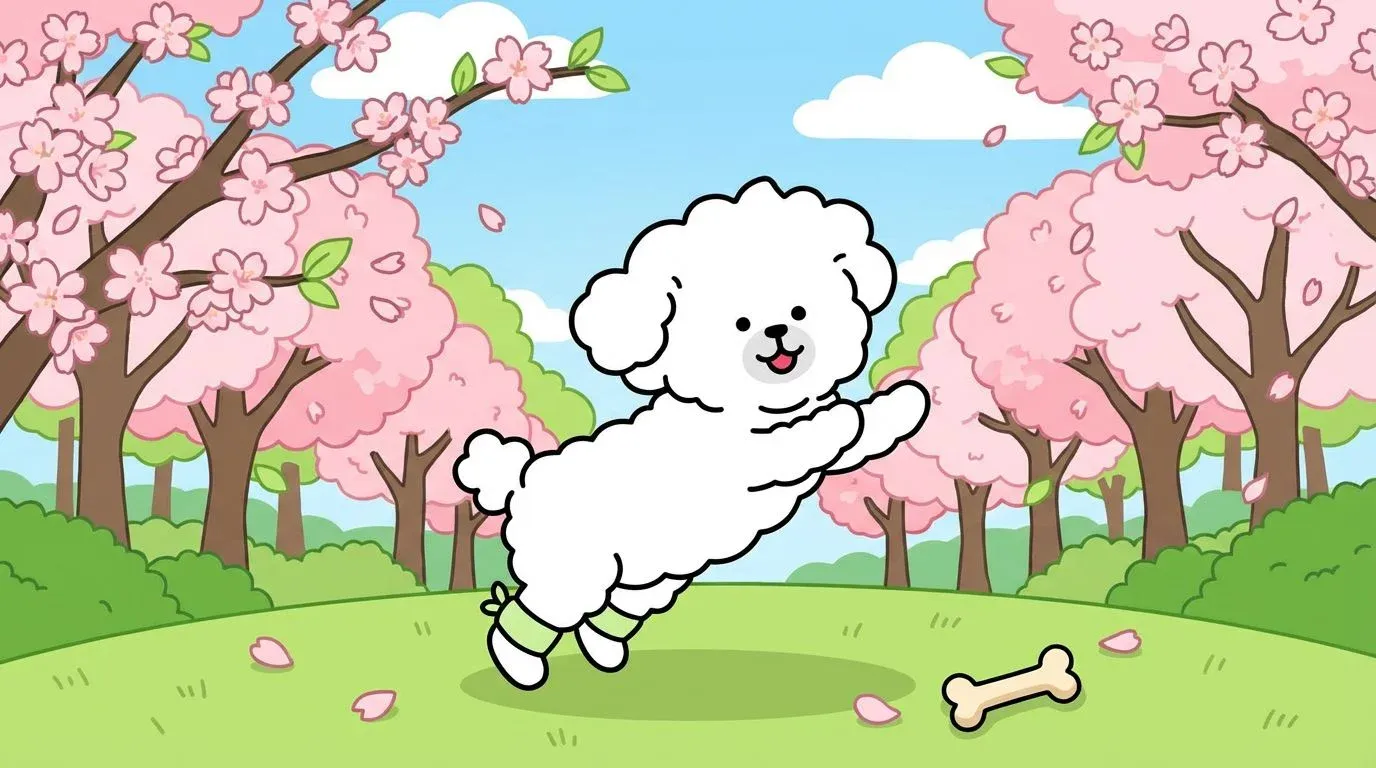
After three months of shorter walks, icy sidewalks, and days spent mostly indoors, the first warm weekends of spring feel like a release for both you and your dog. That enthusiasm is real — but joints that have spent a winter in low-load conditions are not ready for a sudden jump to full activity. Understanding what happens inside your dog’s joints during winter inactivity, and building back correctly, is the difference between a healthy spring and an avoidable injury.
Why Spring Is a Critical Season for Dog Joint Health
Spring does not represent a clean reset for your dog’s musculoskeletal system. It represents a transition that carries specific biomechanical risk — particularly for medium and large breeds, dogs over seven years old, and any dog with a pre-existing joint condition such as arthritis or hip dysplasia.
How Winter Inactivity Deconditions Joints
Joints are not passive hinges. They depend on the surrounding muscles, tendons, and ligaments to distribute load and maintain alignment. When activity drops significantly — as it does for most dogs over a temperate-climate winter — several adaptations occur:
Muscle atrophy. Skeletal muscle begins to atrophy within days of reduced loading. After 8–12 weeks of lower activity, a dog can lose 15–20% of the muscle cross-sectional area in the limbs most affected by inactivity. Less muscle means less dynamic joint stabilization.
Reduced synovial fluid circulation. Synovial fluid lubricates cartilage and delivers nutrients to it. Movement drives this circulation. Extended low-activity periods reduce fluid turnover, leaving cartilage more vulnerable to compressive damage when full loads return suddenly.
Connective tissue stiffening. Tendons and ligaments adapt to lower mechanical demand by becoming slightly stiffer and less extensible. This reduces the joint’s ability to absorb shock at the beginning of spring activity.
None of these changes are irreversible. But they do require a deliberate return-to-activity protocol rather than an immediate return to pre-winter norms.
The Risks of Sudden Activity Increases
The injury pattern veterinary rehabilitation practitioners see most often in spring is not arthritis flare — it is soft tissue injury in dogs that were not yet conditioned for the activity they attempted. Common presentations include:
- Cranial cruciate ligament (CCL) partial tears from uncontrolled pivoting or jumping
- Iliopsoas muscle strains from hill climbing before hip stabilizers have been reconditioned
- Patellar tendon irritation from sudden increases in repetitive flexion-extension
For dogs that already have joint disease, sudden activity increases trigger inflammatory cascades that can set back their management by weeks. A dog that seemed well-managed over winter may appear dramatically more symptomatic after a single over-ambitious outing in early spring.
Pre-Spring Joint Assessment
Before starting any spring activity plan, spend a few days observing your dog’s baseline movement. This gives you a reference point to measure progress against — and it surfaces any problems that developed over winter that may require veterinary attention before you begin increasing activity.
3 Gait Observation Points
Conduct this assessment on a flat, non-slip surface with the dog moving at a natural pace. Watch for:
1. Weight distribution at rest. Stand behind your dog while it stands still. Both hindquarters should be level, with weight distributed evenly across all four legs. A dog that consistently shifts weight off one limb is compensating for pain or weakness in that limb.
2. Head bob during walk. A head bob — where the head drops as a specific leg hits the ground — is a classic indicator of forelimb lameness. The head drops on the sound leg and rises on the painful leg. Even a subtle, intermittent bob warrants attention.
3. Hip sway and stride symmetry. Watch the hindquarters from behind as the dog walks away. Both hips should swing symmetrically. An exaggerated hip sway or a shortened stride on one side suggests hindlimb weakness or pain. In large breeds, this often indicates hip dysplasia progression or early sciatic nerve involvement.
Baseline checklist — record your observations:
- Any visible limping at walk or trot?
- Reluctance to sit, stand, or lie down?
- Stiffness for more than 5 minutes after rising?
- Difficulty climbing or descending stairs?
- Reduced willingness to jump onto furniture or into a car?
- Licking or chewing at a specific joint?
If two or more items are checked, schedule a veterinary evaluation before starting the progressive plan below.
When to Schedule a Vet Check
Some dogs benefit from a brief veterinary musculoskeletal assessment at the start of spring regardless of observed symptoms. This is especially worth doing if:
- Your dog is 7 years or older
- Your dog has a known joint condition (arthritis, patellar luxation, hip dysplasia)
- You noticed a decline in mobility or activity tolerance over winter
- Your dog is overweight — excess body weight amplifies joint stress by a factor of 4–5× on the hindlimbs during walking
A vet can identify subclinical muscle loss, assess range of motion, and recommend whether any management changes — medication, physical therapy, or dietary adjustment — are appropriate before increasing activity.
A 4-Week Progressive Activity Plan
This plan is designed for a previously healthy adult dog returning to normal activity after a low-activity winter. Dogs with existing joint conditions should use this as a framework and consult their veterinarian for modifications. For dogs with diagnosed arthritis, consider the additional guidance in our senior dog joint care guide.
The guiding principle is the 10% rule from human sports rehabilitation, adapted for canine physiology: increase total weekly activity load by no more than 10% per week. In practice, this means small, measurable increments — not “going by feel.”
Weeks 1–2: Short Walks and Indoor Stretching
Target: Rebuild baseline joint circulation and neuromuscular activation without loading deconditioned tissues.
| Day | Walk Duration | Terrain | Frequency |
|---|---|---|---|
| 1–3 | 10–12 min | Flat, paved | 2× daily |
| 4–7 | 12–15 min | Flat, paved | 2× daily |
| Week 2 | 15–18 min | Flat, light grass | 2× daily |
Keep pace slow and consistent. No off-leash running, no sudden direction changes, no rough play with other dogs. The goal is controlled, rhythmic joint loading.
Indoor stretching to add daily (5 minutes):
- Cookie stretch: Hold a treat at the dog’s shoulder, then hip, then flank to encourage lateral neck and spine flexion. Hold each position 5–10 seconds per side.
- Sit-to-stand repetitions: Ask your dog to sit and stand 5–8 times in a row on a non-slip surface. This activates quadriceps, hamstrings, and core stabilizers without joint impact.
- Gentle passive range of motion: With the dog lying on its side, slowly flex and extend each limb through its comfortable range. Stop at any resistance. Perform 10 repetitions per limb.
Weeks 3–4: Increasing Distance and Terrain Variety
Target: Begin progressive loading of muscles and connective tissue. Introduce mild terrain variation to challenge proprioception and stabilizer muscles.
| Day | Walk Duration | Terrain | Additional |
|---|---|---|---|
| Week 3, Day 1–3 | 20 min | Flat + gentle slope | — |
| Week 3, Day 4–7 | 22–25 min | Grass, light trail | — |
| Week 4 | 25–30 min | Varied terrain | Optional 5-min off-leash sniff break |
Gentle slopes are valuable at this stage because they recruit hip extensors and knee stabilizers in patterns that flat surfaces do not. Keep grade mild — no steep inclines yet.
Introduce a brief, calm off-leash sniff break in a secure area by week 4. Sniffing at a slow pace on natural surfaces is excellent proprioceptive input for joints. Avoid any high-speed running or jumping.
Monitor recovery after each walk. A dog that is stiff the morning after a walk was pushed slightly too hard. Drop back one increment and hold that level for three to four days before advancing again.
Week 5 and Beyond: Criteria for Returning to Normal Activity
Do not advance to full pre-winter activity until your dog meets all of the following:
- No morning stiffness after any walk in weeks 3–4
- No visible change in gait during or after walks
- No reluctance to begin walks or to use stairs
- Body condition score at or below 5/9 (ideally 4–5/9)
- No joint licking or chewing after activity
If all criteria are met, you can begin gradually reintroducing higher-intensity activities: longer hikes, off-leash runs, swimming. Continue the 10% weekly increase rule. Most dogs reach full activity tolerance by week 6–8. Dogs with joint conditions may need 10–12 weeks and ongoing management.
Spring Joint-Friendly Lifestyle Adjustments
The progressive walk plan addresses exercise load. But the home environment and nutritional status account for a significant share of joint stress — changes here work alongside the activity plan, not separately from it.
Home Environment: Non-Slip Flooring and Ramp Access
Hardwood, tile, and laminate floors become hazardous as dogs regain activity motivation in spring. A dog that is still in the early reconditioning phase but feels energetic will slip and scramble on smooth floors, placing sudden and extreme torques on joints that are not yet stabilized.
Practical steps:
- Place non-slip yoga mats or carpet runners along your dog’s main travel paths, especially between the sleeping area, food bowl, and exit to the yard
- Add rubber-backed bath mats at the base of any stairs
- If your dog uses furniture or accesses a vehicle, install a ramp or low steps — do not allow jumping on and off during the reconditioning period
- For large breeds and dogs with hip issues, raise food and water bowls to elbow height to reduce spinal loading during feeding
These are low-cost interventions with immediate impact on joint stress accumulation across the full day.
Weight Management and Nutrition
Every pound of excess body weight adds approximately 4–5 pounds of force to the hindlimb joints during walking. For a dog that is 5 pounds overweight, that represents 20–25 pounds of additional joint load on every step — thousands of additional cycles per day.
If your dog gained weight over winter — common with reduced activity — spring is the correct time to address this, ideally before starting the progressive walk plan. A modest 10–15% caloric reduction, combined with the increased activity, is generally sufficient for gradual loss. Consult your veterinarian before making significant dietary changes, particularly for dogs on weight-management diets.
Nutritional factors with evidence for joint health:
- Omega-3 fatty acids (EPA and DHA): Anti-inflammatory effect with reasonable evidence in canine osteoarthritis management. Found in fish oil and some prescription joint diets.
- Glucosamine and chondroitin: Widely used; evidence for symptom relief in dogs with existing arthritis is moderate. Less likely to benefit joints that are not yet affected.
- Lean protein adequacy: Essential for maintaining the muscle mass that protects joints. Senior dogs and dogs recovering from inactivity have higher protein requirements per kilogram than younger, active dogs.
For a detailed, ingredient-by-ingredient breakdown of what the clinical evidence actually shows, see our dog joint supplement guide. If your dog gained weight over winter, addressing that before adding supplements is also worth considering — the connection between weight and joint health explains why excess body weight may be doing more damage than a lack of supplementation.
Warning Signs and What to Do
Most dogs tolerate a well-paced spring return to activity without incident. But knowing which signals require immediate attention — versus which signal a simple need to slow down — is essential for safe management.
Post-Walk Red Flags
These signs indicate the current activity level exceeds what the dog’s musculoskeletal system can handle. Reduce the walk duration by 30–40% and hold that level for five days before trying to advance again:
- Limping that appears during or immediately after a walk and resolves within 30 minutes
- Reluctance to weight-bear on a specific leg for up to 2 hours after returning home
- Noticeably increased stiffness the morning after a walk compared to the morning before
- A change in sitting posture — sitting to one side, or avoiding sitting altogether — that appears after activity
When to See a Vet Immediately
These signs indicate possible acute injury or significant joint inflammation and require same-day or next-day veterinary evaluation:
- Non-weight-bearing lameness (the dog refuses to put a foot down at all)
- Visible swelling around any joint
- Yelping or vocalizing when a joint is touched or when moving
- Limping that does not improve within 24 hours of rest
- A sudden behavioral change — aggression or hiding — that coincides with increased activity
Do not attempt to push through any of these signs. Rest alone may be insufficient if there is structural damage, and early veterinary assessment improves outcomes significantly compared to delayed treatment.
Joint readiness is just one part of a safe spring outing. For a full preparation guide covering tick prevention, toxic plant hazards, lawn chemicals, pollen management, and gear checklists by activity type, see the complete dog spring outing checklist.
References
FAQ
How long does it take for a dog's joints to recover from winter inactivity?
Can I take my dog for a long hike as soon as the weather warms up?
What signs tell me my dog is overdoing it on a walk?
Is swimming a good spring activity for dogs with joint issues?
Should I give my dog joint supplements in spring?
Related Articles
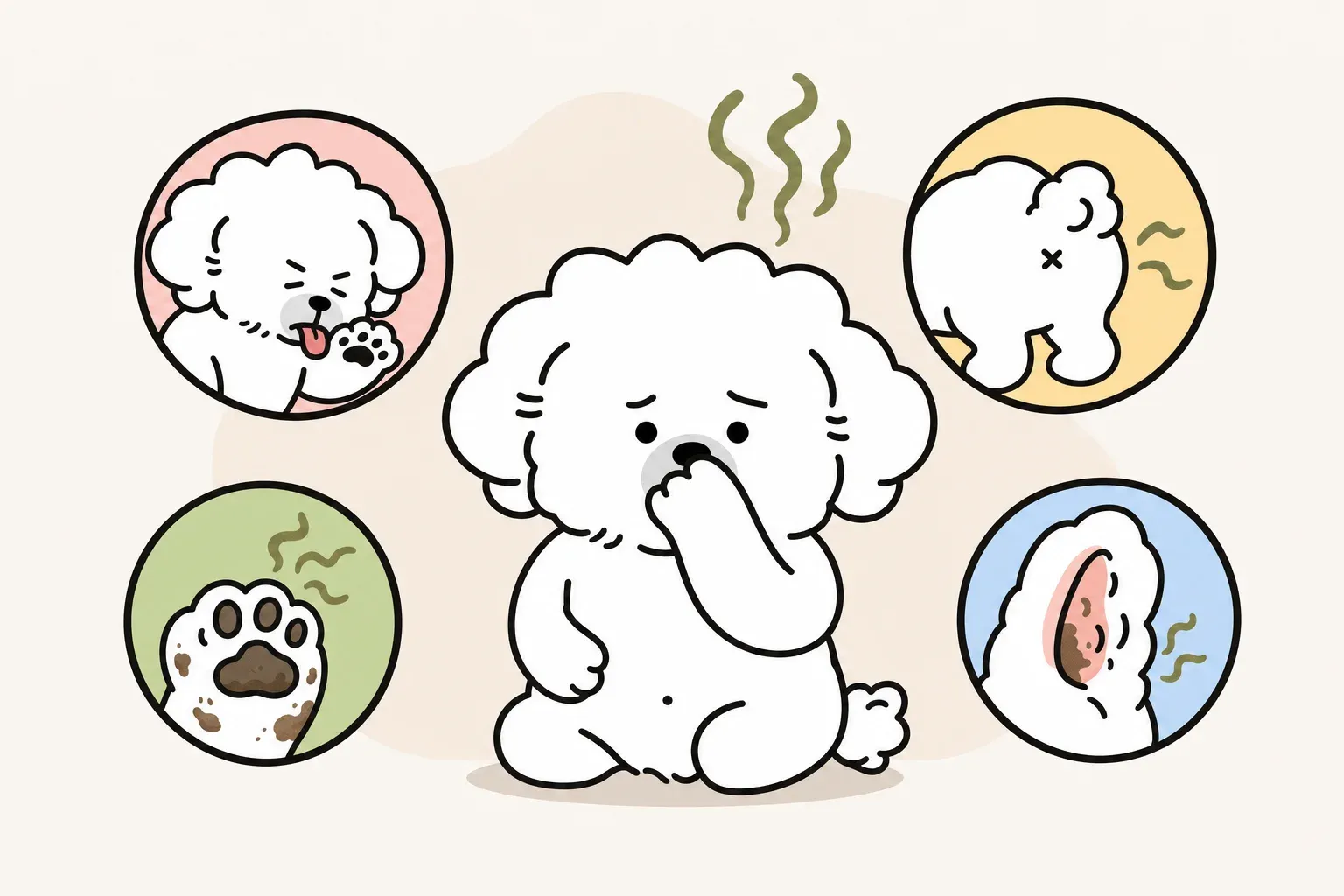
6 Reasons Your Dog Smells Bad and How to Fix Each One
Wondering why does my dog smell bad? Learn the 6 most common causes of dog body odor—from ears to anal glands—and get a practical fix for each one.
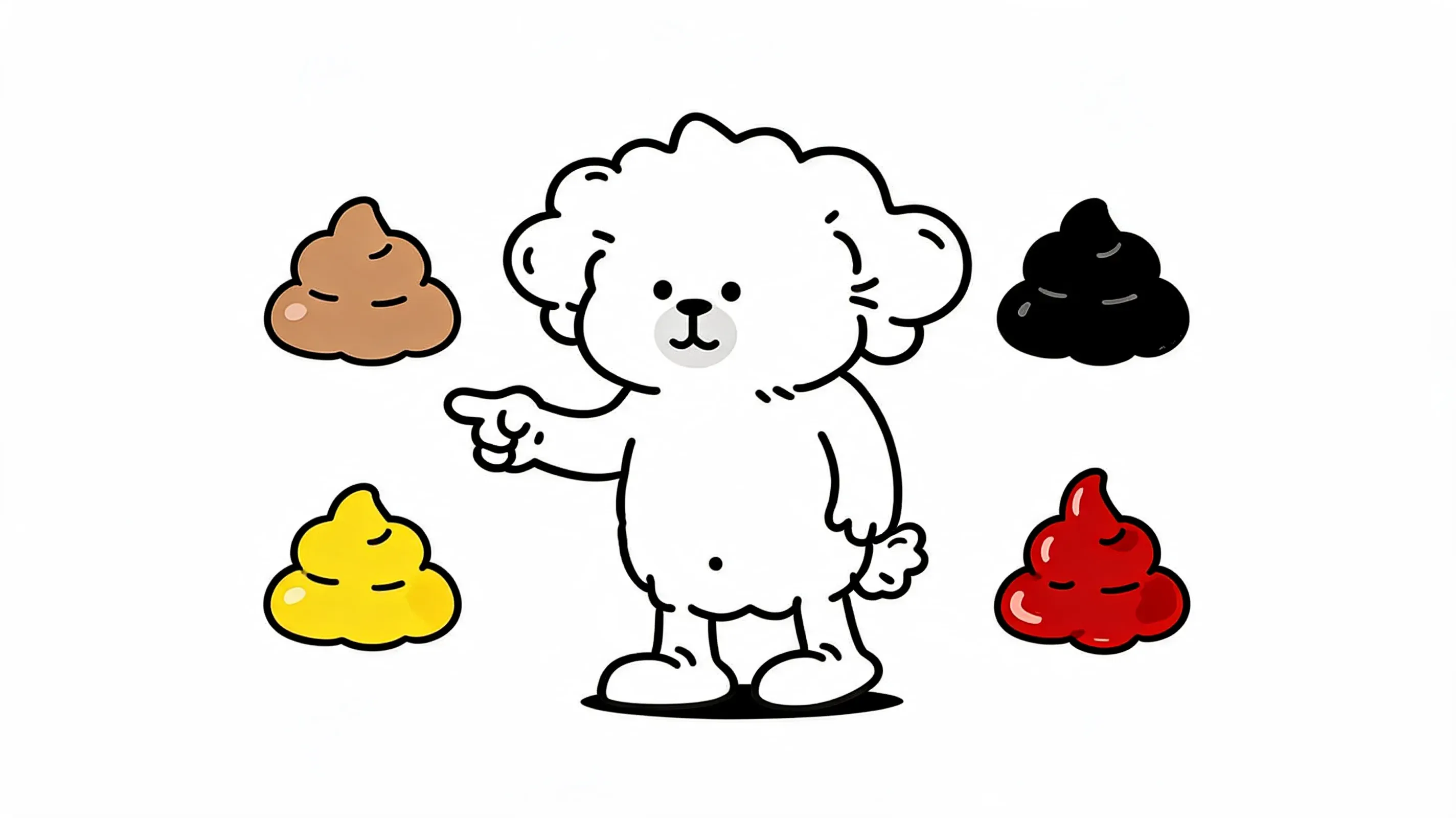
Dog Poop Color Chart: What Each Color Means and When to See a Vet
Complete dog poop color chart covering brown, black, red, yellow, grey, and green stool—plus consistency, mucus, and smell to pinpoint what's wrong.
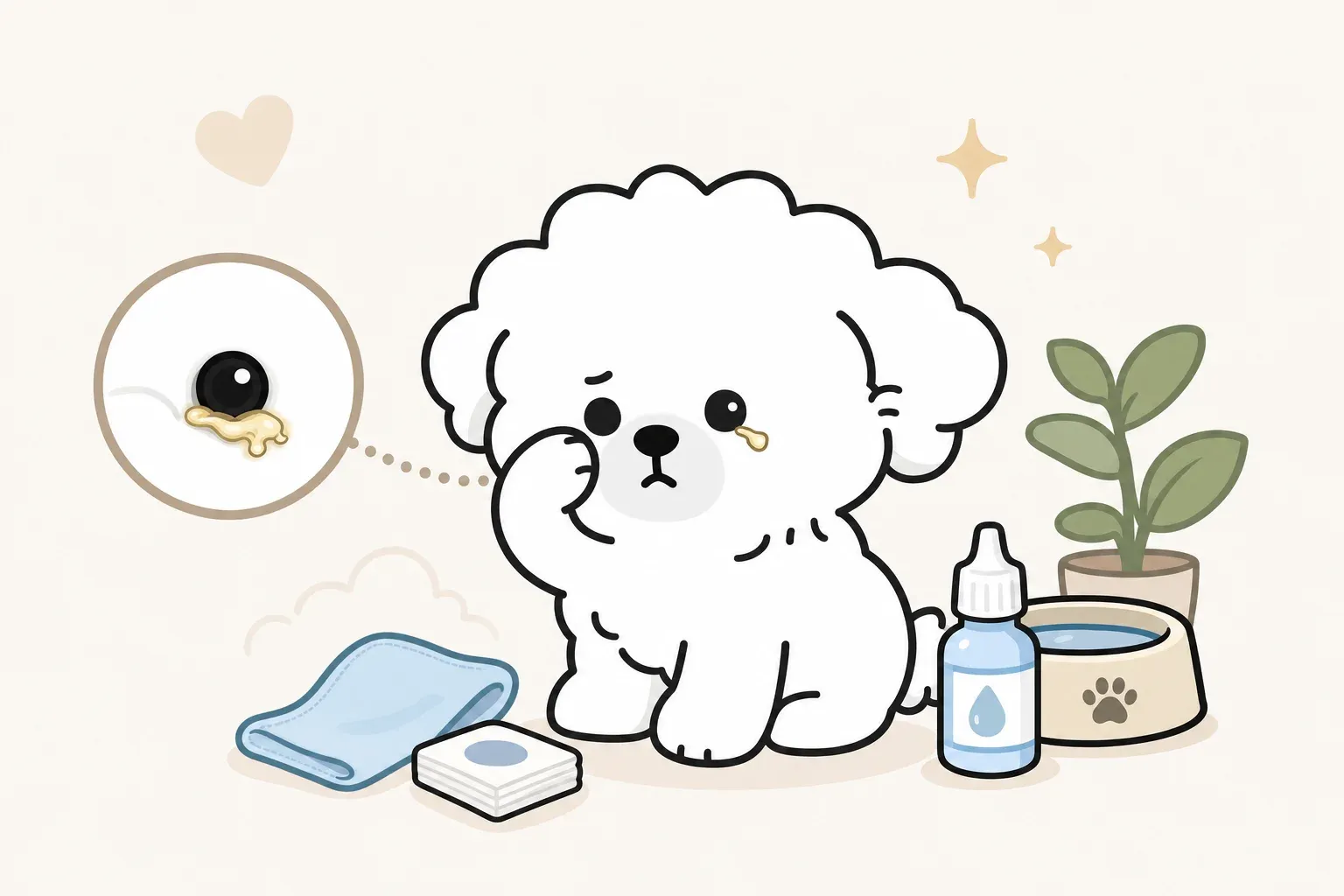
How to Clean Dog Eye Discharge: Color Guide and Care
Dog eye discharge explained by color—clear, yellow, green, brown. Step-by-step cleaning guide, breed-specific tips, and when to see the vet.