 Cirius Petpedia
 Dog Anal Glands: The Complete Guide to Expression, Symptoms, and Prevention
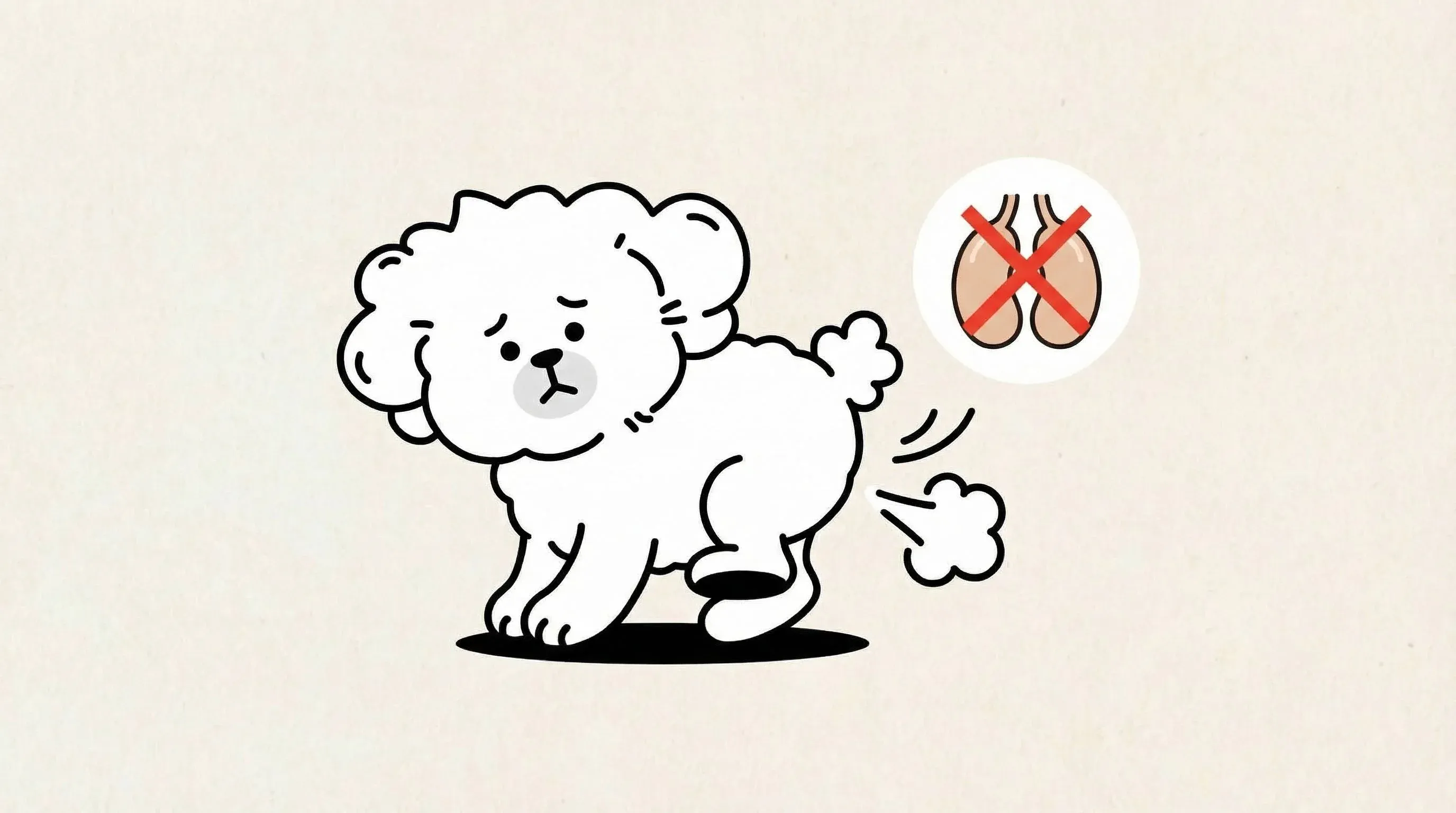
Dog anal glands might be one of the least glamorous topics in pet care — but for many dog owners, they’re also one of the most confusing and anxiety-inducing. If your dog has started scooting across the floor, licking obsessively near their tail, or suddenly smelling strongly of fish, their anal glands are probably involved.
The good news: most anal gland problems are manageable when caught early. This guide covers everything from anatomy basics and warning signs to step-by-step expression instructions, a secretion color reference, groomer-versus-vet comparisons, and the prevention habits that help the most dogs avoid chronic issues.
What Are Dog Anal Glands?
Dog anal glands (more precisely called anal sacs) are two small secretory glands located just inside a dog’s anus, positioned at approximately the 4 o’clock and 8 o’clock positions. Each gland is roughly the size of a pea to a small grape, and each empties through a tiny duct that opens onto the surface of the anal skin.
Location and Anatomy (The 4 and 8 O’Clock Rule)
Veterinarians use the clock-face reference point as a practical landmark: if you were to look at a dog’s anus as the center of a clock, the two glands sit at roughly 4 o’clock on the lower right and 8 o’clock on the lower left. Each gland is surrounded by a thin outer sac and connected to a small duct that opens at the anal ring.
Understanding this anatomy matters for home expression — placing pressure at the wrong angle can fail to empty the gland or, in the worst case, push secretion backward into the duct.
What Anal Glands Do: Scent Marking and Communication
The anal glands produce a strong-smelling, oily secretion unique to each individual dog. This secretion is deposited on the stool during bowel movements and serves as a chemical identity marker — it’s how dogs recognize each other through sniffing the rear, and why they pay such careful attention to other dogs’ waste on walks.
In wild canids and some domestic dogs, the glands can also be voluntarily expressed when frightened, similar to a skunk’s defense mechanism. You may notice this after a stressful vet visit: a sudden, potent fishy odor that dissipates within minutes.
Why Some Dogs Can’t Empty Them Naturally
Under normal conditions, the pressure of a firm stool passing through the anal canal compresses the anal sacs and pushes secretion out through the ducts — no human intervention needed. Problems arise when this natural mechanism fails.
Contributing factors include:
- Soft or loose stools — common with highly processed commercial diets or chronic digestive issues — don’t generate enough pressure
- Narrow or malformed ducts — more prevalent in small and toy breeds
- Obesity — excess body fat can shift the gland’s position and reduce mechanical compression
- Low physical activity — reduced muscle tone in the perineal area
The result is secretion that builds up, thickens, and can eventually block the duct entirely.
5 Signs Your Dog Has an Anal Gland Problem
Anal gland issues rarely announce themselves dramatically at first. The early signs are subtle behaviors that owners sometimes attribute to other causes. Recognizing them early is what prevents a simple fullness problem from becoming an infected abscess.
Scooting (Dragging Their Bottom Across the Floor)
Scooting — the tail-drag movement most owners recognize immediately — is the hallmark sign of anal gland discomfort. Your dog is trying to relieve the pressure or itching by using friction from the floor. It’s uncomfortable enough that they’ll do it repeatedly, often on carpets or rugs.
Scooting is a primary reason owners search for anal gland information, but it’s worth noting: scooting isn’t exclusively an anal gland problem. Intestinal parasites (particularly tapeworms), skin allergies around the perianal area, and irritation from diarrhea can all trigger the same behavior. If expression resolves the scooting, the glands were the cause. If it continues, a vet visit is needed to rule out parasites or allergies.
Excessive Licking or Biting Near the Tail
Dogs experiencing anal gland discomfort will frequently lick, bite, or chew the area just below the base of the tail or directly around the anus. This can be persistent and intense enough to cause hair loss or skin irritation in the area. Unlike the obvious scooting behavior, this one is easier to overlook as general grooming.
Straining or Crying During Bowel Movements
When anal glands are severely full or impacted, defecation becomes uncomfortable. You may notice your dog squatting longer than usual, straining without producing stool, or vocalizing during a bowel movement. This is a sign the glands are more than mildly full and warrant prompt attention.
Swelling, Redness, or a Visible Lump Near the Anus
Visible swelling or a soft, raised lump near the anus — especially if it appears reddish, purple, or warm to the touch — indicates the problem has progressed beyond simple fullness. This is an abscess forming, and it requires same-day veterinary care. Do not attempt home expression on a dog with visible swelling.
A Sudden Strong Fishy Smell
The secretion from anal glands has a distinctively pungent, fish-like odor. A sudden intensification of this smell — especially if it appears when your dog isn’t having a bowel movement — often means the glands have leaked spontaneously due to pressure buildup, or were expressed involuntarily during a stressful moment. Persistent fishy odor that doesn’t clear up is a signal the glands need attention.
How Anal Gland Problems Progress: From Fullness to Rupture
Anal gland issues rarely jump straight from “fine” to “emergency.” They follow a recognizable progression, and understanding where your dog is in that progression determines the urgency of your response.
Stage 1: Full or Impacted Glands
What’s happening: The gland has filled with secretion that hasn’t been naturally expressed. The fluid thickens from its normal thin, liquid consistency to a paste-like or grainy material.
Symptoms: Mild scooting, occasional licking at the rear, possible fishy odor. No swelling or visible change.
Urgency: Low to moderate. Scheduled groomer or vet expression within 1–2 weeks is appropriate. If you’re comfortable with home expression and the glands feel firm but not painful, external expression is an option.
Action: Expression (home, groomer, or vet). Monitor stool firmness and diet.
Stage 2: Infection (Anal Sacculitis)
What’s happening: Bacteria from the skin or GI tract has entered the blocked gland, causing inflammation and infection inside the sac. The secretion changes color and character.
Symptoms: More intense scooting and licking, visible redness or warmth around the anal area, possible swelling beginning to form. Your dog may resist being touched near the tail base. Secretion may be darker, thicker, or have an unusually strong odor.
Urgency: Moderate to high. This warrants a vet visit within 24–48 hours. Antibiotics are typically needed.
Action: Veterinary examination, professional internal expression, and antibiotic therapy (oral or infused directly into the sac).
Stage 3: Abscess Formation
What’s happening: The infection has progressed to the point where pus accumulates inside the gland, creating an abscess — a pressurized pocket of infected fluid. The surrounding tissue is inflamed and painful.
Symptoms: Visible lump near the anus that is soft, painful on palpation, and often discolored (reddish or purple). Your dog may be in obvious pain, reluctant to sit, or visibly distressed. Some dogs run a fever.
Urgency: High. Same-day veterinary care is required. Do not attempt home expression.
Action: Veterinary lancing and flushing of the abscess, antibiotic therapy (often injectable followed by oral), pain management. Sedation may be needed for the procedure.
Stage 4: Rupture
What’s happening: The abscess has burst through the skin, creating an open wound near the anus. This looks alarming — a draining, raw opening — but the rupture actually relieves some of the pressure and pain.
Symptoms: Open wound or draining tract near the anus, possible blood or pus visible on fur. Dog may be calmer after rupture due to pressure relief, but the wound requires treatment to heal properly.
Urgency: Urgent. This is not a “wait and see” situation. The wound needs to be cleaned, evaluated, and monitored for proper healing. Without treatment, the tract can become a chronic fistula.
Action: Immediate veterinary care. Surgical debridement may be needed. Extended antibiotic course. Owner follow-up care for wound management.
A Note on Anal Gland Cancer (Adenocarcinoma)
Anal gland adenocarcinoma is a malignant tumor arising from the secretory cells of the anal sac. It is relatively rare, but serious: unlike the inflammatory conditions above, it doesn’t follow a predictable progression from “just full” to infected.
Signs that distinguish it from impaction or abscess include:
- A firm, fixed lump (not soft and fluctuant like an abscess)
- Rapid growth
- Possible elevation in blood calcium (hypercalcemia), which can cause increased thirst, urination, and lethargy
- Enlarged lymph nodes in the groin or abdomen
Any firm, persistent mass near the anal area warrants veterinary evaluation and possible fine-needle aspirate or biopsy. Early detection dramatically improves outcomes.
How to Express Your Dog’s Anal Glands: Step-by-Step
Home expression is possible for many dogs, but it’s appropriate only in specific circumstances: the glands feel full (firm, pea-like), your dog has no history of infection or abscess, and your dog tolerates handling in that area. If there is any swelling, redness, or pain, skip this entirely and see a vet.
This guide covers external expression only — the method safe for home use. Internal expression (inserting a gloved finger into the rectum) should be left to veterinarians; it’s more complete but carries risks of injury if done incorrectly.
What You’ll Need
- Latex or nitrile gloves (two pairs is smart — it gets messy)
- Petroleum jelly or water-based lubricant
- Paper towels or an old washcloth
- Warm water and gentle pet-safe soap for cleanup
- A stable, non-slip surface at a comfortable working height (a grooming table, counter, or bathtub)
Step 1: Position Your Dog on a Stable Surface
Place your dog in a standing position on a stable, non-slip surface. Having a second person to gently hold the dog steady at the front is genuinely helpful, especially for the first few times. Calm, matter-of-fact handling keeps the dog from associating the process with anxiety.
Step 2: Locate the Glands at 4 and 8 O’Clock
With a gloved hand, gently lift the tail with one hand. With your other gloved hand, position your thumb and forefinger on either side of the anus — approximately at the 4 and 8 o’clock positions. You can usually feel the glands as small, firm, grape-like structures just beneath the skin surface. If you can’t feel them, they may not be significantly full.
Step 3: Apply Gentle Inward and Upward Pressure
With your thumb and forefinger in position, apply gentle but firm pressure inward (toward the body) and slightly upward. Think of a gentle squeezing and lifting motion, as if you were gently pressing the glands toward the anal opening. A small amount of secretion should appear at the anal opening and can be immediately captured with a paper towel.
Key reminders:
- Gentle is the operative word. Aggressive squeezing is painful and can cause injury.
- If nothing comes out after 2–3 attempts with consistent pressure, the glands may not be full, or the ducts may be blocked — stop and see a vet.
- Work one gland at a time if it’s easier for you.
Step 4: Check the Secretion and Clean Up
Once secretion has been expressed, take note of its color and consistency (see the reference guide in the next section). Normal secretion is thin and yellow-to-brown; anything outside this warrants a vet call.
Wipe the area clean with a warm, damp cloth. Wash your hands thoroughly even through the gloves — the odor is extremely persistent and will transfer to surfaces.
When to Stop and Call Your Vet Instead
Stop immediately and schedule a vet visit if:
- Your dog cries, yelps, or snaps when you touch the area
- You see blood, green or grey discharge, or pus
- The glands feel rock-hard or immovable
- Nothing comes out despite repeated attempts
- You see swelling or a lump near the anus
- The dog has been scooting for more than a week without resolution
What the Secretion Tells You: A Color and Consistency Guide
The appearance of anal gland secretion is one of the most useful diagnostic clues available to observant owners — and it’s a reference point that very few guides compile clearly. Check secretion color and consistency each time you perform expression.
| Status | Color | Consistency | What It Means | Action |
|---|---|---|---|---|
| Normal | Pale yellow to tan-brown | Thin, watery to slightly oily | Healthy gland secretion | None needed beyond routine expression |
| Caution | Dark brown to dark grey | Thick, paste-like, or grainy | Possible impaction; secretion is not draining properly | Schedule vet check; adjust diet for firmer stools |
| Caution | Yellow-white or cloudy | Thicker than normal, slightly opaque | Mild early-stage inflammation or early infection | Vet visit within a few days |
| Danger | Green, yellow-green | Any consistency | Active bacterial infection | Vet visit within 24 hours; antibiotics likely needed |
| Danger | Bloody, pink-tinged, or pus-filled | Any consistency | Advanced infection, abscess, or possible tumor | Same-day veterinary care |
This table maps directly to the progression stages described above: thin yellow-brown secretion corresponds to Stage 1 or healthy; dark brown paste to early impaction; cloudy or infected-appearing secretion to Stages 2–3; and blood or pus to Stages 3–4 or cancer.
Normal: Thin, Yellow-Brown Liquid
This is the goal. A small amount of thin, watery, yellow-to-tan fluid expelled easily with gentle pressure indicates the gland was full but healthy. The smell will still be strong — anal gland secretion always is — but the fluid itself flows freely.
Caution: Dark Brown, Thick, or Paste-Like
If the secretion comes out with resistance, looks dark or paste-like, or has a granular or grainy texture, the contents have thickened beyond normal. This is impaction in progress. It may still be expressible, but this is the point where dietary intervention (increased fiber, firmer stools) and more frequent monitoring become important. If the glands feel this way on two consecutive checks, discuss it with your vet.
Danger: Green, Bloody, or Pus-Filled
Any secretion that is green, yellow-green, grey, bloody, or pus-like is a veterinary urgency. These colors indicate active bacterial infection or worse. Do not attempt to express a gland that produces or is surrounded by these signs — you risk spreading the infection. Call your vet.
Groomer vs Vet: Where Should You Get Glands Expressed?
Both groomers and veterinarians offer anal gland expression, but they are not interchangeable services. Understanding the difference helps you make the right call for your dog’s situation.
External Expression (Groomer Method)
Most grooming salons offer anal gland expression as an add-on to bath services. Groomers are trained in the external method: applying pressure from outside the body using the same thumb-and-forefinger technique described above.
Advantages: Convenient, affordable, sufficient for routine maintenance in healthy dogs.
Limitations: The external method does not completely empty the glands in all dogs. It cannot detect internal changes (thickened secretion, early tumors, sac inflammation). A groomer is not trained to evaluate what they’re seeing — if a problem exists, you may not hear about it.
Internal Expression (Veterinary Method)
Veterinarians and veterinary technicians can perform internal expression: a gloved, lubricated finger is inserted into the rectum to compress each gland from inside, which allows more complete emptying and direct palpation of the gland structure.
Advantages: More thorough emptying, ability to detect structural abnormalities (thickened sac walls, masses, duct blockages), direct evaluation of secretion character, immediate treatment if infection is found.
Limitations: More expensive, requires a vet visit, stressful for some dogs.
Cost Comparison ($7–$50 Range)
| Service | Typical Cost | Method | Completeness | Can Detect Problems? |
|---|---|---|---|---|
| Groomer add-on | $7–$20 | External | Moderate | No |
| Veterinary tech expression | $25–$50 | Internal | High | Yes |
| Vet exam + expression | $50–$100+ | Internal + evaluation | Highest | Yes |
Costs vary by location, practice type, and whether expression is standalone or bundled with an exam.
Which One Is Right for Your Dog?
Choose a groomer for: Dogs with a clean history, no recurring problems, and healthy secretion. Routine maintenance every 6–8 weeks in a dog whose glands fill but don’t cause issues.
Choose a vet for: Any dog with a history of infection, abscess, or repeated impaction. Any dog whose secretion looks abnormal. Any time you see swelling, redness, or your dog is in pain. First-time expression if you’re unsure what’s normal for your dog. Dogs with Doodle coats, which can hide early swelling.
The general principle from veterinary guidance (including Cornell’s canine health team): if your dog needs expression more than once a month, or has had an abscess, the vet should be the primary provider — groomers are not equipped to manage recurring disease.
4 Habits That Prevent Anal Gland Problems
Prevention is far less expensive and stressful than treatment. The four habits below address the most modifiable risk factors for anal gland problems. None of them require medication or veterinary intervention to start.
Feed a High-Fiber Diet (Aim for 5%+ Fiber)
Fiber is the most clinically relevant dietary factor in anal gland health. Insoluble fiber creates bulk in the stool, and that bulk is what physically compresses the anal glands during defecation. Dogs eating low-fiber diets — particularly those on highly processed kibble or wet foods without adequate fiber content — produce soft stools that pass without triggering natural gland expression.
Practical targets: Check the guaranteed analysis on your dog’s food label. Look for a minimum crude fiber of 5%. If the current food falls short, consider adding:
- Canned pumpkin (plain, not pie filling): 1–4 teaspoons per meal depending on dog size; approximately 2.5g fiber per 100g
- Cooked sweet potato: Similar fiber content, well tolerated by most dogs
- Psyllium husk (unflavored): A small pinch (1/4 teaspoon for small dogs, up to 1 teaspoon for large dogs) added to food increases stool bulk significantly
Fiber supplementation should be introduced gradually to avoid gas and loose stools. If you’re also supporting your dog’s gut health with probiotics, fiber and probiotics work synergistically — fiber feeds beneficial gut bacteria, which in turn supports stool consistency.
Keep Your Dog at a Healthy Weight
Obesity is a documented risk factor for anal gland problems. Excess body fat in the perianal area physically interferes with natural gland compression by altering the positioning and mechanical pressure of passing stools. Fat deposits can also narrow the duct opening.
Beyond the mechanical issue, obesity increases joint stress, reduces exercise capacity, and creates a feedback loop where less movement leads to even less natural gland activity. Your veterinarian can give you a target body condition score (BCS) for your dog; ideally it should be 4–5 out of 9.
Prioritize Daily Exercise and Regular Walks
Physical activity supports anal gland health in two ways: it maintains healthy bowel movement frequency and regularity, and it helps dogs maintain muscle tone throughout the pelvic and perineal area. Dogs that move more tend to defecate more consistently, and each healthy bowel movement is an opportunity for natural gland expression.
Even for small breeds or senior dogs with joint limitations, regular short walks are preferable to inactivity. If your dog has mobility challenges that limit exercise, discuss low-impact alternatives with your vet — even gentle movement is better than none.
Schedule Routine Anal Gland Checks
Proactive monitoring is the habit that converts everything else from reactive to preventive. For most dogs with no history of problems, checking glands during regular grooming every 6–8 weeks is sufficient. For higher-risk dogs (small breeds, dogs with a history of impaction, or overweight dogs), monthly checks make sense.
Building a regular grooming routine that includes ear checks, nail trims, and anal gland evaluation helps normalize handling and means problems are caught when they’re minor. Think of it the same way as checking your car’s oil: most of the time everything is fine, but checking regularly is what catches the early warning before it becomes an engine problem.
Which Dogs Are Most at Risk?
While any dog can develop anal gland problems, certain characteristics significantly increase the odds. Knowing where your dog falls on the risk spectrum helps you calibrate how vigilant you need to be.
Small and Toy Breeds (Chihuahuas, Poodles, Shih Tzus, Dachshunds)
Small and toy breeds are disproportionately affected by anal gland problems, and this is consistent across veterinary literature. The primary structural reason is anatomy: small breeds have relatively narrower anal sac ducts and smaller gland-to-duct ratios, meaning the glands fill before they can fully drain. Dachshunds add a compounding factor with their elongated body shape, which affects how stool moves through the colon.
Doodle breeds (Goldendoodles, Labradoodles, Bernedoodles) are also frequently cited in clinical practice — possibly related to their hybrid digestive sensitivities and coat density that can mask early signs.
For these breeds, expression every 4–6 weeks may be appropriate even in dogs with no obvious symptoms.
Overweight and Obese Dogs
As noted in the prevention section, excess body fat physically impedes the natural gland-emptying mechanism. Overweight dogs across all breeds show higher rates of impaction and recurrent expression needs. Weight loss — even modest, 10–15% reduction — is consistently the most impactful intervention for dogs whose gland problems are clearly linked to obesity.
Dogs with Chronic Soft Stool or Allergies
Chronic diarrhea or persistently soft stool is one of the most common underlying causes of recurring anal gland problems in otherwise structurally normal dogs. When stools are consistently soft, they simply don’t generate the mechanical pressure needed to empty the glands.
Dogs with skin or food allergies are particularly prone to chronic digestive upset, and the cycle feeds itself: allergies cause soft stool, soft stool leads to full glands, full glands cause discomfort, discomfort causes licking and scratching that worsens skin inflammation. Addressing the underlying allergy is often more effective than repeated manual expression.
Understanding dog anal glands removes much of the squeamishness and guesswork from what can otherwise feel like an opaque and unpleasant part of pet ownership. The key takeaways: watch for scooting, licking, and fishy odor as early signals; know the four-stage progression so you can gauge urgency accurately; use secretion color as a real-time diagnostic guide; and build the four prevention habits before problems start. For dogs with recurring issues, a conversation with your vet about underlying causes — diet, weight, allergies — will almost always be more effective than a fixed expression schedule alone.
FAQ
Do all dogs need their anal glands expressed?
How often should I express my dog's anal glands?
Why does my dog smell like fish?
Is dog scooting always an anal gland problem?
How much does anal gland expression cost at the vet?
What happens if you don't express your dog's anal glands when they're full?
Can diet prevent anal gland problems?
What are signs of an anal gland infection versus impaction?
When should I consider anal gland removal surgery?
Can I express my dog's anal glands at home safely?
Related Articles
Cat Spring Shedding: 5 Vet-Backed Steps to Control the Fur
Cat spring shedding explained: why it happens, how to tell normal from abnormal, and 5 vet-backed steps to manage fur and prevent hairballs.
Dog Hydrotherapy: 4 Ways Water Therapy Rebuilds Joint Strength
Discover how dog hydrotherapy uses buoyancy and resistance to rebuild joint strength. Covers underwater treadmill vs pool therapy, who benefits, session expectations, and safe at-home options.
How to Massage Your Dog's Joints: A Step-by-Step Home Guide for Every Condition
Dog joint massage guide for arthritis, hip dysplasia, and post-surgery rehab. Step-by-step protocols for every joint with breed-specific pressure tips.
Dog Joint Surgery Recovery: A Vet-Based Week-by-Week Rehab Guide
Dog joint surgery recovery guide covering TPLO, patellar luxation, hip surgery, and disc surgery. Week-by-week rehab timeline and home care protocols.
Red Light Therapy for Dogs at Home: A Science-Based Safety Guide
Learn how red light and near-infrared therapy works for dogs, what the research actually shows, and how to use it safely at home — with dosimetry guidance.
Luxating Patella Exercises for Dogs: A Grade-by-Grade Home Rehab Guide
Grade-specific exercises for dogs with luxating patella — from foundation moves for Grade I-II to aquatic alternatives. Includes reps, sets, and a safety checklist.
How Near-Infrared Therapy Works for Dogs
Discover how near-infrared (NIR) therapy helps relieve joint pain and inflammation in dogs through scientific mechanisms.
Senior Dog Joint Care Guide
A comprehensive guide to maintaining joint health and managing pain in aging dogs.
How to Safely Restart Your Dog's Activity After Winter: A Spring Joint Care Guide
Spring dog joint care guide: assess winter deconditioning, follow a 4-week progressive activity plan, and spot warning signs before they become injuries.
Are Cat Hairballs Really Normal? The Truth About Prevention and Risk
Cat hairball prevention explained: what's a safe frequency, when vomiting signals danger, and an integrated 3-pillar approach — grooming, diet, and environment.
7 Essential Dog Paw Care Tips Every Owner Should Know
Your complete dog paw care guide: moisturizing cracked pads, trimming nails, preventing hot pavement burns, winter de-icer hazards, first aid for injuries, and when to call the vet.
3 Health Warning Signs Hidden in Your Dog's Tear Stains
Dog tear stains signal more than cosmetic issues. Learn to identify root causes—nasolacrimal obstruction, allergies, diet, infection—and apply cause-specific management strategies.
Puppy First Bath: A Stress-Free Step-by-Step Guide
When to give a puppy their first bath, how to bathe them safely, choose the right shampoo, dry properly, and handle bath fear.
Cat Skin Allergies: Causes, Symptoms, Treatment, and Home Care Guide
Cat skin allergies cause scratching, hair loss, and rashes. This evidence-based guide covers all 4 types, vet-approved home remedies, medications, and an 8-week elimination diet protocol.
Why Is My Dog Throwing Up? Causes by Vomit Color and When to See the Vet
Learn the most common dog vomiting causes by vomit color, breed risk factors, emergency warning signs, and a step-by-step home care protocol from hours 0–24.
How to Trim Cat Nails Safely: A Complete Home Guide
Learn how to trim cat nails safely at home — find the quick, choose tools, and handle emergencies. Age-specific tips for kittens to seniors.
Puppy Vaccination Schedule: Shots, Costs & Side Effects
Complete puppy vaccination schedule by age, 2026 US cost ranges, side effect warning signs, missed dose protocol, and titer testing explained.
How to Trim Dog Nails: Step-by-Step Guide for Every Owner
Learn how to trim dog nails safely at home — understand the quick, compare clippers vs grinders, handle bleeding, and build a routine by life stage.
How to Brush Your Dog's Teeth: A Step-by-Step Desensitization Guide
Learn how to brush dog teeth with a 5-step desensitization program, stubborn dog troubleshooting, VOHC-approved alternatives, and age-specific tips.
Ear Mites in Cats: Symptoms, Treatment, and Prevention Guide
Ear mites in cats cause dark discharge and intense scratching. Identify symptoms, compare vet treatments, evaluate home remedies, and keep all pets safe.
How to Clean Dog Ears at Home: A Guide by Ear Type
Learn how to clean dog ears at home — floppy, erect, and hairy canal breeds, cleaning frequency, solution ingredients, and a 3-phase desensitization plan.