 Cirius Petpedia
 Is Your Dog Constantly Chasing Their Tail? How to Tell If It's Play or a Warning Sign
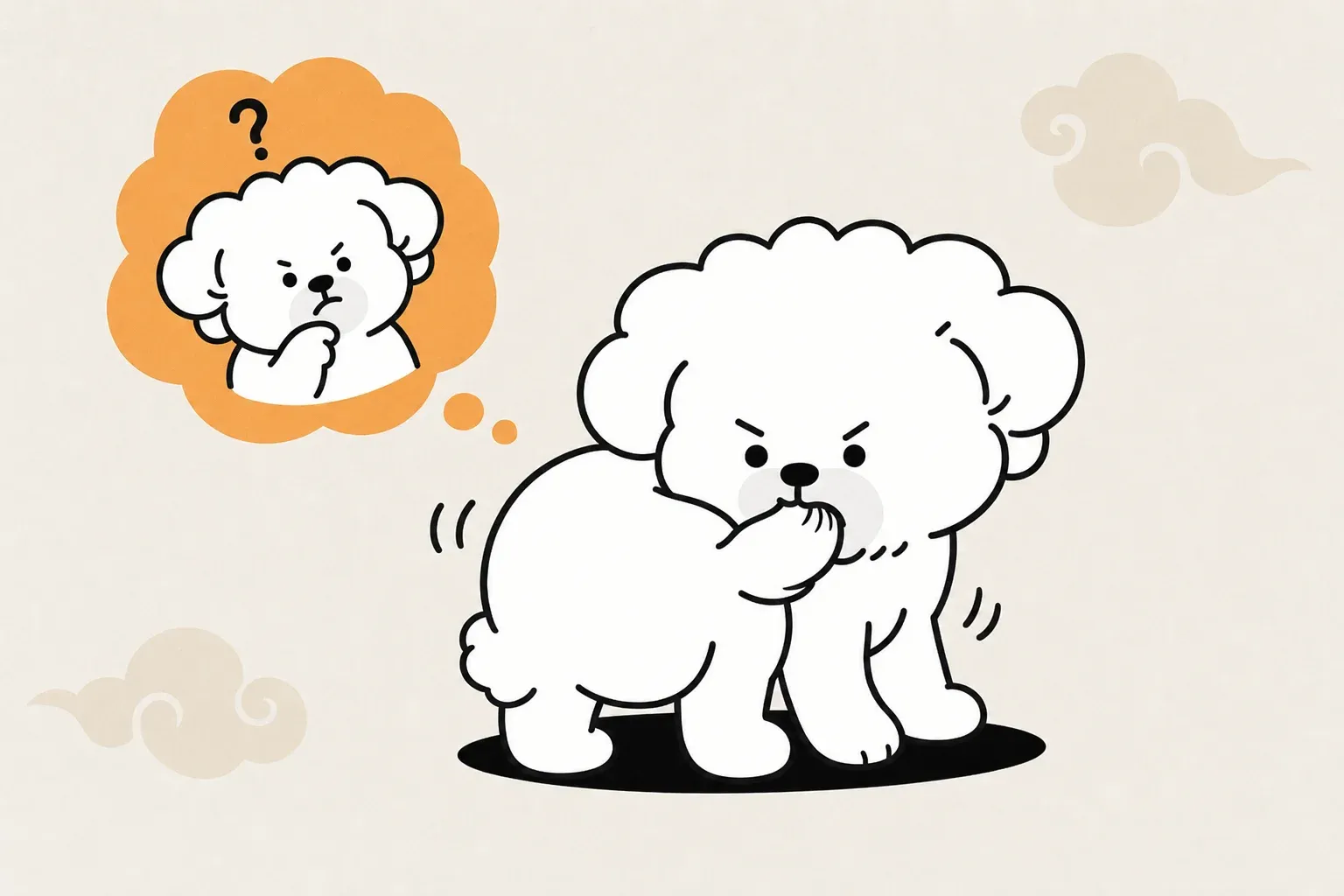
That Funny Spinning Habit — Is It Really Just Fun?
There is probably no more universally relatable dog moment than watching your dog spin in frantic circles chasing the fluffy thing attached to their own rear end. It looks ridiculous, it usually gets a laugh, and for a few seconds it seems like your dog is the most entertained being on the planet.
Most owners scroll past. A few film it and post it online. Almost nobody thinks twice.
That’s understandable — because most of the time, especially with puppies, a quick tail-chasing episode is genuinely harmless. But “most of the time” is doing a lot of work in that sentence. Dog tail chasing behavior exists on a wide spectrum, from a curious puppy discovering their own body to an adult dog locked in a compulsive loop that signals real physical or psychological distress.
The tricky part? Both ends of that spectrum can look identical from the couch.
A Behavior Every Dog Owner Has Seen
Tail chasing shows up across all breeds, ages, and temperaments. Puppies do it because they haven’t yet realized the tail is theirs. Bored dogs do it because they have nothing better to focus on. Anxious dogs do it as a self-soothing ritual. And some dogs do it because something hurts or itches at the base of the tail — and spinning toward it is the only way they know to investigate.
Understanding why your specific dog is doing it is the first step to knowing whether to laugh it off or pick up the phone and call your vet.
The Line Between Play and Problem
Behaviorally, the key distinction isn’t whether the behavior happens — it’s how it happens. Playful tail chasing tends to be brief (under 10–15 seconds), easy to interrupt with a word or a treat, and followed by normal behavior. The dog seems light, bouncy, and aware of their surroundings.
Problem tail chasing looks different: the dog seems locked in, doesn’t notice distractions, continues past the point of exhaustion, bites down when they catch the tail, or returns to the behavior immediately after being interrupted. If that description sounds familiar, keep reading.
When Tail Chasing Becomes a Concern
5 Warning Signs That Go Beyond Play
Any one of the following should shift tail chasing from “cute habit” to “worth investigating”:
- Frequency is increasing. The behavior that happened once a week now happens daily, or multiple times per day.
- Duration is extending. Episodes last longer than 30 seconds or seem to end only from exhaustion rather than choice.
- The dog cannot be interrupted. Calling their name, offering a high-value treat, or touching them doesn’t break the cycle.
- Tail damage is present. Hair thinning, raw skin, scabbing, or open wounds at the tail tip or base.
- Other behavioral changes accompany it. Increased anxiety, reduced appetite, disturbed sleep, or sudden aggression around the tail area.
When Chasing Turns to Biting and Self-Injury
Dogs that graduate from chasing to biting their tail are crossing into self-injurious territory. The dog chasing tail and biting it pattern is particularly concerning because it creates a feedback loop: the bite causes pain or irritation, which draws the dog’s attention back to the tail, which triggers more biting.
Physically, repeated trauma to the tail causes hair loss, skin breakdown, and secondary bacterial infection. In severe cases, tissue damage becomes significant enough to require veterinary intervention, and in rare cases, partial tail amputation is performed when infection becomes uncontrollable.
If you’re seeing active biting — not just chasing — the timeline for a vet visit shortens considerably.
Puppies vs. Adult Dogs: Same Behavior, Different Meaning
Age is one of the most useful filters for interpreting tail chasing.
Puppies under 4 months frequently chase their tails as part of normal sensorimotor exploration. Their peripheral awareness is still developing, and the moving object attached to their hindquarters is genuinely novel. This typically resolves on its own as their nervous system matures, usually by 4–6 months. It requires no intervention other than basic redirection and age-appropriate stimulation.
Adult dogs with no prior history who suddenly begin tail chasing are a different clinical picture. Adult onset tail chasing almost always has a triggering cause — physical discomfort, a significant change in environment, or the beginning of a compulsive behavioral pattern. It does not resolve on its own and warrants investigation.
Senior dogs who develop late-onset tail chasing may be experiencing cognitive decline, chronic pain, or sensory changes. Canine cognitive dysfunction is a recognized trigger for new-onset repetitive behaviors in older dogs, and distinguishing CCD from a purely behavioral or pain-related cause requires veterinary evaluation. The differential is wider and a veterinary workup is more urgent.
Sudden Onset: Why Did This Start Out of Nowhere?
“Dog chasing tail all of a sudden” is one of the most searched variations of this topic — and for good reason. When a dog with no history of the behavior suddenly starts spinning toward their tail, it almost always points to something physical:
- A flea infestation causing intense itching at the base of the tail (fleas concentrate in this region)
- Anal gland fullness or impaction causing pressure and discomfort
- A localized skin infection, hot spot, or allergic reaction
- A nerve impingement or injury affecting sensation in the tail or hindquarters
Sudden onset also overlaps with nighttime tail chasing, which some owners notice starts specifically after dark. This timing matters: dogs tend to be calmer and less stimulated at night, meaning low-level physical discomfort that was masked by daytime activity becomes more noticeable. If your dog chases their tail at night but is fine during the day, a physical cause is the most likely explanation.
7 Reasons Your Dog Chases Their Tail
Understanding the cause is the only way to choose the right response. These seven categories cover the overwhelming majority of cases.
Boredom and Excess Energy
The most common cause in physically healthy, young-to-middle-aged dogs. Dogs require significantly more mental and physical stimulation than most owners provide. A Border Collie that needs 90 minutes of active exercise and mental work receiving only a 20-minute walk will generate behavioral outlets — tail chasing being one of the more visible ones.
Signs this is the cause: behavior occurs primarily after long periods of inactivity, resolves when exercise and enrichment are increased, and the dog is otherwise behaviorally normal.
For dogs with excess energy, structured hyperactivity and calm training protocols can be more effective than simply increasing exercise volume.
Stress and Anxiety
Anxious dogs often develop repetitive motor behaviors as a coping mechanism. Tail chasing in this context functions similarly to a person clicking a pen repeatedly under stress — it’s not purposeful, but it provides a kind of sensory rhythm that temporarily reduces arousal.
Common anxiety triggers include changes in household structure, new pets or people, construction noise, schedule disruption, or underlying separation anxiety. The behavioral pattern tends to occur during or shortly after the stressor, and the dog may show other anxiety signs: yawning, lip licking, panting, or whale eye.
Fleas, Ticks, and Parasites
Ectoparasites — particularly fleas — concentrate at the base of the tail, causing intense itching in a spot the dog cannot scratch with their paws. Spinning toward the tail to bite at the itch is a natural but frustrating response. Many owners don’t notice the fleas themselves; they notice the behavior.
A thorough physical check of the tail base, around the anus, and across the lower back is the first diagnostic step. Flea dirt (black specks that turn reddish-brown when wet) is often the only visible sign. A comprehensive flea prevention and treatment protocol eliminates this cause reliably when applied correctly.
Skin Conditions and Allergies
Allergic dermatitis — whether environmental, food-triggered, or contact-based — can produce localized itching anywhere on the body, including the tail and hindquarters. Dog skin allergies are among the most underdiagnosed conditions in veterinary dermatology precisely because the secondary behavior (scratching, biting, spinning) is what owners notice, not the underlying skin changes.
Look for: redness, thickening, flaking, greasiness, or a distinct smell in the affected area. Seasonal patterns (worsening in spring or fall) suggest environmental allergens; year-round presentation with dietary correlation suggests food allergy.
Anal Gland Problems
The anal glands are two small scent-producing sacs located on either side of the anus at approximately the 4 and 8 o’clock positions. When they fail to empty naturally during defecation, they fill, become uncomfortable, and sometimes impacted or infected. Dogs respond by scooting, licking at the base of the tail, and in some cases spinning toward their hindquarters.
Anal gland problems are extremely common — particularly in small breeds — and frequently go unrecognized because owners attribute the behavior to other causes. If your dog’s tail chasing behavior is accompanied by scooting or excessive licking of the rear end, anal glands are a high-probability explanation.
Pain, Joint Issues, or Neurological Problems
Tail chasing as a pain response is less common than the causes above but is a critical differential, particularly for adult and senior dogs with sudden onset. Vertebral or nerve pain affecting the lumbar spine or sacrum can cause abnormal sensation in the tail — numbness, tingling, or referred pain — that the dog investigates by turning toward it.
Understanding how dogs communicate pain through behavior is essential context here: dogs almost never vocalize pain until it is severe. Behavioral changes — including new repetitive motor patterns — are often the first and only signal. Other signs that point to a neurological or pain cause include: hind limb weakness, stumbling, changes in posture, or reluctance to have the tail touched or lifted.
Canine Compulsive Disorder (CCD)
Canine Compulsive Disorder is the veterinary behavioral diagnosis for repetitive, stereotyped behaviors that interfere with normal functioning. It is the direct analog to Obsessive-Compulsive Disorder in humans and is thought to involve similar neurobiological mechanisms, including dysregulation in serotonergic and dopaminergic pathways in the basal ganglia.
Tail chasing is one of the most recognized manifestations of CCD, alongside flank sucking, pacing, fly snapping, acral lick dermatitis, and compulsive digging behavior. The behavior in true CCD is:
- Present even when all physical causes have been ruled out
- Resistant to interruption and redirection
- Progressive without intervention
- Responsive (at least partially) to behavioral modification and, in moderate-to-severe cases, pharmacological treatment
CCD is a diagnosable medical condition — not a personality quirk, not a training failure, and not something that resolves on its own. If you suspect CCD, a board-certified veterinary behaviorist is the appropriate specialist.
Breeds More Prone to Compulsive Tail Chasing
Bull Terriers, German Shepherds, and Other High-Risk Breeds
The strongest genetic evidence for breed-specific compulsive tail chasing comes from Bull Terriers. Research by Moon-Fanelli and colleagues (published in the Journal of Veterinary Behavior) identified tail chasing as a heritable compulsive behavior in Bull Terriers, with affected dogs showing earlier onset and more severe presentations when bred from affected lines. Studies estimate that up to 85% of Bull Terriers who chase their tails do so compulsively rather than playfully.
German Shepherds represent the second most studied breed for CCD-related tail chasing. Their high neural arousal, combined with the fact that they are frequently placed in understimulating environments relative to their cognitive and physical needs, creates conditions where compulsive outlets develop. Other breeds with elevated risk include:
| Breed | CCD Manifestation | Risk Factor |
|---|---|---|
| Bull Terrier | Tail chasing, spinning | Strong genetic predisposition |
| German Shepherd | Tail chasing, pacing | High drive + understimulation |
| Australian Cattle Dog | Tail chasing, flank biting | Herding drive redirected |
| Belgian Malinois | Spinning, tail chasing | Extreme arousal baseline |
| Doberman Pinscher | Flank sucking, tail chasing | Genetic component documented |
| Labrador Retriever | Tail chasing (less severe) | Food/play motivated, typically mild |
Small Breeds vs. Large Breeds
Small breeds are proportionally more prone to anal gland impaction (a physical trigger for tail chasing), and tend to develop habitual behaviors more readily when confined or under-exercised. However, because small breed tail chasing is often less dramatic and easier to physically interrupt, it tends to go untreated longer.
Large, high-drive working breeds are at greater absolute risk for true CCD-related tail chasing. The gap in stimulation needs between what these dogs require and what many domestic environments provide is substantial, and CCD frequently emerges at that gap.
How to Help Your Dog Stop Chasing Their Tail
Environmental Enrichment: Exercise, Play, and Mental Stimulation
For boredom-driven or energy-driven tail chasing, the primary intervention is a structured increase in enrichment. Generic advice like “walk more” is insufficient — the specifics matter.
Physical exercise: Most medium-to-large breeds require a minimum of 45–90 minutes of active, not passive, exercise daily. Active means running, fetch, swimming, or structured play — not slow walking. For high-drive breeds, this baseline is higher.
Mental stimulation: Research in applied animal behavior consistently shows that 15–20 minutes of focused mental work (nose work, puzzle feeders, training sessions) is more exhausting for a dog than 30 minutes of walking. Rotate puzzle types to prevent habituation.
Structured daily routine: Dogs with predictable schedules — fixed wake, feed, exercise, and sleep times — show consistently lower cortisol baselines and fewer stress-related behavioral problems.
A sample daily enrichment structure for a medium-energy adult dog:
- Morning: 30-minute active walk or backyard fetch
- Midday: 15-minute sniff walk or scatter feeding in the yard
- Evening: 45-minute active exercise + 10-minute training session
- Night: Chew or food puzzle before sleep
3-Step Behavior Redirection Training
When the behavior occurs, this protocol replaces punishment (which increases anxiety and often worsens compulsive behavior) with structured redirection:
Step 1 — Interrupt without reinforcing. Use a neutral sound (a single clap, not the dog’s name in a high-pitched voice) to break the dog’s focus. Do not chase the dog, grab the tail, or physically restrain. The goal is a momentary pause, not confrontation.
Step 2 — Redirect to an incompatible behavior. Immediately ask for a behavior the dog knows well: “sit,” “down,” or “find it” (scatter a few treats on the ground). The dog cannot chase their tail while sniffing the floor or holding a sit. Reward the incompatible behavior generously.
Step 3 — Remove the trigger or address the environment. After redirection, provide an appropriate outlet: a chew toy, a food puzzle, or a short training sequence. The goal is to channel the underlying energy or anxiety into something productive rather than simply suppressing the surface behavior.
Consistency across all household members is essential. If one person redirects and another laughs and reinforces the spinning, the behavior will persist.
What NOT to Do When Your Dog Chases Their Tail
Common owner responses that reliably make the situation worse:
- Laughing or giving attention during an episode. Dogs are sensitive to social reinforcement. If tail chasing reliably produces attention — even laughter — it becomes operantly conditioned.
- Physically punishing the behavior. Punishment increases stress and anxiety, which are often the underlying drivers of the behavior in the first place.
- Ignoring escalating severity. Watchful waiting is appropriate for mild, infrequent episodes in puppies. It is not appropriate for adult dogs showing increasing frequency, duration, or self-injury.
- Assuming it will resolve on its own. True CCD is progressive without intervention. Medical causes (fleas, anal glands, allergies) also do not self-resolve.
When to See the Vet
5-Point Self-Assessment Checklist
Before your appointment, run through this checklist. Any “yes” answer warrants a vet visit within the week; multiple “yes” answers warrant one sooner.
- My dog bites or wounds their tail during episodes
- The behavior started suddenly in a dog with no prior history
- The behavior has increased in frequency or duration over the past 2–4 weeks
- My dog cannot be interrupted during an episode
- The behavior is accompanied by other symptoms: scooting, scooting, hind limb weakness, skin changes, changes in defecation, or behavioral shifts
If none of the above apply and your puppy is under 5 months old with infrequent, brief episodes, watchful waiting with enrichment is a reasonable first step.
What to Tell Your Vet (and How to Document the Behavior)
Veterinarians assessing tail chasing benefit enormously from behavioral documentation that owners rarely think to bring. Before your appointment:
Video the episodes. A 30–60 second clip showing the behavior is worth more diagnostically than a verbal description. Capture: how the episode starts, whether it can be interrupted, and what follows.
Log frequency and duration. Keep a simple diary for 1–2 weeks: time of day, duration, what preceded the episode (exercise level, stress events, feeding), and what stopped it (if anything).
Note concurrent symptoms. Any scooting, licking of the rear or tail base, skin changes, changes in gait or posture, or shifts in appetite and sleep.
This information allows the vet to differentiate between a behavioral presentation that needs a behavior specialist and a physical presentation that needs dermatological, parasitological, or neurological workup — and saves both you and your dog from unnecessary testing.
Understanding how to read your dog’s body language more broadly can also help you catch subtle signs that something is wrong before it escalates to tail chasing.
References
- 1. Canine Compulsive Disorder – Tufts Animal Behavior Clinic
- 2. Compulsive Behaviors in Dogs – VCA Animal Hospitals
- 3. Why Do Dogs Chase Their Tails? – PetMD
- 4. Bull Terrier Compulsive Tail Chasing – Moon-Fanelli et al., Journal of Veterinary Behavior
- 5. Canine Acral Lick Dermatitis and Compulsive Disorders – Veterinary Clinics of North America
- 6. Canine Compulsive Disorder: Genetics, Neurobiology, and Treatment – Overall KL
FAQ
Is it normal for dogs to chase their tails?
What breeds are most prone to tail chasing?
Why did my dog suddenly start chasing their tail?
At what age do dogs stop chasing their tails?
Is it cruel to stop a dog from chasing their tail?
Related Articles
Dog Fear of Strangers: Causes and Desensitization Training
Learn why your dog fears strangers, assess severity from mild to severe, and follow a vet-backed desensitization protocol to build your dog's confidence.
Is Your Dog Stressed? Read the Signs and Help Them Cope
Recognize the signs of stress in dogs — calming signals, behavioral and physical symptoms — with proven relief strategies and a self-assessment checklist.
Dog Growling: How to Read Every Type and Respond the Right Way
Learn the dog growling meaning behind every rumble—play, warning, pain, and more. Includes a body language checklist, age-specific guide, and when to call a professional.