 Cirius Petpedia
 How to Introduce a Second Dog: From First Meeting to Harmonious Living
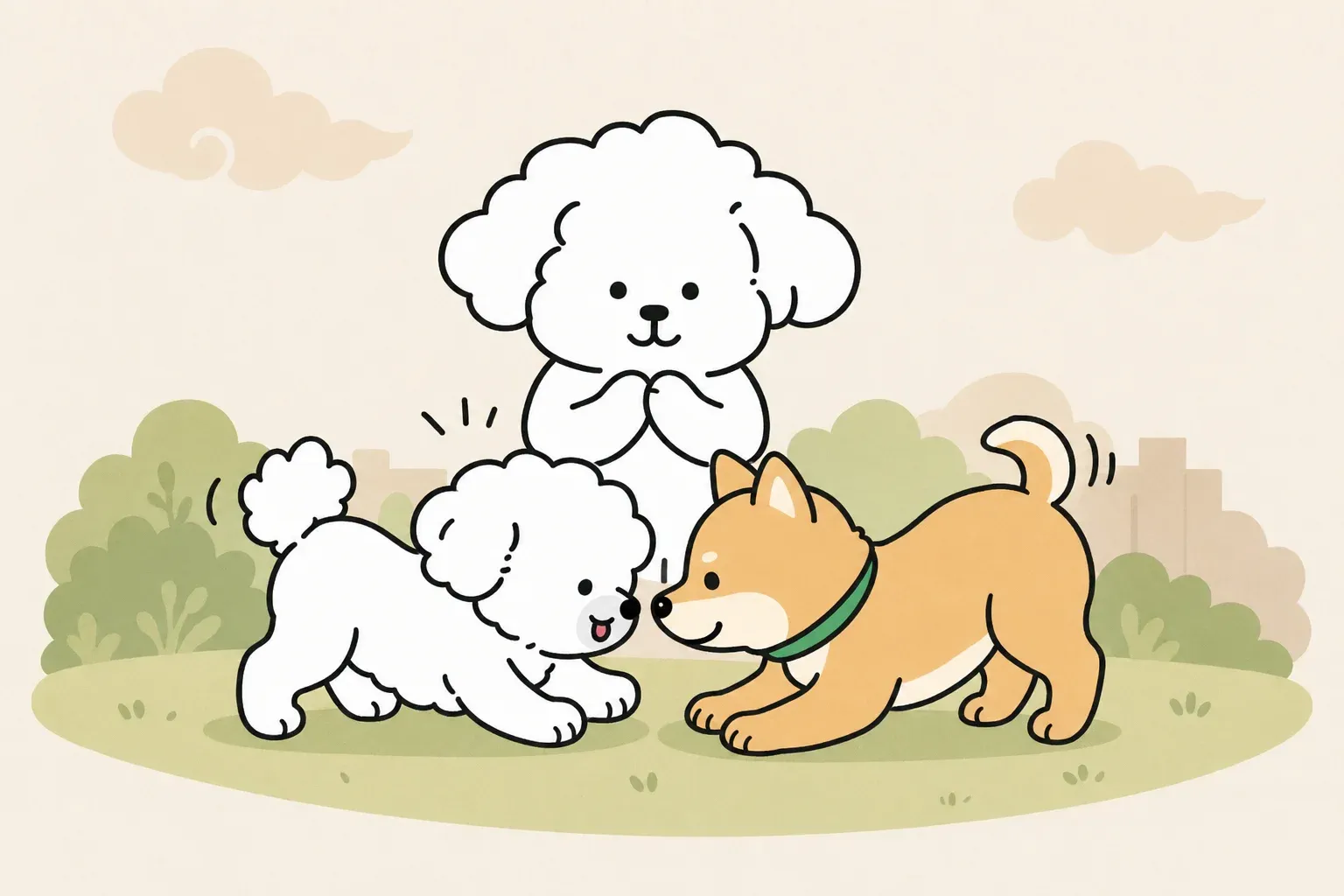
Bringing a second dog home is one of the most exciting decisions a dog owner can make — and one of the most likely to go sideways without a plan. The good news is that the outcome depends far less on individual dog personalities than on the process itself. Dogs that are introduced slowly and systematically, with careful management of space and resources, almost always find a workable relationship. Dogs that are thrust together and expected to figure it out on their own frequently don’t.
This guide gives you a complete, timeline-based process from the day before your new dog arrives through the first month and beyond. It integrates the parallel walking technique, the crate-gate-rotate management framework, and body language interpretation into a single coherent sequence — covering what most other guides address separately, if at all.
Why a Proper Dog Introduction Matters
Multi-dog households are common. According to the American Pet Products Association, roughly 44% of dog-owning US households have two or more dogs. What the statistics don’t capture is how many of those households are managing ongoing tension, resource disputes, or outright aggression because the introduction was handled poorly.
The consequences of a rushed or mismanaged introduction are significant. A bad first encounter creates a learned negative association — the resident dog now has experiential evidence that this particular dog is a threat. Reversing that association takes far more time and effort than building a positive one from scratch. In some cases, dogs introduced poorly develop persistent aggression that requires professional behavioral intervention or permanent managed separation.
The introduction process described here works because it matches the pace at which dogs actually process social information: through scent first, then distance visual contact, then proximity with exits available, and finally shared space. Each stage gives both dogs time to adjust their threat assessment downward before the next increase in social demand.
Before the Introduction: Setting Up for Success
The decisions you make before your new dog arrives determine much of what happens next.
Evaluating Your Current Dog’s Readiness
Not every dog is a good candidate for a canine companion, and honestly assessing your resident dog before you commit saves both dogs from a difficult experience.
Consider your dog’s history with other dogs. A dog that has reliably positive interactions at the dog park, on walks, or with known dogs in social settings is a strong candidate. A dog that has shown consistent aggression, significant fear responses, or inability to disengage from other dogs warrants careful consultation with a professional trainer — and possibly a structured socialization assessment — before you proceed.
Age and health matter too. A senior dog with joint pain or hearing loss may find a rambunctious puppy genuinely overwhelming rather than enriching. A dog managing separation anxiety or fear-based behavioral issues should have those addressed first — adding a second dog to an already anxious dog’s environment typically amplifies the problems rather than resolving them.
Choosing a Compatible Second Dog: Gender, Age, Size, and Temperament
Gender pairing guidance from VCA Hospitals aligns with what most experienced trainers observe in practice:
- Male + female (both neutered): The smoothest pairing in the majority of cases. Competition for social position is reduced when sex differs.
- Male + male (both neutered): Manageable with patience, particularly if energy levels are similar and neither has significant resource-guarding history.
- Female + female: Statistically the most challenging combination. Female dogs can be strongly territorial and persistent in conflict — same-sex female pairs require the most thorough introduction protocol and the most consistent long-term resource management.
Age compatibility is often underestimated. A two-year-old high-drive Border Collie and a nine-year-old Basset Hound have fundamentally different energy levels and needs — what the younger dog interprets as play is often experienced by the older dog as harassment. The broadest compatibility typically exists between dogs within two to three years of each other.
Size differences aren’t inherently problematic, but they create safety considerations. A Saint Bernard and a Chihuahua can coexist comfortably — but play styles need to be compatible, and supervision is essential until play patterns are well established.
Temperament is the most predictive factor of all. A confident, socially experienced dog generally adapts to most partners. A dog with low impulse control, high prey drive, or significant resource-guarding history requires more careful matching and more structured management.
Preparing Your Home: Separate Spaces and Individual Supplies
Before your new dog arrives, set up the physical environment to support a gradual introduction:
Two fully separate living areas: The new dog needs a space of its own — a room with a door that closes. This isn’t temporary housing; it’s the base of operations for the scent and visual introduction phases.
Individual supplies, never shared initially:
- Separate food bowls, placed in different rooms
- Separate water stations
- Separate crates or designated resting spots
- Separate leashes and collars stored in different locations
High-value items removed from common areas: Chews, bones, and favorite toys are the most common triggers for resource-guarding during the introduction period. Remove them from shared spaces entirely for the first two to four weeks. Individual chew sessions can happen in separate rooms with the door closed.
Baby gates or exercise pens: These become the visual barrier tool for Step 3 of the introduction. Have them in place before Day 1.
Step 1: Scent Introduction (Days 1–3)
Before the two dogs ever see each other, they should know each other’s smell. This phase costs nothing and prevents a significant amount of early conflict.
How to Exchange Scents
The mechanics are simple. On the day before or the morning of your new dog’s arrival:
- Rub a soft cloth or old t-shirt along your new dog’s cheeks, neck, and flanks — where scent glands concentrate.
- Place that cloth near your resident dog’s food bowl or resting area. Not on top of the food bowl, but close enough that the dog encounters the scent while doing something it values.
- Do the reverse: take a cloth with your resident dog’s scent and place it in the new dog’s designated room.
Room rotation is the more thorough version of this technique. For thirty to sixty minutes, allow your new dog into a room your resident dog normally occupies, while the resident dog is elsewhere. The new dog can investigate and deposit scent; the resident dog later enters and processes the new scent without the social pressure of a physical presence. Then swap back. This approach allows both dogs to form detailed scent-based impressions of each other’s presence before any visual contact occurs.
Reading Your Dog’s Reaction to New Scents
Your resident dog’s initial response to the new dog’s scent tells you a lot about what to expect during visual introduction.
Positive signs: Investigates curiously without freezing, soft body posture, may sniff and then return to normal activity, shows interest without sustained fixation.
Signs requiring more time in this phase: Stiff posture while investigating, low growling at the scent item, raised hackles, fixated staring at the cloth, or avoidance of the area where the cloth was placed. These responses are not disqualifying — they tell you the scent phase needs more time before advancing.
Two to three days of scent exchange is the minimum for a smooth transition to visual introduction. If your resident dog is still reacting strongly to the scent items at Day 3, extend this phase by another two to three days.
Step 2: The First Meeting on Neutral Ground
The first face-to-face meeting should never happen in your home or yard. The resident dog has a territorial claim to those spaces, and introducing a stranger directly into claimed territory triggers a defensive response that works against you.
Choosing the Right Location and Safety Setup
The location should be genuinely neutral: a park neither dog has visited recently, a school parking lot on weekends, an empty field. Both dogs should arrive having been exercised — a dog that has already spent some energy on a walk approaches new encounters with less reactive intensity.
Equipment setup for the first meeting:
- Both dogs on a standard four-to-six foot leash, not a retractable
- One handler per dog — do not attempt a two-dog first meeting solo
- No flexi-leads, no off-leash, no fenced-in enclosure where escape isn’t possible
- Have high-value treats accessible to both handlers
Begin with the dogs at least 20 to 30 feet apart, both moving on a parallel path in the same direction with handlers between the dogs. This is the beginning of the parallel walk.
The Parallel Walk Technique
Parallel walking is the most effective tool in the initial meeting toolkit. Rather than bringing the dogs face-to-face immediately, both dogs walk in the same direction at matching paces, with enough distance between them that neither is in the other’s personal space.
The reason this works is behavioral: two dogs moving forward together do not need to make a decision about each other. There is no frontal approach, no staring contest, no territorial challenge. The movement itself reduces arousal and provides a shared activity that is naturally calming.
How to progress:
- Begin parallel with 20 to 30 feet between the dogs. Allow both dogs to simply walk and notice each other’s presence.
- Over five to ten minutes, gradually close the gap — but only while both dogs are moving with loose body posture and not fixating on each other.
- At ten to fifteen feet apart, allow brief glances, then redirect each dog’s attention forward or to the handler.
- When the dogs are five to six feet apart and both showing relaxed posture, allow a brief approach: a curved path (never head-to-head), no more than three to five seconds, then separate and continue walking.
- The brief approach-and-retreat pattern is repeated, with each positive contact building the association: this other dog is not a threat.
The entire parallel walk process typically takes 20 to 45 minutes for a successful first meeting. Do not rush to off-leash contact.
Positive Signals vs. Warning Signs to Watch For
Understanding dog body language during the introduction determines whether you advance, hold, or separate.
Positive signals — keep going:
| Signal | What It Means |
|---|---|
| Loose, wagging tail at mid-height | Relaxed interest, not alarm |
| Soft, squinting eyes | Non-threatening engagement |
| Play bow (front end lowered, rear up) | Clear invitation to interact socially |
| Curved approach path | Non-confrontational — dogs curve naturally when comfortable |
| Brief sniff and disengage | Healthy social investigation without fixation |
| Returning to sniffing the ground | Self-regulation, low arousal |
Warning signs — increase distance immediately:
| Signal | What It Means |
|---|---|
| Stiff, still posture with weight forward | Preparing for conflict |
| Tail raised high and rigid | Dominance signal, elevated arousal |
| Hard, unblinking stare | Threat posture |
| Hackles raised from shoulders to tail | High arousal, possible fear or aggression |
| Lips pulled back with tight mouth | Pre-aggression signal |
| Low, sustained growl | Explicit warning — respect it |
| Lunging toward the other dog | Loss of impulse control |
A warning sign during the parallel walk means increase the distance, not stop the process. Back up to the point where both dogs were relaxed and continue from there. The first meeting does not need to end with the dogs touching — a calm parallel walk without conflict is a successful first meeting.
Step 3: Gradual Home Integration
If the neutral-ground meeting goes well, bring both dogs home — in separate vehicles if possible, or with one dog loaded first and the other later so they don’t share crate space in the car immediately.
Day 1 at Home: Separate Spaces and Alternating Exploration
For the first 24 hours, the dogs should be in completely separate areas of the home. This is where the crate-gate-rotate methodology begins.
The crate-gate-rotate framework (developed and refined in professional canine rehabilitation settings) manages space by giving each dog exclusive access to parts of the home in turns, always separated by a physical barrier when not in supervised sessions:
- Crate: Each dog has its own crate as a safe, private retreat. Crate training for the new dog should begin immediately if not already in place. See our crate training guide for a step-by-step protocol.
- Gate: Baby gates or exercise pens create visual access while preventing physical contact. This is the primary management tool for Days 2 through 14.
- Rotate: The dogs alternate between the secured area (crate or gated room) and the main living space, with each experiencing the other’s scent in the shared space without simultaneous physical presence.
The first afternoon at home: let the new dog explore the main living area while the resident dog is in its crate or secured room. Then swap. Both dogs are processing each other’s scent in the home environment — building familiarity without the social pressure of being watched.
Feed separately, always: Both dogs eat in separate rooms with the door closed or the gate in place. Food is the most common trigger for early-stage conflict. Do not test this boundary, even if the dogs seemed relaxed during the first meeting.
Week 1: Supervised Interactions with Increasing Duration
Beginning on Day 2 or 3, introduce brief supervised sessions with both dogs in a shared space. Keep a gate or door nearby as a ready escape route.
How to run early supervised sessions:
- Start in a room that is not the resident dog’s core territory (not their primary sleeping spot or feeding area).
- Have both dogs on leash initially. This gives you physical control without creating tension — keep the leash loose; a tight leash communicates anxiety to the dog.
- Five minutes maximum for the first session. End it before either dog shows stress signals.
- Increase session duration by two to three minutes per day as long as both dogs continue showing relaxed body posture.
During week one, remove all high-value items from the shared space before sessions: bones, chews, favored toys, and food bowls. Resource guarding typically triggers in the presence of something worth competing over. Removing the competition removes the most common flashpoint.
Watch for signs of appropriate social interaction: reciprocal sniffing, parallel movement without tension, brief play bows, and mutual disengagement. These tell you the relationship is building on a positive foundation.
Weeks 2–4: Transitioning to Unsupervised Coexistence
By the end of Week 1, most pairs are ready to begin transitioning from fully supervised sessions to periods of monitored but not directly overseen coexistence. The distinction matters: monitored means you are in the home and checking in every few minutes, not watching every second. Supervised means eyes on both dogs continuously.
The transition sequence:
- Week 2: Supervised sessions of 15 to 30 minutes, multiple times per day, with brief monitored periods (five to ten minutes) when both dogs are physically tired and showing settled behavior.
- Week 3: Monitored coexistence for most of the day when you are home. Return to separate gated spaces when you leave the house or cannot pay attention.
- Week 4+: Unsupervised coexistence when you leave the house, once you have consistent evidence — across at least five to seven days — that both dogs are relaxed, not competing for resources, and choosing to rest without fixating on each other.
The gate remains a useful tool indefinitely, not just during the introduction period. Many successful multi-dog households maintain gated bedroom access for sleeping, or gate feeding areas permanently, because it removes the low-level competition that accumulates into long-term tension.
Common Problems and How to Solve Them
Growling and Resource Guarding
Growling during the introduction period is communication, not failure. A dog that growls at the other dog near the food bowl is accurately communicating that this proximity feels threatening. The appropriate response is to increase management — not to punish the growl, which removes the warning signal without removing the underlying tension.
If you observe resource guarding behavior:
- Feed in completely separate rooms with the door closed, not just at opposite ends of the same room.
- Remove all chews, bones, and high-value toys from shared spaces for at least two additional weeks.
- Supervise greetings near any remaining items of value (water bowls, resting spots, toys).
- Reinforce the guarding dog with high-value treats for any moment it tolerates the other dog’s presence near a valued item at a distance — this is the beginning of counter-conditioning.
For persistent or escalating resource guarding, structured intervention is available. A detailed protocol for addressing the behavior is in our resource guarding guide.
Excessive Barking or Over-Excitement
Some dogs manage the stress of introduction through arousal rather than tension — they bark frantically, lunge forward in excitement rather than aggression, and seem unable to settle in the other dog’s presence. This is not aggression, but it creates a problem: the other dog often reads high-arousal behavior as a threat, which triggers a defensive response.
Management tools for over-excited dogs:
- Exercise before supervised sessions: A dog that has already walked 45 minutes or done a training session approaches new social situations with lower baseline arousal.
- Engage the excited dog’s brain: Ask for a few obedience behaviors (sit, down, stay) before allowing any approach. The cognitive engagement briefly reduces arousal by redirecting prefrontal cortex activity.
- Short sessions, high success rate: End every session before over-excitement peaks. If the dog starts barking at the gate, the session was ten seconds too long. End it calmly and try again after ten minutes.
For dogs with persistent barking during gate sessions, the techniques covered in barking management training apply directly — the triggering context differs but the desensitization method is the same.
Your First Dog Showing Depression or Withdrawal
The introduction should enrich the resident dog’s life, not diminish it. But some resident dogs respond to the new arrival with withdrawal, appetite changes, or visible sadness — what looks like depression and often has a similar physiological basis: elevated cortisol, disrupted routine, and reduced owner attention.
This response is more likely when the resident dog is older, was previously the only dog, or is strongly bonded to a single owner. The behavior the resident dog interprets as jealousy is actually competition for the social resource it values most: you.
Practical measures to protect the first dog’s adjustment:
- Maintain all of the resident dog’s established routines: feeding time, walk time, one-on-one play sessions, and sleep schedule.
- Give the resident dog priority in greetings — enter the room, greet the resident dog first, then attend to the new dog. This maintains the established social order.
- Schedule dedicated one-on-one time with the resident dog daily — a solo walk, a training session, an individual play session. This time is separate from any activities that include both dogs.
If the resident dog’s appetite or activity level has not returned to baseline within two to three weeks of the new dog’s arrival, a veterinary check-in is warranted. Sustained stress has immune and physiological consequences beyond behavioral change.
When Introduction Isn’t Working: Red Flags and Professional Help
Most introductions go through friction before they find a rhythm. The following are normal and expected: brief growling, stiff posture during early sessions, avoidance of the other dog, and some initial resource tension. These resolve with consistent management and time.
The following are signs that the process needs to stop, reset, and potentially involve professional help:
Immediate red flags:
- Any bite that breaks skin
- Sustained attack in which one dog does not disengage despite the other submitting
- One dog pinning and holding the other in a sustained bite
- Escalating aggression across sessions rather than decreasing over time
Cumulative warning signs:
- More than three incidents of contact aggression within the first two weeks
- Persistent stress signs in either dog beyond two weeks: appetite loss, hiding, changes in elimination habits, inability to relax in any shared space
- One dog consistently shutting down (freezing, trembling, refusing to engage) in the presence of the other
When conflict occurs, note the context: feeding proximity, a specific toy present, spatial proximity during rest, a specific trigger moment. This information is essential for a professional assessment.
An important physiological point: cortisol (the primary stress hormone) remains elevated for up to 72 hours following a conflict. A dog involved in an aggressive incident is not ready to be re-exposed to the other dog the next morning. The 72-hour window is a minimum, not a guideline to ignore.
For professional support, look for:
- CPDT-KA (Certified Professional Dog Trainer — Knowledge Assessed): the standard certification for force-free trainer qualifications
- CBCC-KA (Certified Behavior Consultant Canine — Knowledge Assessed): for complex behavioral issues
- Diplomate ACVB (Board-certified veterinary behaviorist): for cases with medical components or medication consideration
A veterinary behaviorist can also evaluate whether one or both dogs would benefit from short-term pharmacological support — not to sedate the dogs, but to lower baseline anxiety to a level where behavioral intervention can be effective.
Long-Term Tips for a Happy Multi-Dog Home
A smooth first month does not guarantee a problem-free multi-dog household forever. Long-term harmony depends on ongoing environmental management and attention to each dog as an individual.
Separate feeding stations, permanently: Even dogs that have lived together for years can develop food-related tension when a new stressor arises (illness, a houseguest, a schedule change). Permanent separate feeding removes the most common and preventable source of adult-household conflict.
Individual safe spaces for each dog: Every dog needs a place it can retreat to and not be followed — a crate left open in a quiet room, a bed in the bedroom where the other dog doesn’t sleep, a spot under a desk. These spaces become especially important when one dog is unwell, anxious, or simply needs quiet. Do not allow one dog to block the other’s access to its retreat space.
Separate training sessions: Training both dogs together looks efficient but is pedagogically inefficient. Each dog learns faster and builds a stronger owner bond in individual sessions. Joint sessions have value once both dogs know their individual cues, but they are not a substitute for one-on-one work.
Individual veterinary monitoring: Health problems in multi-dog households are sometimes caught later because behavioral changes are attributed to the social dynamic rather than examined medically. Keep each dog’s annual exams and baseline bloodwork current, and report behavioral changes to the veterinarian without assuming the other dog is the cause.
Watch for slow-building tension: Multi-dog conflict often doesn’t appear suddenly. More commonly, it builds over weeks or months through competition for resources, owner attention, or physical space. A dog that was happily coexisting a month ago and is now showing stiff posture at the gate or low growling during greetings is communicating that something has changed. Address emerging tension proactively rather than waiting for escalation.
The most successful multi-dog households are those where the owners stay interested in each dog’s individual wellbeing and continue managing the environment deliberately — not those where the dogs were simply thrown together and eventually stopped fighting. The difference between those two outcomes is usually the process used in the first four weeks.
If you are still in the planning phase — weighing whether to adopt a second dog and what to look for — our adoption preparation guide covers compatibility assessment, timing considerations, and what questions to ask a shelter or rescue before committing.
For dogs showing signs of separation anxiety that overlap with introduction stress — distress when separated from the owner, not from the other dog — the two protocols are distinct and both deserve attention. Introduction stress and separation anxiety can co-exist but have different management approaches.
References
- 1. How to Successfully Introduce Two Dogs – Animal Humane Society
- 2. How to Introduce Dogs to Each Other – PetMD (Vet-Reviewed)
- 3. Getting a Second Dog – VCA Hospitals
- 4. Introducing New Dogs Into Multi Dog Households – Aggressive Dog
- 5. Dog-to-Dog Aggression – ASPCA
- 6. Canine Body Language – AKC
- 7. Cortisol as a Stress Biomarker in Dogs – Frontiers in Veterinary Science
FAQ
How long does it take to introduce two dogs?
Does neutering help with dog introductions?
What should I do if the dogs fight during introduction?
Can I introduce a puppy to an older dog?
How do I tell the difference between play and real aggression?
Should I intervene when the dogs play-wrestle?
Related Articles
Bringing Home a New Puppy? The Complete Socialization Training Guide You Need
Learn the science behind puppy socialization windows, get a week-by-week timeline, and discover safe pre-vaccination methods with a practical category-based checklist.

Do Dogs Really Get Jealous? Signs, Causes, and Step-by-Step Solutions
Do dogs get jealous? Yes — and it escalates if ignored. Learn the 7 warning signs, scenario-specific fixes, and a 5-step DSCC correction protocol.

Is Your Dog Guarding More Than Just the Food Bowl? Types of Resource Guarding and How to Fix Them
Dog resource guarding goes beyond food bowls. Learn the 4 types, a severity assessment framework, and type-specific training protocols to stop guarding safely.