 Cirius Petpedia
 Should You Walk Your Dog in the Rain? A Step-by-Step Safety Guide
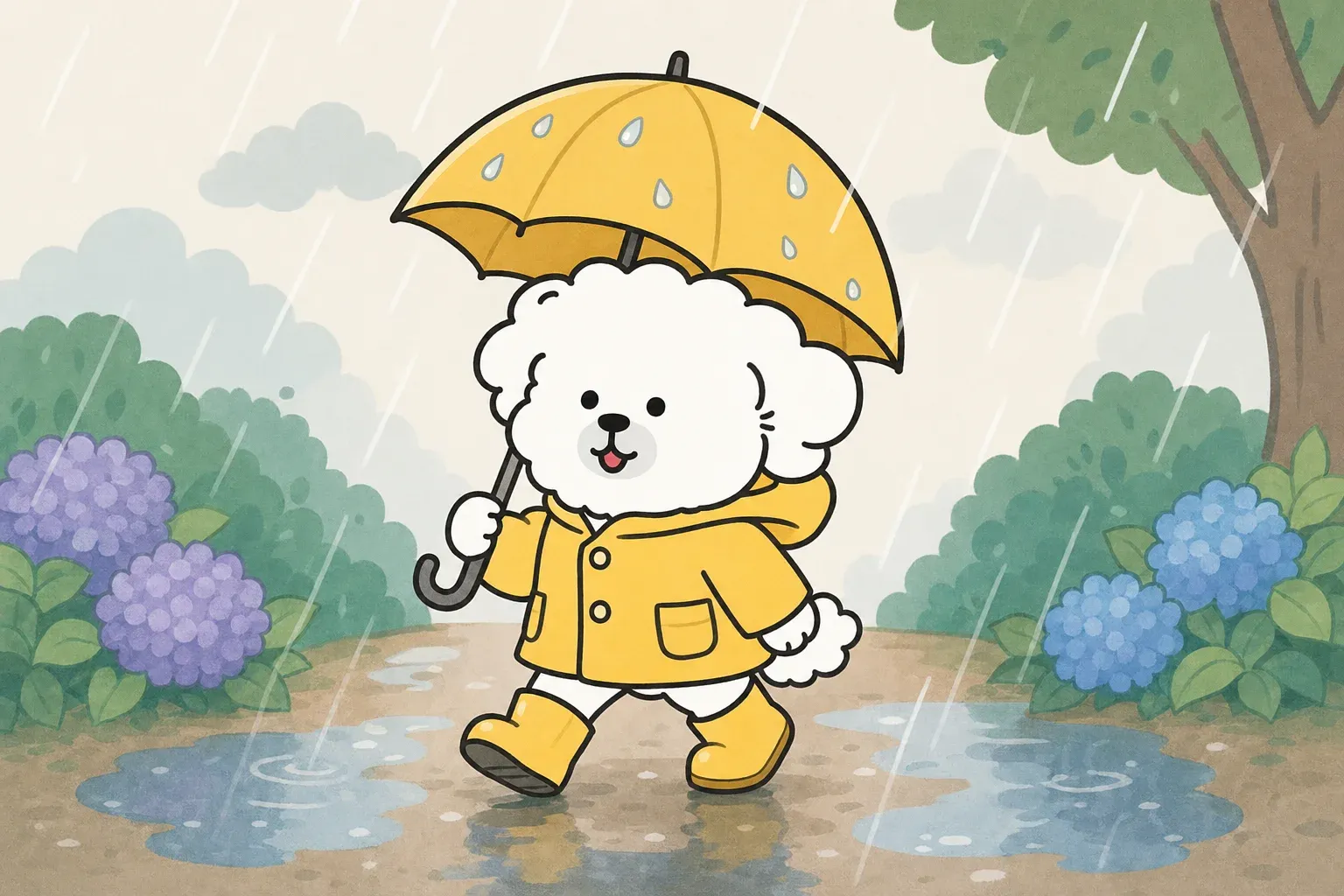
The rain started an hour ago and your dog is pacing, staring at you, clearly needing a walk — but refusing to take a single step outside. Or maybe you’re the one hesitating, wondering whether wet sidewalks and standing puddles are genuinely risky. Either way, you have questions: Should I skip the walk entirely? Is rain actually harmful? What about that puddle my dog just drank from?
This guide works through every part of a rainy walk — what to prepare, what to watch for mid-walk, how to care for your dog when you get home, and what to do when your dog would rather skip the whole ordeal.
Should You Walk Your Dog in the Rain?
The short answer is yes — light to moderate rain is not a reason to cancel a walk for most dogs. Skipping walks has its own costs: unburned energy, boredom, and for dogs on a regular toilet schedule, real physical discomfort. The decision depends on the type of rain, your dog’s individual health, and a few safety factors you can check in two minutes.
When Rain Walks Are Fine (and When They’re Not)
Go ahead in:
- Light drizzle or steady moderate rain without lightning
- Temperatures above 50°F (10°C) for most breeds
- Post-storm conditions once lightning has stopped
Consider shortening or skipping when:
- There is active lightning within the area — lightning is the clearest reason to stay in
- Rain is heavy enough to reduce visibility for both you and passing drivers
- Temperatures are below 45°F (7°C) combined with soaking rain, particularly for small breeds, short-coated dogs (Greyhounds, Boxers, Chihuahuas), elderly dogs, or dogs recovering from illness
- Your dog has an open skin wound, a recent surgical site, or an active ear infection — wet conditions worsen both
Thunderstorm note: The thunder and lightning question comes up often. Lightning is genuinely dangerous, and a walk during an active electrical storm is not recommended for any dog or owner. If your dog has storm anxiety or thunder phobia, rainy walks can also become a trigger even without actual lightning, so the behavioral approach covered later in this guide matters.
Health Risks of Skipping Walks vs. Walking in Rain
Dogs that miss walks regularly accumulate physical and psychological consequences: weight gain, joint stiffness (especially in dogs with existing mobility issues), destructive behavior, and anxiety. A 2019 study in Applied Animal Behaviour Science found that dogs with inadequate exercise showed significantly higher stress-related behaviors compared to well-exercised counterparts.
Contrast that with rain risks, which are manageable with simple precautions. The risk profile looks something like this:
| Scenario | Actual Risk | Manageable With |
|---|---|---|
| Light rain, healthy dog | Very low | Towel dry afterward |
| Heavy rain, small breed, cold weather | Moderate | Shorter walk, raincoat |
| Standing puddle contact | Low-moderate | Avoid puddles; update vaccines |
| Active thunderstorm | Real | Stay indoors |
| Skipping walks repeatedly | Accumulating | Consistent routine |
Before the Walk: Preparation Checklist
Preparation takes less than five minutes and makes the difference between a miserable wet outing and an entirely manageable one.
Checking Weather and Choosing the Right Time
Before leaving, check the radar rather than just looking outside. Apps that show live rainfall intensity maps help you identify a gap between showers — a 30-minute window of lighter rain can be enough for a full walk.
The best timing in most rainy weather:
- Early morning: Overnight rain often pauses by 6–7 a.m.
- Mid-afternoon: Convective rain (common in summer) tends to come in bursts with dry intervals
- After a storm passes: Post-storm air is often calm; wait 20–30 minutes for lightning risk to clear
Avoid walking during peak lightning hours (typically 2–5 p.m. in summer in the US) and during water-warning advisories when street flooding creates additional hazards.
Essential Rain Gear for Your Dog
You do not need to spend heavily on gear, but a few basics make a real difference.
Dog raincoat: Most useful for short-coated breeds and small dogs who lose body heat quickly when wet. A well-fitted raincoat keeps the core dry, reducing post-walk drying time significantly. Look for waterproof (not just water-resistant) outer fabric, a belly strap to prevent shifting, and openings that allow a harness to clip through.
Reflective lead and collar: Rain reduces visibility for drivers. A reflective lead combined with a light-colored harness or an LED collar clip improves your dog’s visibility in low light. This matters most for early morning and evening walks.
Dog boots: Boots are not essential for every dog, but they serve a specific purpose in rainy conditions: protecting paws from road salt, chemicals washed into the gutter, and cuts from debris hidden under puddles. If your dog tolerates boots, they also make paw cleanup after the walk much faster. Introduce boots indoors before the first rainy-day use — most dogs need several sessions to walk normally in them.
Your own gear: A hands-free lead attachment (waist belt) keeps an umbrella option open, though most experienced dog owners find umbrellas awkward during an active walk. A fully waterproof jacket and footwear keep you comfortable and prevent cutting the walk short before your dog is ready.
Planning a Safe Route
A few route adjustments for wet conditions:
- Choose routes with pavements over grass where possible; grass conceals debris and stays wetter longer, increasing puddle contact
- Avoid routes near drainage channels or open storm drains that may overflow
- Stay off roads with heavy traffic — splash from passing cars is unpleasant and can startle dogs
- Pick familiar routes rather than exploring new trails, which are more likely to have hazards hidden under water or mud
During the Walk: Staying Safe in the Rain
How Long Should a Rainy Walk Last?
A useful default is 60–70% of your normal walk time for light rain, and around 40–50% for heavier conditions. This is a starting point — your dog’s behavior is the best guide. A dog still actively sniffing and exploring is comfortable; a dog pulling toward home, shivering, or hunching has had enough.
By size and coat type:
| Dog Type | Light Rain | Moderate Rain |
|---|---|---|
| Large, double-coated (Labrador, Husky) | Normal duration | 70% of normal |
| Medium, single-coat | 70% | 50% |
| Small or short-coated breeds | 50% | 20–30 min max |
| Senior or health-compromised | Monitor closely | Toilet outing only |
Puddles, Mud, and Hidden Hazards
This is where the real health risk of rain walks lives, and it gets its own section because many owners are unaware of it.
Leptospirosis and standing water
Leptospirosis is a bacterial infection caused by Leptospira species, shed in the urine of infected wildlife — rats, raccoons, deer, and other mammals. Rain washes this contaminated urine into gutters, puddles, and standing water. Dogs who drink from or wade through contaminated puddles can be exposed.
According to the AVMA, leptospirosis is reportable in animals, affects dogs in both urban and rural environments, and can be transmitted to humans (it is a zoonotic disease). Clinical signs include fever, vomiting, lethargy, muscle pain, and in severe cases, kidney or liver failure. The good news: a leptospirosis vaccine is available and widely recommended by veterinarians in higher-risk areas. If your dog has not been vaccinated and you live near wildlife or walk in areas with standing water regularly, discuss the vaccine with your vet.
Practical rule: train your dog not to drink from puddles and redirect with a water bottle you carry on walks. This habit has benefits year-round, not just in rainy conditions.
Debris under water
Broken glass, sharp metal, and nails accumulate in gutters and are invisible under even a thin layer of water. Walk slightly away from curbs where this debris tends to concentrate. If your dog steps on something and begins limping, stop the walk immediately and check the paw before continuing.
Flea and tick exposure
Wet conditions do not eliminate flea and tick risk — in fact, ticks remain active in damp, mild weather. If you walk in grassy or wooded areas during rainy periods, continue your regular flea and tick prevention routine without interruption.
Leash Management in Wet Conditions
Wet hands and a wet leash are a real handling challenge. A few adjustments:
- Use a leash with a rubber or rubberized grip handle rather than bare nylon, which becomes slippery when wet
- Shorten your working length in high-traffic areas — a shorter lead gives more control if your dog reacts to a startling car splash or another dog
- Consider a waist-clip lead if you need both hands free to manage a bag, umbrella, or other item
- Check that your dog’s ID tags are legible; rain can cause older paper or ink tags to bleed
When Your Dog Refuses to Go Out in the Rain
This is the section most owners actually need and almost no guide covers well. “My dog won’t go out in the rain to pee” is one of the most-searched rainy dog walk queries, and the threads answering it are mostly anecdotes. Here is the behavioral framework that actually works.
Why Some Dogs Hate Rain
Rain aversion in dogs usually stems from one of three sources:
-
Sensory discomfort: The sound of rain on hard surfaces (rooftops, pavements, leaves) is unpredictable and sometimes loud. Dogs have significantly more sensitive hearing than humans — what sounds like background noise to you can be an irregular, startling stimulus to them. Rain also carries a distinct smell from petrichor (the earthy compound released when rain hits dry soil), which some dogs find overwhelming.
-
Negative associations: A dog that was once frightened during a rainstorm — by thunder, by a startling splash, by slipping on wet pavement — can generalize the aversion to all wet-weather outings.
-
Insufficient early exposure: Dogs not exposed to rain during their socialization window (roughly 3–16 weeks) often show more pronounced aversion later. This is not a character flaw; it is simply a gap in early experience.
Dogs with existing noise sensitivity or separation anxiety tend to show stronger rain aversion. Addressing the broader noise phobia alongside the rain aversion will produce faster results.
Gradual Desensitization Techniques
Desensitization works by pairing small, manageable exposures to rain with extremely positive experiences, then very gradually increasing intensity. This is the same framework used by veterinary behaviorists for noise phobias.
Week 1–2: Build a positive doorstep association
- Walk to the front door or threshold when it is raining. Do not push outside.
- Let your dog look and sniff at the rain from the doorway.
- Deliver a high-value treat (boiled chicken, cheese, whatever your dog finds irresistible) every time they approach the doorway calmly.
- Repeat 3–5 times per day on rainy days. Keep sessions under 2 minutes.
Week 3–4: Step out together
- Step onto the covered porch, overhang, or garage with your dog for 10–15 seconds.
- Treat continuously while outside. Return indoors before any sign of distress.
- Gradually extend time outdoors by 10–15 seconds per session.
Week 5+: Move toward open rain
- With your dog in a comfortable outdoor space, allow a few drops to land on them while delivering treats.
- Progress from covered areas to light rain exposure over multiple sessions.
- Do not rush. A dog that shows lip licking, yawning, turning away, or trying to bolt is telling you the pace is too fast.
Consistency matters more than speed. A dog that takes six weeks to become rain-comfortable through proper desensitization is far better off than one pushed through the process and left with worse anxiety.
Quick Solutions for Bathroom Emergencies
Desensitization takes time. In the meantime, your dog still needs to eliminate. Practical strategies when your dog absolutely refuses:
Covered elimination spot: If you have any covered outdoor space — a porch, a garage, a carport awning — use that as a temporary “toilet zone.” Walk your dog there on leash, give the toilet cue, and wait. The rain noise is reduced and the wet ground stimulus is removed. Most resistant dogs will eventually eliminate here.
Rain gear trial: Some dogs, particularly those with texture sensitivity, become more willing to go out once wearing a raincoat. The coat does not eliminate the stimulus but can reduce the discomfort enough to break the refusal cycle. Try putting the coat on inside first and feeding treats before attempting the walk.
Extended waiting with no punishment: Do not scold, drag, or force a rain-averse dog outside. Punishment during an already stressful moment will make the aversion worse. Wait at the doorstep, stay calm and upbeat, and let your dog make the choice.
Set a maximum hold limit: A dog that has not urinated in 8–10 hours needs relief regardless of weather. If no other approach is working within that window, a brief carry-to-grass moment (for small dogs) or a very short on-leash guided walk to a sheltered grass patch may be necessary. Once eliminated, return indoors immediately and reward heavily.
After the Walk: Post-Rain Care Routine
Coming home from a wet walk and simply toweling off is not enough. A consistent post-rain routine takes about 10 minutes and prevents the most common rain-related health problems: paw injuries, ear infections, and skin conditions.
Paw Cleaning and Drying Step by Step
Paws deserve careful attention after every rainy walk. Mud, road chemicals, puddle bacteria, and small debris all collect between the pads.
Step 1 — Wipe from above the wrist down Use a warm damp cloth or a paw-cleaning cup (a small container of warm water your dog steps into) to remove surface mud before it dries. Wipe from the leg down toward the paw, not the reverse.
Step 2 — Check between each toe Gently spread the toes and check for embedded grit, small stones, or cuts. Debris that works its way between the digital pads causes sores within 24–48 hours if not removed.
Step 3 — Dry thoroughly Use a dry microfiber towel or a dedicated pet dryer on a low setting. Moisture left between the toe pads creates the warm, damp environment that encourages yeast and bacterial growth.
Step 4 — Apply paw balm if needed Repeated wet-and-dry cycles dry out pad skin and can cause cracking, especially in older dogs. A simple paw balm applied after drying protects the pads between walks. For a thorough approach to year-round paw health, the comprehensive dog paw care guide covers balm selection, crack repair, and pad conditioning in detail.
Ear Care to Prevent Infections
Water that enters the ear canal during rain (or from head shaking against puddles) dramatically increases the risk of otitis externa — the outer ear infection that is one of the most common veterinary visits for dogs. According to the Merck Veterinary Manual, moisture in the ear canal disrupts the natural bacterial environment and promotes proliferation of both bacterial and yeast organisms.
After any wet walk where your dog has shaken its head vigorously or clearly had water around the ears:
- Gently lift each ear flap and look into the canal opening for visible moisture.
- Use a dry cotton ball (never a cotton swab) to absorb surface moisture at the entrance to the canal. Do not push cotton into the canal.
- If you notice odor, brown or black discharge, or your dog scratching at the ear frequently after wet outings, schedule a vet visit rather than treating at home.
Breeds with floppy, pendulous ears (Cocker Spaniels, Basset Hounds, Poodles, Cavalier King Charles Spaniels) have higher baseline risk. If your dog falls into this group and gets frequent ear infections, your vet may recommend a veterinary ear-drying solution after wet activities. For a full breakdown of causes, symptoms, and treatment, the dog ear infection guide covers what owners of prone breeds need to know.
Full-Body Drying and That Wet Dog Smell
The “wet dog smell” is caused by microorganisms — bacteria and yeast — that live in your dog’s coat and produce volatile compounds when activated by moisture. The smell peaks within minutes of getting wet and dissipates as the coat dries completely. Drying is the solution, not products.
Towel technique: Use a large, absorbent microfiber towel rather than a standard bath towel. Blot rather than rub — rubbing creates friction that mats the coat and can irritate sensitive skin. Work from the neck down toward the tail, then address each leg.
Dryer use: A pet dryer on a warm (not hot) setting speeds drying significantly for thick or double-coated breeds. Keep the dryer moving and maintain a 6–8 inch distance. If using a human hair dryer, use the low-heat setting only — overheating skin is a real risk with hair dryers.
Towels after and before: Keep a dedicated “rain towel” by the entry — a second-quality towel you use before entering the house reduces the amount of wet-dog contamination on furniture and floors.
When to bathe: A full bath after every rain walk is unnecessary and counterproductive — over-bathing strips the natural oils from the skin, leading to dryness and increased susceptibility to skin problems. Reserve full baths for when your dog is genuinely dirty. For dogs with sensitive skin or existing skin conditions, the rainy season skin care guide provides targeted guidance on managing humidity-related skin issues.
Indoor Alternatives for Heavy Rain Days
When rain is genuinely too heavy, thunderstorms are active, or your rain-averse dog simply will not cooperate, indoor activity replaces the physical and mental output of a walk.
Nose Work and Scent Games
Scent work is the most efficient mental exercise you can offer a dog indoors. Research on detection dogs and pet dog enrichment consistently shows that 15 minutes of nose work produces a level of mental fatigue equivalent to a 30–40 minute walk. For dogs that are already stressed about the weather, nose work also has a calming effect — the focusing required for scent work naturally reduces arousal.
Basic hide-and-seek: Place small pieces of high-value food in three or four locations around a single room — under a chair leg, behind a door, in a corner. Show your dog the first find, then send them to search independently. Gradually increase difficulty by adding rooms or using more subtle hiding spots.
Snuffle mat: A snuffle mat (a mat with rubber tines through which you scatter kibble) converts meal time into a 10–15 minute sniffing activity. Many dogs are ready to sleep within 20 minutes of a snuffle mat session.
For structured nose work development including foundation odor training, the dog nose work training guide walks through the full progression from first hides to advanced searches.
Indoor Training Sessions
Rain days are an excellent opportunity to work on behaviors that get neglected during outdoor-focused walks. Indoor training has the added benefit of strengthening your communication with your dog in a low-distraction environment.
Good indoor training options:
- Impulse control: “Leave it,” “stay,” “wait” — behaviors that require duration and self-regulation
- Trick training: Paw, roll over, fetch-by-name — high engagement, mentally demanding
- Mat/place training: Teaching your dog to go to a specific mat on cue and remain there is particularly useful and can be broken into short 5-minute repetitions throughout the day
Keep sessions to 5–10 minutes maximum. Dogs learn faster from several short sessions than from one extended block, and shorter sessions prevent frustration on both sides.
Mental Stimulation Puzzles
Commercial food puzzles and enrichment feeders replace the eating speed of a food bowl with 10–20 minutes of problem-solving. For dogs in the “I have way too much energy and no outlet” category on a rain day, a stuffed frozen Kong before lunch can be the difference between a calm afternoon and a chaos spiral.
Puzzle difficulty levels:
- Level 1 (beginner): Lick mats, basic food puzzles with slide covers
- Level 2 (intermediate): Multi-step puzzles, snuffle mats, treat-dispensing balls
- Level 3 (advanced): Sequential puzzles, multiple-compartment feeders
Start at a difficulty level where your dog succeeds within a few minutes. Failure at a puzzle that is too hard leads to frustration and giving up — not mental enrichment.
For a complete library of indoor activity ideas organized by energy requirement and space needed, the indoor dog activities guide covers everything from low-energy apartment options to high-engagement activities for working breeds.
Can Dogs Get Sick from Walking in the Rain?
This question sits in the top PAA results for most rain-walk searches, so it deserves a direct, evidence-based answer.
Rain itself — being wet and cold — does not cause illness in dogs the way it is commonly assumed. The primary health risks associated with rainy walks are specific and preventable. Here is what the evidence actually shows.
Leptospirosis and Standing Water
As covered in the “During the Walk” section, leptospirosis is the most clinically significant rain-walk health risk. To summarize the key points:
- The bacteria (Leptospira spp.) are shed in wildlife urine and survive in standing water and moist soil
- Exposure routes: drinking from puddles, walking through contaminated water with open cuts, or mucous membrane contact
- Clinical presentation: initially flu-like (fever, muscle pain, vomiting), progressing to kidney or liver dysfunction in severe cases
- Prevention: leptospirosis vaccination (a 4-serovar vaccine is now standard), avoiding puddle drinking, post-walk paw washing
The AVMA and most veterinary professional bodies recommend leptospirosis vaccination for dogs that regularly walk in urban environments (due to rat reservoirs), near wildlife, or in flood-prone areas. If your dog’s vaccine history does not include lepto, ask at your next annual wellness visit.
Fungal Skin Infections
Prolonged exposure to wet conditions can disrupt the skin’s microbiome, creating an environment where naturally occurring yeast (Malassezia) and bacteria can overgrow. Common presentations include:
- Interdigital dermatitis (paw fold irritation): Redness, brown staining, and odor between the toes; caused by moisture trapped in the paw folds
- Hot spots (acute moist dermatitis): Localized areas of wet, red, and often painful skin, most common in thick-coated breeds like Golden Retrievers, Labradors, and German Shepherds
- Skin fold infections: Particularly in breeds with prominent skin folds (Bulldogs, Shar-Peis) — moisture in folds worsens existing bacterial populations
All of these conditions are significantly worsened by failing to dry your dog properly after wet walks. The drying routine in the previous section is the primary prevention. Dogs with a history of skin problems, allergies, or thick double coats benefit from a more thorough post-walk skin check.
When to See the Vet
Contact your veterinarian if you notice any of the following in the days following rainy walks:
- Lethargy, fever, or loss of appetite — potential leptospirosis or viral infection
- Limping or reluctance to bear weight — possible paw injury or debris injury
- Persistent scratching at ears or head shaking — early ear infection
- Red, odorous, or weeping skin between toes — interdigital dermatitis
- Muscle stiffness or trembling following a cold, wet walk — in older or small dogs, hypothermia risk is real at temperatures below 45°F
Most problems that develop from rain walks appear within 24–72 hours. If your dog seems fine 72 hours post-walk, the walk itself almost certainly went fine.
Walking your dog in the rain does not require a major production — it requires a short preparation routine, awareness of a few real risks (primarily leptospirosis and puddle contact), and a consistent post-walk care habit. Most healthy dogs handle rainy walks without incident, especially with a raincoat and a 10-minute dry-down when you get home.
The dogs that struggle most with rainy weather are often those with rain aversion or storm anxiety. For those dogs, the behavioral desensitization approach in this guide — paired with indoor enrichment on the worst weather days — provides a practical path through even a long, wet season.
References
FAQ
How long can dogs be in the rain?
Do dogs like walking in the rain?
Is it okay to walk a dog after rain?
What do professional dog walkers do when it rains?
My dog won't pee in the rain — what should I do?
Related Articles
If Your Dog Is Prone to Skin Issues in Wet Weather: A Seasonal Care Guide
Learn how humid and wet weather triggers yeast infections, bacterial pyoderma, and hot spots in dogs — plus a complete post-walk routine, indoor humidity management, and nutrition tips.
7 Essential Dog Paw Care Tips Every Owner Should Know
Your complete dog paw care guide: moisturizing cracked pads, trimming nails, preventing hot pavement burns, winter de-icer hazards, first aid for injuries, and when to call the vet.
Dog Ear Infections: Causes, Symptoms, Treatment & Prevention
Dog ear infection causes, symptoms, and treatment: bacterial vs yeast differences, high-risk breeds, step-by-step ear cleaning, and when to see a vet.