 Cirius Petpedia
 5 Summer Dog Grooming Styles: A Coat-Type Guide to the Best Cut for Your Breed
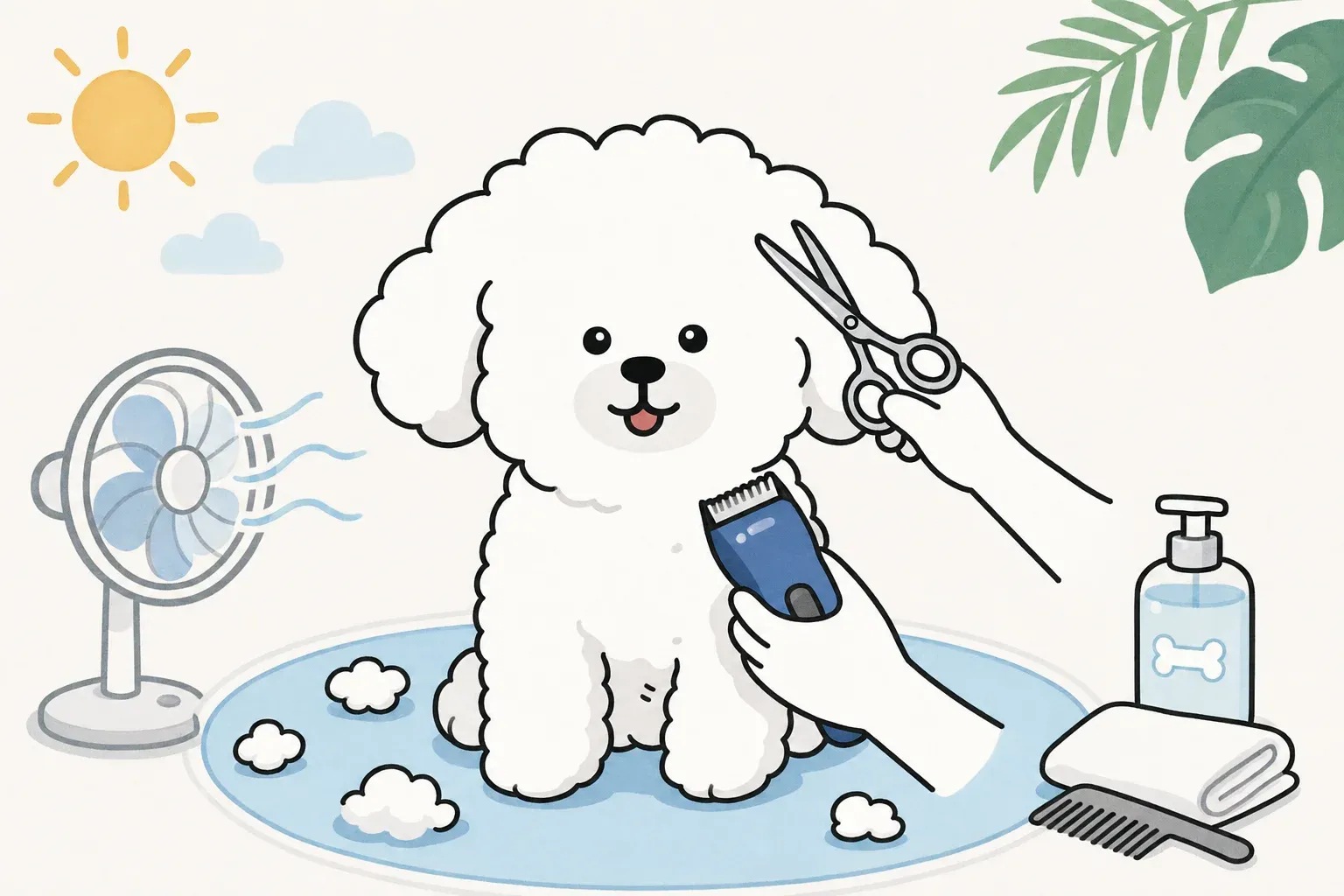
Every summer, dog owners face the same question: should I cut my dog’s hair short to help them handle the heat? The answer is more nuanced than a simple yes or no — and it depends almost entirely on what kind of coat your dog has.
This guide breaks down the five grooming styles used most commonly in summer, explains the science behind why shaving is the wrong call for roughly half of all pet dogs in the US, and gives breed-specific recommendations so you know exactly what approach fits your dog.
Why Summer Grooming Matters for Your Dog
Dog summer grooming is not just about appearances. The right grooming approach directly affects how well your dog manages heat, how healthy their skin stays, and how much shedding you deal with indoors. The wrong approach — particularly shaving a dog whose coat is designed to insulate — can create more problems than it solves.
How Dogs Regulate Body Temperature
Dogs do not sweat the way humans do. Rather than releasing heat through sweat glands across the body, dogs primarily cool themselves through panting, which evaporates moisture from the tongue and respiratory tract. A secondary cooling mechanism involves blood vessels in the paw pads and ears, which can dilate to release heat to the environment.
This matters for grooming decisions because a dog’s skin surface plays a much smaller role in thermoregulation than most owners assume. Removing coat to “let heat escape through the skin” sounds logical, but the skin itself is not a meaningful heat-release organ in dogs. What the coat does instead is act as a barrier against solar radiation — blocking direct UV heat from reaching the skin. Disrupting that barrier can actually increase the amount of heat the dog absorbs.
Single Coat vs Double Coat: Why It Changes Everything
This single distinction determines most of your summer grooming decisions.
Single-coated breeds have one layer of fur with no dense undercoat. The fur is relatively uniform in texture throughout. Examples include Poodles, Maltese, Bichon Frises, Shih Tzus, Yorkshire Terriers, and Greyhounds. Single-coated dogs can be clipped short in summer without structural consequences — the coat will grow back with the same texture, and the reduction in coat length can genuinely reduce heat retention in warm conditions.
Double-coated breeds have two distinct layers: a dense, insulating undercoat of short, fluffy fibers, and a longer outer layer of guard hairs that repel water, block UV rays, and provide structural protection. Examples include Golden Retrievers, Labrador Retrievers, German Shepherds, Siberian Huskies, Corgis, Bernese Mountain Dogs, Australian Shepherds, and Border Collies. The double coat functions like a thermos — insulating against both cold and heat. In summer, the undercoat naturally thins through shedding, creating air pockets between the coat layers that provide passive cooling. Removing this system through clipping disrupts the mechanism entirely.
| Coat Type | Examples | Summer Grooming Approach |
|---|---|---|
| Single coat | Poodle, Maltese, Bichon, Yorkie, Shih Tzu | Can be clipped short; puppy cut or summer cut appropriate |
| Double coat | Golden Retriever, Labrador, German Shepherd, Husky, Corgi | De-shed and brush; do not clip or shave |
| Wire coat | Dachshund (wire), Schnauzer, Terriers | Hand-stripping or light trim; avoid close shaving |
| Curly coat | Poodle, Goldendoodle, Cockapoo | Regular clipper cuts; summer cuts appropriate |
5 Summer Grooming Styles Compared
Understanding what each style involves helps you communicate with your groomer and choose the right approach for your dog’s coat type, lifestyle, and maintenance tolerance.
Summer Cut: Short All-Over Clip
The summer cut is a generic term for any significantly shorter-than-usual clip applied across the entire body. Groomers typically use a #7 or #10 blade, which leaves the coat at approximately half an inch or shorter. The aim is straightforward heat reduction for dogs whose coat can safely be clipped.
Best for: Single-coated breeds — Poodles, Maltese, Bichon Frises, Shih Tzus, Cockapoos.
Not appropriate for: Double-coated breeds. A close summer cut on a Husky or Golden Retriever removes the functional coat structure and offers no benefit while carrying real risks.
Maintenance: Low between appointments; re-grows over 6–10 weeks depending on breed.
Puppy Cut: Even Medium-Length Trim
Despite the name, the puppy cut is not exclusively for puppies. It describes an even trim across the entire body to a uniform length — typically 1 to 2 inches — with a rounded, soft finish on the face and paws. The effect closely resembles how a puppy’s coat looks before the adult coat fully develops.
Best for: Poodles, Bichon Frises, Maltese, Cavapoos, Cockapoos, Shih Tzus.
Blade length: #4 to #5 clipper blade (approximately 1 to 1.5 inches of coat remaining).
Pros: Balanced look, manageable at home between visits, reduces matting risk in warm humid conditions.
Cons: May still leave enough coat to feel warm in extreme heat. Some owners prefer a shorter summer cut for dogs that spend a lot of time outdoors.
Teddy Bear Cut: Rounded Face and Body
The teddy bear cut is primarily a styling choice — it prioritizes the rounded, plush appearance of the face, ears, and overall body shape over raw coat reduction. Scissor work on the face creates the characteristic soft, rounded muzzle. The body is typically trimmed to a medium length (1–2 inches).
Best for: Bichon Frises, Poodles (especially Toy and Miniature), Shih Tzus, Yorkies, Maltipoos.
Blade length: #4 to #5 for the body; scissors for face shaping.
Pros: Aesthetic appeal; face shaping reduces eye discharge accumulation around the eyes.
Cons: More groomer skill required; slightly longer coat means more heat retention compared to a full summer cut. Best for dogs in temperate climates or primarily indoor dogs.
Kennel Cut: Low-Maintenance Short Style
The kennel cut is the most functional, utilitarian option on this list. It prioritizes speed, hygiene, and minimal maintenance over appearance. The coat is clipped uniformly short across the body — typically shorter than a summer cut — with less detailed finishing work on the face and legs.
Best for: Single-coated breeds; working dogs; dogs in outdoor, high-activity environments; dogs that swim frequently.
Blade length: #7 to #10 (very short; 1/8 to 1/2 inch of coat).
Pros: Maximum heat reduction for appropriate coat types; dries quickly after swimming or bathing; reduces debris accumulation on the coat.
Cons: Less polished appearance; may expose lighter skin tones to sun if no UV protection is applied; not appropriate for double-coated breeds.
Sanitary Trim: Targeted Hygiene Areas
The sanitary trim is not a full-body style but rather a targeted grooming step that cleans up specific areas prone to hygiene issues — primarily the areas around the genitals, anus, and belly, as well as the paw pads and the areas around the mouth and eyes. In summer, this becomes particularly important because heat and humidity accelerate bacterial growth in moist, hair-dense areas.
Best for: All breeds as a maintenance step; essential for double-coated breeds as part of a summer routine when full clipping is not appropriate.
Frequency: Every 4–6 weeks; can be done at home with blunt-tipped scissors.
Pros: Dramatically reduces urine scalding, fecal matting, and hygiene-related skin infections; prevents hot spots in high-moisture areas.
Cons: Requires careful scissor handling near sensitive areas; many owners prefer professional groomer for this.
Comparison table:
| Style | Length | Best Coat Type | Heat Reduction | Maintenance |
|---|---|---|---|---|
| Summer Cut | ½ inch or less | Single coat | High | Low |
| Puppy Cut | 1–2 inches | Single/curly coat | Moderate | Low–Medium |
| Teddy Bear Cut | 1–2 inches | Single/curly coat | Moderate | Medium |
| Kennel Cut | ⅛–½ inch | Single coat | Highest | Lowest |
| Sanitary Trim | Targeted only | All breeds | Minimal | Low |
Should You Shave Your Dog? The Double-Coat Truth
This is the most common and most misunderstood question in dog summer grooming. The answer for double-coated breeds is almost always no — and the reasoning comes down to basic coat biology, not preference.
Why Shaving a Double-Coated Dog Can Backfire
The double coat functions as a passive climate control system. The dense undercoat creates an insulating air layer between the skin and the outer environment. In cold weather, this layer traps body heat. In warm weather, it creates a buffer that prevents solar heat from reaching the skin. As summer progresses, the dog naturally sheds much of the undercoat, thinning this insulating layer to optimize for the season.
When you clip or shave this coat, two problems occur. First, the insulating buffer is removed entirely, meaning the skin is now in direct contact with warm air and direct sunlight. Dogs have no other mechanism to compensate for this. Second — and this is less widely understood — the guard hairs and undercoat do not necessarily grow back in sync. The undercoat, which grows faster, often returns first and becomes a tangled, woolly mass. The guard hairs, which give the coat its directional structure and water resistance, may take months longer to regrow. This disrupted regrowth pattern, called post-clipping alopecia (PCA), leaves the coat looking patchy and abnormal and may compromise function for 12 months or more.
A study published in Veterinary Dermatology identified PCA most commonly in Nordic breeds — Samoyeds, Pomeranians, Keeshonds — but the underlying risk exists across double-coated breeds, particularly in dogs that are older or that have pre-existing hormonal imbalances.
Breeds You Should Never Shave
The following breeds are most vulnerable to coat damage from clipping and receive explicit caution from the AKC against summer shaving:
- Siberian Husky and Alaskan Malamute
- Golden Retriever and Labrador Retriever
- German Shepherd
- Pembroke and Cardigan Welsh Corgi
- Border Collie and Australian Shepherd
- Bernese Mountain Dog
- Great Pyrenees and Samoyed
- Pomeranian
- Shetland Sheepdog
For these breeds, the appropriate summer grooming protocol involves de-shedding — removing the dead undercoat through professional de-shedding treatments, high-velocity dryer sessions, and regular brushing — not clipping.
When Short Cuts Are Actually Safe
Short cuts are appropriate when:
- The dog is a confirmed single-coated breed
- The dog has a mixed (doodle-type) coat where the structure has already been altered by genetics
- A veterinarian or veterinary dermatologist has specifically recommended clipping for a medical reason (severe mat removal, wound care, dermatological treatment)
- The owner understands and accepts the regrowth timeline and any cosmetic changes
When in doubt, consult your groomer about your specific dog’s coat before making the decision. A professional groomer can identify the coat type with certainty and recommend the appropriate approach.
Best Summer Grooming by Breed
Here is a practical breakdown for the most popular US dog breeds, organized by coat category.
Poodle, Bichon Frise, Maltese: Summer and Puppy Cuts
These single-coated breeds were essentially designed for clipper styling. Their continuously growing, non-shedding coats require regular professional grooming year-round; summer is simply an opportunity to go shorter.
Recommended summer style: Puppy cut at 1 inch, or full summer cut at ½ inch for dogs in hot climates.
Frequency: Professional grooming every 6–8 weeks. Without regular grooming, these coats mat quickly — and matting in summer creates hot, moisture-trapping areas that invite skin infections and hot spots.
At-home care: Brushing 3–4 times per week with a slicker brush to prevent mat formation between appointments.
Golden Retriever and Labrador Retriever: Undercoat Removal Only
These two breeds top the AKC’s annual popularity rankings and are among the most frequently — and incorrectly — shaved dogs in the US. Both have functional double coats that should not be clipped in summer.
Recommended summer approach: A professional de-shedding treatment at the start of summer, which uses a combination of high-velocity drying and de-shedding tools to remove the bulk of the dead undercoat. Follow with a bath, blow-out, and trim of the sanitary areas and paw pads.
What not to do: Do not request a “summer cut” for these breeds at a grooming salon without specifying that you do not want clipping. Some groomers will default to a clip if not instructed otherwise.
Frequency: One professional de-shedding at the start of summer; brushing at home 3–4 times per week with an undercoat rake or slicker brush.
For more on managing the heavy spring and summer shedding these breeds produce, see our guide on dog spring shedding care.
German Shepherd and Siberian Husky: Brush-Only Protocol
German Shepherds and Huskies are the breeds most likely to experience post-clipping alopecia, and both are commonly brought to groomers by owners convinced that shaving will help their dog through summer. The AKC is explicit: do not shave these breeds.
Recommended summer approach: Brush-only protocol with weekly high-volume deshedding sessions. In peak shedding season, daily brushing may be necessary. A professional grooming appointment focused entirely on de-shedding — no clipping — is appropriate every 6–8 weeks.
Tools: Undercoat rake for the dense undercoat; pin brush or slicker for the guard hairs; a de-shedding tool (such as the style commonly branded for undercoat removal) used conservatively — overuse can damage guard hairs.
Heat management: Focus on keeping these breeds cool through environmental means: shade, cool water access, limited outdoor activity during peak heat hours, and cooling mats rather than coat alteration. Our guide on dog summer heat stroke prevention covers these strategies in detail.
Small Breeds: Yorkie, Shih Tzu, Chihuahua
Yorkshire Terrier: The Yorkie has a single-layer, silky coat that grows continuously — similar in behavior to human hair. Short summer cuts (puppy cut, summer cut) are appropriate and will not damage coat texture.
Shih Tzu: Single-coated with a dense, flowing coat that mats easily in humidity. Summer cuts or puppy cuts are standard for Shih Tzus in warm months. Trimming the face hair back from the eyes is particularly important to prevent moisture and debris accumulation.
Chihuahua: Smooth-coated Chihuahuas have a very short, single-layer coat that requires no seasonal adjustments — they are naturally suited to summer. Long-coated Chihuahuas can benefit from a light trim around the ears and sanitary areas but do not require a full cut.
DIY Summer Grooming Basics
Professional grooming is the safest option for significant coat cuts, but there are summer grooming tasks that owners can safely handle at home — and doing them regularly reduces cost and keeps the coat healthier between appointments.
Tools You Need
For single-coated dogs you plan to clip at home:
- Clippers with interchangeable blades — #4 or #5 for a puppy cut, #7 for a shorter summer cut
- Slicker brush — for de-tangling before clipping
- Metal comb — to check for remaining tangles
- Blunt-tipped scissors — for face, paws, and sanitary areas
- Dog-safe grooming spray — helps clippers move smoothly through the coat
For double-coated dogs (brush-only):
- Undercoat rake — reaches through the guard hairs to remove the dense undercoat
- Slicker brush — finishes the outer layer
- De-shedding tool — used 1–2 times per week maximum during peak shedding
- High-velocity dryer (optional but highly effective at blowing out loose undercoat)
How to Do a Safe Sanitary Trim at Home
This is one of the most practical DIY grooming skills for any dog owner and is appropriate for all breeds:
- Place your dog on a stable, non-slip surface at a comfortable working height.
- Using blunt-tipped scissors, carefully trim the hair around the genital and anal areas to a length of ½ to 1 inch — close enough to prevent fecal or urine soiling, but not so close that the scissors risk contacting the skin.
- Trim the hair between the paw pads to prevent debris, mud, and moisture accumulation — particularly important in summer. Use straight scissors or a small clipper and work slowly.
- If the dog is cooperative, trim the periocular hair (around the eyes) for breeds prone to tear-staining and facial fold moisture.
- Reward throughout and keep sessions short — 5 to 10 minutes maximum.
Common Mistakes to Avoid
Skipping brushing before clipping. Clippers should never be run through matted or tangled fur. Tangles pull the skin into the blade path and cause cuts. Always brush thoroughly before using clippers.
Using dull blades. A dull blade pulls rather than cuts, causing discomfort and heat buildup. Check that your blades are sharp and lubricated before use.
Cutting too close without experience. Home clipping accidents most commonly happen when owners attempt very short blades (#10 or higher). If you want a very short cut, have a professional do it — the margin for error is minimal.
Bathing after clipping. Clipping disrupts the coat slightly and can cause temporary skin sensitivity. Wait 24–48 hours before bathing a freshly clipped dog.
Skipping the professional consultation. If you are unsure about your dog’s coat type or have never groomed the dog yourself, schedule one professional appointment before attempting DIY work. A professional groomer can assess the coat, advise on the appropriate approach, and demonstrate technique.
Post-Grooming Summer Coat and Skin Care
The grooming appointment is not the end of summer coat management. What happens in the weeks following — particularly the bathing routine, sun protection, and brushing schedule — determines how well the skin and coat hold up until the next appointment.
Bathing Frequency in Summer
Summer heat, outdoor activity, swimming, and increased perspiration from paw pads all contribute to a coat that picks up more dirt, pollen, and bacteria than in cooler months. The appropriate bathing frequency increases accordingly.
As a general guideline: single-coated dogs that are groomed regularly can be bathed every 3–4 weeks in summer. Dogs that swim or spend significant time in grass, sand, or soil may benefit from baths every 2–3 weeks. Double-coated breeds should be bathed more carefully — every 4–6 weeks — because full drying is essential to prevent moisture trapped at the skin level, which can cause bacterial overgrowth.
For detailed technique on bathing safely by coat type and age, see our dog bathing guide.
Regardless of breed, always use a dog-formulated shampoo. Human shampoos disrupt the dog’s skin pH (approximately 7.0–7.5, versus human skin at 5.5) and strip the natural skin barrier.
Sun Protection for Freshly Groomed Dogs
Dogs with short, clipped coats — and particularly those with pink or light-pigmented skin, white or thin coats, or recently shaved areas — are at increased UV exposure risk. Sunburn in dogs presents as red, inflamed, or peeling skin, most commonly on the nose, ear tips, and belly.
Protective measures:
- Apply a dog-safe sunscreen (free of zinc oxide and PABA) to exposed areas before prolonged outdoor exposure
- Limit direct sun exposure during peak UV hours (10 a.m. to 4 p.m.)
- Consider a lightweight UV-protective shirt for dogs with very short or thin coats
Sun exposure is a particular concern for dogs that have been shaved — one more reason that appropriate coat length matters.
Brushing Schedule by Coat Type
Regular brushing does more in summer than keep the coat tidy. It redistributes the coat’s natural oils, removes dead hair before it mats, and allows you to monitor the skin for early signs of irritation, parasites, or hot spots — which are significantly more common in warm, humid conditions.
| Coat Type | Brushing Frequency | Tool |
|---|---|---|
| Single coat (short, smooth) | Once per week | Rubber curry brush or bristle brush |
| Single coat (long, silky) | 3–4 times per week | Slicker brush + metal comb |
| Double coat (short undercoat) | 3–4 times per week | Undercoat rake + slicker brush |
| Double coat (heavy shedder) | Daily during peak shed season | Undercoat rake + de-shedding tool |
| Curly/wavy coat | 3–4 times per week | Slicker brush + wide-tooth comb |
After outdoor activities, run a quick brush-through and check the coat for burrs, grass seeds, and debris, which can work their way to the skin and cause irritation or infection. This is also the ideal time to check for fleas and ticks, which are at peak activity in summer. Our guide on dog flea prevention and treatment covers identification and prevention in detail.
If you notice reddened, moist skin — particularly in skin folds, between toes, or in areas with dense hair — act early. These are early signs of hot spots, which develop rapidly in summer conditions. The guide on dog hot spot treatment explains how to manage early-stage hot spots and when to involve a veterinarian.
For dogs prone to post-grooming skin sensitivity or environmental allergies, summer grooming can occasionally trigger a flare. Our guide on dog allergy and skin care covers the overlap between grooming practices and allergic skin responses.
Finally, do not overlook the paws. The paw pads and nail length deserve dedicated attention in summer, both because pads are in direct contact with hot pavement and because longer nails affect gait — which matters more if the dog is spending more time on hard surfaces during summer walks. See our dog paw care guide for a complete summer paw care protocol.
References
FAQ
Should I shave my dog to keep them cool in summer?
What is the difference between a puppy cut and a summer cut?
How often should I groom my dog in summer?
Can I use sunscreen on my dog after grooming?
Does shaving a dog cause permanent coat damage?
Related Articles
How to Bathe a Dog in 7 Steps: Frequency, Technique & Skin Protection
Learn how to bathe a dog safely in 7 steps — including water temperature, shampoo selection, and a dedicated guide for senior dogs with arthritis.

Dog Spring Shedding Care: Brushing, Skin, and Joint Health
Science-backed dog spring shedding care: brushing routines, breed guides, skin nutrition, and the skin-to-joint inflammation link grooming guides miss.
Dog Heat Stroke Prevention: Critical Temperature Thresholds and Warning Signs Every Owner Must Know
Learn the 4-tier temperature risk system, breed-specific vulnerabilities, pavement heat dangers, and step-by-step emergency protocol to prevent and treat dog heat stroke this summer.