 Cirius Petpedia
 Why Does My Dog Whine? 7 Causes and How to Respond

Every dog owner has experienced it: you’re sitting quietly and your dog starts whining, seemingly out of nowhere. You check the food bowl — full. You offered a walk an hour ago. Nothing obvious has changed.
So why does your dog whine?
The instinct to immediately comfort or investigate is understandable, and in some cases it’s exactly the right response. But whining covers a wide behavioral spectrum — from a learned attention-getting strategy to a signal of genuine physical pain. Treating all whining the same way leads to two common mistakes: reinforcing demand behavior by responding when you shouldn’t, or missing a medical problem by ignoring when you shouldn’t.
This guide breaks down the 7 evidence-based causes of dog whining, explains when to respond versus when to ignore, and addresses the age, sex, and breed factors that shape how individual dogs vocalize.
What Dog Whining Actually Means
Whining as a Communication Tool
Whining is a high-frequency vocalization that dogs produce across a broader range of contexts than most owners realize. Unlike barking — which is used primarily for alert, territorial, and play functions — or howling, which serves long-distance social signaling, whining operates in the close-range social space between a dog and the people or animals it is attached to.
Ethologists classify whining as an affiliative vocalization: it is directed at specific individuals and intended to draw them closer or elicit a behavioral response. Puppies produce it most prolifically because they are entirely dependent on caregivers, and the vocalization is wired to trigger a care response in adults — both canine and human. Adult dogs retain this vocal tool and apply it across multiple contexts as their social and emotional needs expand.
The critical distinction for owners is that whining can arise from both emotional states (anxiety, fear, excitement, pain) and learned behavioral strategies (demand whining). Understanding which is operating at any given moment determines the correct response.
Types of Whining Sounds and What They Signal
Not all whines sound identical, and the acoustic qualities carry meaning worth learning to read alongside your dog’s body language signals:
- High-pitched, repetitive whine with a rising inflection: Most often associated with excitement, anticipation, or greeting. Body language is loose and forward.
- Soft, intermittent whine with tucked posture: Commonly linked to anxiety, appeasement, or mild fear. Watch for lip licking, yawning, and averted gaze.
- Persistent, demanding whine held at steady pitch: Typically demand or attention-seeking whining. Dog is alert, oriented toward the owner, and behavior escalates if ignored briefly.
- Sudden, sharp whine or yelp that tapers: Often pain-related, especially if triggered by movement or touch to a specific body region.
- Soft, repetitive nighttime whining in older dogs: A recognized pattern in canine cognitive dysfunction — often accompanied by disorientation, pacing, or staring at walls.
These categories overlap in real life, which is why behavioral context and co-occurring signals matter as much as the sound itself.
7 Reasons Your Dog Whines
1. Attention and Demand — They Want Something
Demand whining is perhaps the most common cause owners encounter with adult dogs, and also the most frequently mismanaged. It operates through straightforward operant conditioning: if whining has reliably produced attention, food, play, or access to furniture in the past, the dog has learned that whining works.
The behavior is not manipulative in any morally loaded sense — it is simply an efficient strategy the dog has discovered through trial and error. The owner’s past responses have shaped it.
Demand whining is typically characterized by sustained, attention-directed vocalization. The dog faces you, makes or seeks eye contact, and may paw, nose, or otherwise physically prompt you in addition to whining. It escalates when ignored initially (more on this in the extinction burst section below).
Context where demand whining most commonly appears:
- Before meals or when the food bowl is visible
- When you sit down but haven’t invited the dog onto furniture
- When you stop petting or playing before the dog is ready
- When another person or pet is receiving your attention
- In the car when arrival at a destination is anticipated
The appropriate response is not punishment but non-reinforcement of whining paired with consistent reinforcement of the alternative behavior (quiet sitting, lying down, or a specific cued behavior).
2. Anxiety and Stress — Separation, Environmental Changes
Anxiety-driven whining is distinct from demand whining in its emotional underpinning and the dog’s overall behavioral state. An anxious dog is not strategically requesting something — it is experiencing genuine physiological arousal associated with perceived threat or loss.
Separation anxiety is the most clinically significant form. Dogs with separation anxiety whine, bark, pace, and may engage in destructive behavior specifically during owner absences or in anticipation of departure. The whining typically begins during pre-departure cues (picking up keys, putting on shoes) and continues for some or all of the owner’s absence.
Research consistently shows that separation anxiety is not simply “missing the owner” — it involves dysregulation of the hypothalamic-pituitary-adrenal (HPA) axis, with measurable cortisol elevations. Dogs with clinical separation anxiety require behavior modification protocols, and in moderate to severe cases, veterinary-prescribed anxiolytic support alongside training.
Environmental stressors that commonly trigger anxiety whining include:
- Visitors or unfamiliar people in the home
- Changes in household routine or composition (new family member, owner schedule change)
- Moving to a new home
- Changes to the dog’s resting or feeding space
3. Pain or Discomfort — Something Hurts
Pain is the cause owners most need to rule out before concluding any other explanation. Dogs have a strong biological tendency to suppress obvious pain displays — a legacy of predator avoidance in their evolutionary history. By the time pain is visible in posture, gait, or facial expression, the underlying condition is often well-established.
Whining is frequently an early pain signal, appearing before more obvious signs. A dog experiencing orthopedic pain (joint inflammation, soft tissue injury, spinal discomfort) may whine when:
- Getting up from rest or lying down
- Ascending or descending stairs
- Being lifted or having a specific body region touched
- After exercise
Visceral discomfort — gastrointestinal distress, urinary tract infection, or internal organ pain — tends to produce whining that is less positionally triggered and may be accompanied by restlessness, repeated repositioning, lip licking, and decreased appetite.
For specific behavioral patterns that indicate your dog may be in pain, the pain behavior signals guide provides a detailed reference. If whining is new, sudden, or uncharacteristic, a veterinary evaluation is the correct first step — not behavioral management.
4. Excitement and Anticipation — Walks, Treats, Greetings
Excitement whining is the most benign category, though it can become habitual and difficult to live with if it escalates. Dogs whine in anticipation of positive events — the appearance of a leash, the sound of a food container, your car pulling into the driveway, a visitor arriving.
This form of whining is characterized by a high energy state: the dog is typically moving, tail active, body loose, and the whining has a higher pitch and faster tempo than anxiety or pain vocalizations. It is communicative in the purest sense — the dog is expressing emotional state, not requesting a behavior change from you.
While excitement whining is not harmful, owners who find it overwhelming can reduce its intensity by:
- Delaying the trigger event until the dog is calm for several seconds
- Practicing calm introductions to high-value cues (putting the leash on multiple times a day without leading to a walk, until the leash loses predictive value)
- Reinforcing settled behavior before initiating exciting events
This approach requires patience because the whining is strongly conditioned to specific cues, but the association can be modified over weeks of consistent practice.
5. Fear — Noise, Unfamiliar Situations
Fear-based whining is closely related to anxiety whining but tends to be more acute and tied to specific stimuli rather than a generalized state. Dogs experiencing fear whine as a distress signal and often combine it with a behavioral repertoire that includes attempting to flee, hiding, trembling, yawning, and seeking physical contact with their owner.
Noise phobia — particularly thunder and fireworks — is a common trigger. Affected dogs often begin whining before the sound reaches human-audible levels, responding to barometric pressure changes or infrasound components of approaching storms. This is frequently misread as “whining for no reason” when in fact the dog is responding to a real, if invisible, stimulus.
Other common fear triggers that produce whining:
- Visits to the veterinary clinic or groomer
- Car travel (in dogs with negative car associations)
- Unfamiliar environments or sudden changes in familiar spaces
- Other animals, particularly intact or unfamiliar dogs
Fear-based whining should not be met with punishment or dismissal. Punishment increases the aversive emotional state and can worsen fear responses over time. Management (preventing exposure when possible), counter-conditioning (creating positive associations with the trigger), and veterinary behavioral support are the evidence-based approaches.
6. Cognitive Decline — Senior Dogs and Night Whining
Canine cognitive dysfunction (CCD, also referred to as canine cognitive dysfunction syndrome or CCDS) is an age-related neurodegenerative condition analogous to Alzheimer’s disease in humans. It is estimated to affect approximately 28% of dogs aged 11–12 years and over 68% of dogs aged 15–16 years, though it remains significantly underdiagnosed.
Nighttime whining in older dogs is one of its most characteristic presentations. Affected dogs often whine, pace, or vocalize during nighttime hours specifically because circadian rhythm disruption is a core feature of the condition. The dog may appear disoriented, fail to recognize familiar spaces, or stare at walls or into corners.
For a detailed overview of diagnosis and management, the canine cognitive dysfunction guide covers the clinical picture, staging, and current management strategies.
Key features that distinguish CCD-related whining from other causes:
- Predominantly or exclusively nocturnal onset
- Occurs in dogs over 8 years of age (onset is earlier in large breeds)
- Accompanied by at least one other DISHA sign: Disorientation, altered Interactions with family, Sleep-wake cycle disruption, House soiling, altered Activity levels
- Gradual onset rather than sudden change
CCD-related whining warrants veterinary evaluation for diagnosis and discussion of management options. Environmental modifications, dietary support, and in some cases medication can meaningfully improve quality of life for both dog and owner.
7. Appeasement and Social Signaling
Appeasement whining is perhaps the least understood cause among general owners. Dogs use whining as a social signal to communicate non-threat intent — to indicate deference and reduce potential conflict. It evolved as a functional communication tool within canine social groups and persists in domestic dogs’ interactions with humans and other dogs.
You may observe appeasement whining when:
- Your dog greets a person it perceives as dominant or unpredictable
- A correction or expression of displeasure has just occurred
- Your dog is uncertain about how to behave in a social situation
- Meeting an unfamiliar dog that is displaying high social arousal
Appeasement whining is generally accompanied by a cluster of calming signals: gaze aversion, lowered head, tucked tail (though not always), body lowering, and sometimes rolling onto one side. The dog is communicating, not requesting anything.
The appropriate response is to reduce whatever social pressure is triggering the appeasement and allow the dog to find behavioral equilibrium. Attempting to reassure through excessive attention can inadvertently reinforce a generalized submissive pattern.
Should You Ignore the Whining or Respond?
When Ignoring Is the Right Call — Demand Whining and Habits
Ignoring is the appropriate response specifically when whining is being maintained by the owner’s attention or responses — in other words, when it is demand or attention-seeking whining. The mechanism is operant conditioning: if whining is never rewarded, it will eventually extinguish.
Effective non-reinforcement requires:
- Complete withdrawal of all attention: No eye contact, no verbal response, no moving toward or away from the dog. Even “No” counts as attention and can reinforce the behavior.
- Consistency across all household members: If one person responds while others ignore, the whining is maintained on a variable reinforcement schedule — the schedule most resistant to extinction.
- Proactive reinforcement of quiet: When the dog is not whining, especially when settled voluntarily, reward this behavior with calm attention or a treat. You are teaching the dog that quiet is the behavior that works.
When You Must Respond — Pain, Fear, Cognitive Confusion
Ignoring is never appropriate when the underlying cause is pain, illness, fear, or cognitive confusion. Failing to respond to these signals is both harmful to the dog and damages the trust relationship between dog and owner.
Respond promptly when:
- The whining is new, sudden, or uncharacteristic for your dog
- You observe any physical signs of pain or discomfort (reluctance to move, sensitivity to touch, altered posture or gait)
- The whining occurs during a known fear trigger (thunderstorm, veterinary visit)
- Your dog is a senior with known or suspected cognitive decline
- The whining is accompanied by house soiling, restlessness, or disorientation
If you are uncertain whether whining is behavioral or medical in origin, err on the side of a veterinary evaluation. Ruling out physical causes first is the responsible approach and prevents inadvertently ignoring a dog in pain.
Understanding Extinction Bursts — Why It Gets Worse Before Better
One of the most important behavioral concepts for owners managing demand whining is the extinction burst. When a previously reinforced behavior stops being rewarded, animals do not immediately reduce the behavior — they initially intensify it.
The logic, from the dog’s perspective, is straightforward: the behavior used to work. If it’s not working right now, maybe more of it, louder, more persistently, will work again. This escalation before decline is a normal and predictable feature of the extinction process, not a sign that the approach is failing.
An extinction burst in the context of demand whining typically means:
- Whining becomes louder or more persistent in the first days of a new non-reinforcement approach
- The dog may add new behaviors (barking, pawing, jumping) alongside whining
- Duration of whining sessions may increase before they begin to decrease
Owners who respond during an extinction burst — even once — have now reinforced the intensified behavior. The dog learns that ordinary whining doesn’t work but prolonged, escalating whining does. This is the mechanism by which well-intentioned management creates dogs who whine for 30 minutes instead of 5.
Staying the course through the extinction burst, with complete and consistent non-reinforcement, is essential. Most extinction bursts resolve within 1–2 weeks when management is truly consistent.
Age, Sex, and Breed Factors
Puppies — Adjustment Period Whining
Puppies whine significantly more than adult dogs, and this is developmentally normal. A puppy separated from its mother and littermates is experiencing a genuine social loss and relying on whining to re-establish proximity to caregivers — the same function the vocalization served in its natal context.
Adjustment period whining (first 1–3 weeks in a new home) typically decreases on its own as the puppy forms attachment bonds with new household members and becomes more comfortable with the environment. Responding to nighttime whining from a very young puppy (under 12 weeks) is appropriate — puppies at this age have genuine social and thermoregulation needs that warrant response.
As puppies mature (12–16 weeks and beyond), demand whining patterns begin to emerge based on what the puppy has learned works. Crate training during this period, when approached gradually and positively, can reduce anxiety-based nighttime whining by providing a secure, predictable rest space.
Adults — Separation Anxiety and Demand Behavior
Adult dogs (1–7 years, varying by breed) are most likely to present with either established demand whining or clinically significant separation anxiety. Both are behavioral patterns that have typically been developing for months to years by the time owners seek help.
Demand whining in adults is often well-practiced and resistant to extinction because it has been reinforced (even intermittently) throughout the dog’s life. Behavior modification requires time and consistency rather than a quick fix.
Adult-onset separation anxiety — whining that develops in a previously stable dog — warrants investigation into what changed: a new schedule, loss of a companion animal or human household member, a traumatic event, or a recent medical condition can all trigger onset. If sudden changes in activity levels or lethargy accompany the new whining pattern, a veterinary workup should precede behavioral intervention.
Seniors — Cognitive Dysfunction and Pain
Senior dogs (generally over 7 years for large breeds, over 9–10 years for small breeds) have an elevated prevalence of two whining causes that require specific management: chronic pain (most commonly from osteoarthritis or spinal conditions) and canine cognitive dysfunction.
Nighttime whining in a previously quiet older dog is a clinical flag that warrants veterinary attention rather than behavioral management. The DISHA criteria for CCD assessment provide a useful starting framework, but only a veterinarian can distinguish CCD from pain, endocrine disorders (hypothyroidism, hyperadrenocorticism), or other medical conditions that can produce similar behavioral changes.
Hormonal Factors — Intact Males and Females in Heat
Hormonal state significantly influences whining behavior in intact (non-neutered/non-spayed) dogs, and this is an area underrepresented in most general guides.
Intact females in estrus (heat) frequently increase vocalization, restlessness, and whining — behaviors driven by hormonal changes and proximity of intact males. A female dog in heat may whine persistently despite no obvious social or environmental trigger. Whining typically correlates with the proestrus and estrus phases and resolves as the cycle concludes.
Intact males in the presence of a female in estrus — even at distance, through scent — may whine, pace, refuse food, and show persistent agitation. This is driven by elevated testosterone and the reproductive drive response. The behavior is not trainable away through behavioral methods alone while the hormonal trigger is present.
Both patterns are substantially reduced by spaying and neutering, though individual responses vary. If your intact male or female dog is whining intensely with no obvious cause, hormonal context is worth considering and discussing with your veterinarian.
Breed Tendencies — Which Breeds Whine More
Breed-level vocalization tendencies reflect selective breeding history, not fixed behavioral destiny. That said, certain breeds were selected for characteristics that correlate with higher whining frequency:
| Breed Group | Representative Breeds | Whining Tendency | Reason |
|---|---|---|---|
| Scent hounds | Beagle, Bloodhound | High | Bred for vocal communication during hunts |
| Nordic/sled dogs | Siberian Husky, Alaskan Malamute | High | Vocal communication across distances; howling also common |
| Toy breeds | Chihuahua, Dachshund (also scent) | Moderate-High | High attachment to owners; vocal alertness |
| Herding breeds | Border Collie, Shetland Sheepdog | Moderate | Whining used as a control signal in herding contexts |
| Sporting breeds | Labrador Retriever, Golden Retriever | Low-Moderate | Bred for soft-mouth, quiet cooperation; but high separation sensitivity |
| Guardian breeds | Rottweiler, Mastiff | Low | Selected for calm confidence, not vocal expressiveness |
These are tendencies, not rules. A well-socialized Husky with a secure attachment and adequate exercise can be quieter than an anxious Labrador.
When Whining Means a Vet Visit — Warning Signs Checklist
5 Pain-Related Symptoms to Watch For
When whining is accompanied by any of the following signs, a veterinary evaluation is warranted promptly rather than behavioral management:
- Whining when getting up or lying down, or when touching a specific body area — suggests musculoskeletal or orthopedic pain
- Whining accompanied by restlessness or repeated repositioning that doesn’t settle — suggests visceral discomfort (GI, urinary, or other internal)
- Reduced appetite or water intake alongside whining — suggests systemic illness or pain sufficient to suppress appetite
- Abnormal gait, limping, or reluctance to use stairs accompanying new whining — suggests acute or worsening orthopedic injury
- Whining during urination or defecation — suggests urinary tract infection, bladder stones, or GI inflammation
What Sudden Changes in Whining Patterns Mean
A dog whose whining changes suddenly — in frequency, timing, intensity, or context — is giving you a signal that something in their internal state has changed. The differential diagnosis is broad:
- New whining only at night, in a dog 7+ years old: Canine cognitive dysfunction until proven otherwise
- New whining with exercise or stair use: Acute orthopedic injury or significant worsening of existing joint disease
- New whining in an intact female at predictable intervals: Estrus cycle; examine whether spaying aligns with your goals
- New whining with house soiling, confusion, or altered sleep: CCD, but also consider endocrine disorders
- New whining in a dog who recently lost a companion or experienced a major change: Grief and adjustment response — monitor; if not improving within 2–4 weeks, behavioral support may help
The consistent principle: sudden behavioral changes in dogs, including new or dramatically increased whining, are data points about the dog’s internal state. Investigate rather than immediately attempt to suppress the behavior.
Understanding why your dog whines is the foundation of an effective response. Demand whining and pain-driven whining both produce persistent, difficult-to-ignore vocalizations — but they require completely opposite interventions. Responding consistently and empathetically requires distinguishing between them, and that distinction rests on observation, behavioral context, and — when uncertain — veterinary guidance.
If you are observing additional behavioral changes alongside whining, such as reduced movement or play interest, the activity decline and lethargy guide can help you assess whether a physical cause may be present.
References
FAQ
Should I ignore my dog whining at night?
Why is my dog whining for no reason?
What breed of dog whines the most?
Why is my dog whining so much all of a sudden?
How do I stop demand whining without making it worse?
Related Articles
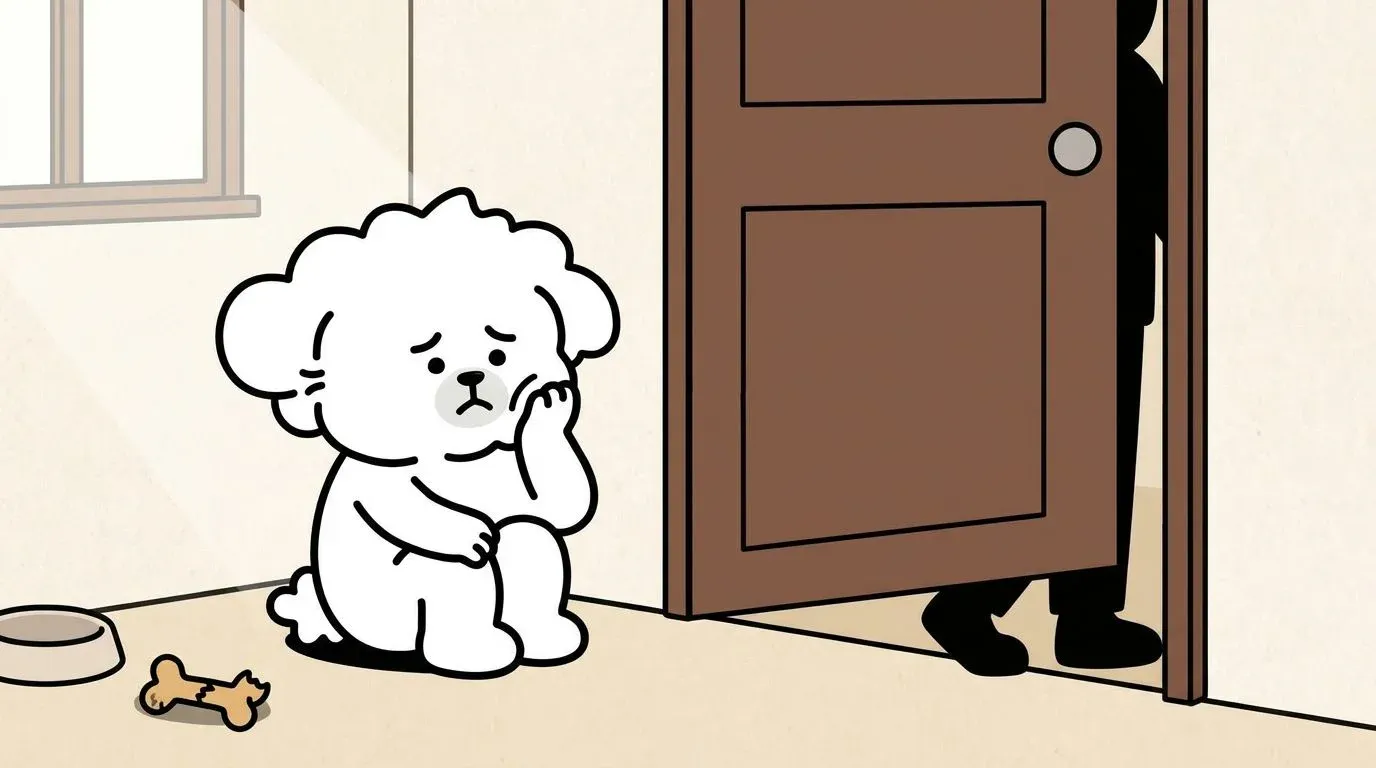
Dog Separation Anxiety Guide: Symptoms, Training, and Help
Learn how to identify dog separation anxiety symptoms, follow a vet-backed step-by-step training plan, and know when medication or a specialist is needed.
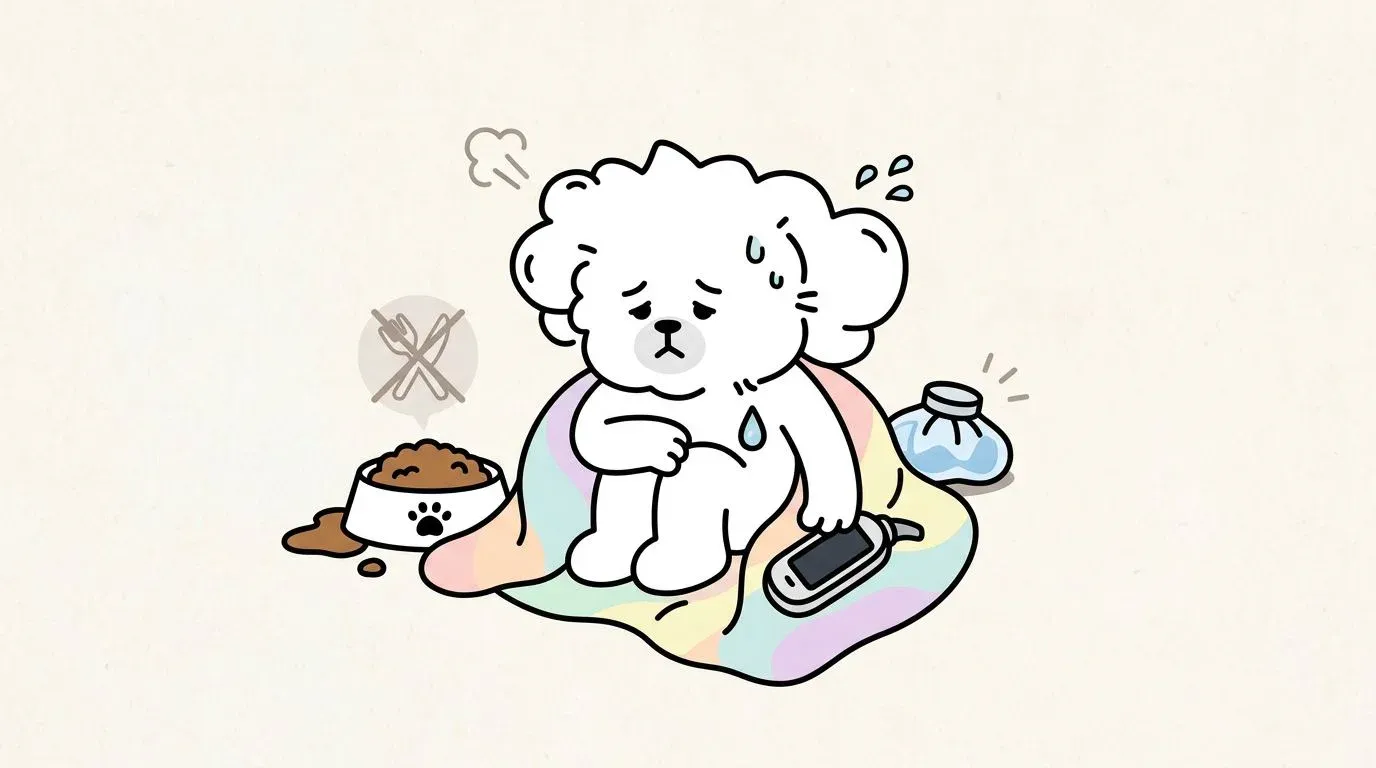
Is Your Dog in Pain? 7 Subtle Signs Most Owners Miss
Learn the 7 behavioral signs your dog is in pain that are easy to overlook, how to tell acute from chronic pain, and what to do before your vet visit.
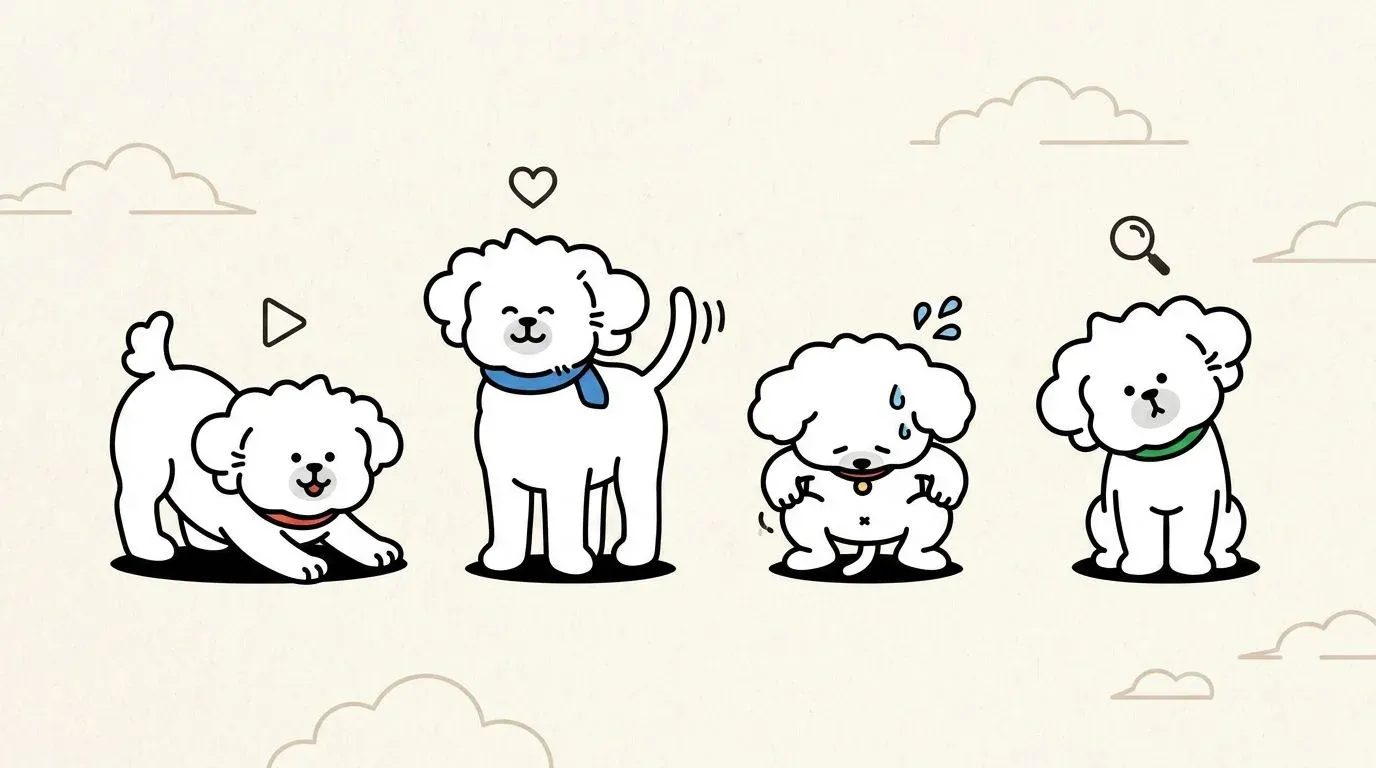
Can You Really Read Your Dog? A Complete Guide to Dog Body Language
Master dog body language with a body-part-by-body-part breakdown plus emotion-state cross-reference. Learn calming signals, misread cues, and pain signals.