 Cirius Petpedia
 Dog Bloody Stool: Color Guide and When to See a Vet
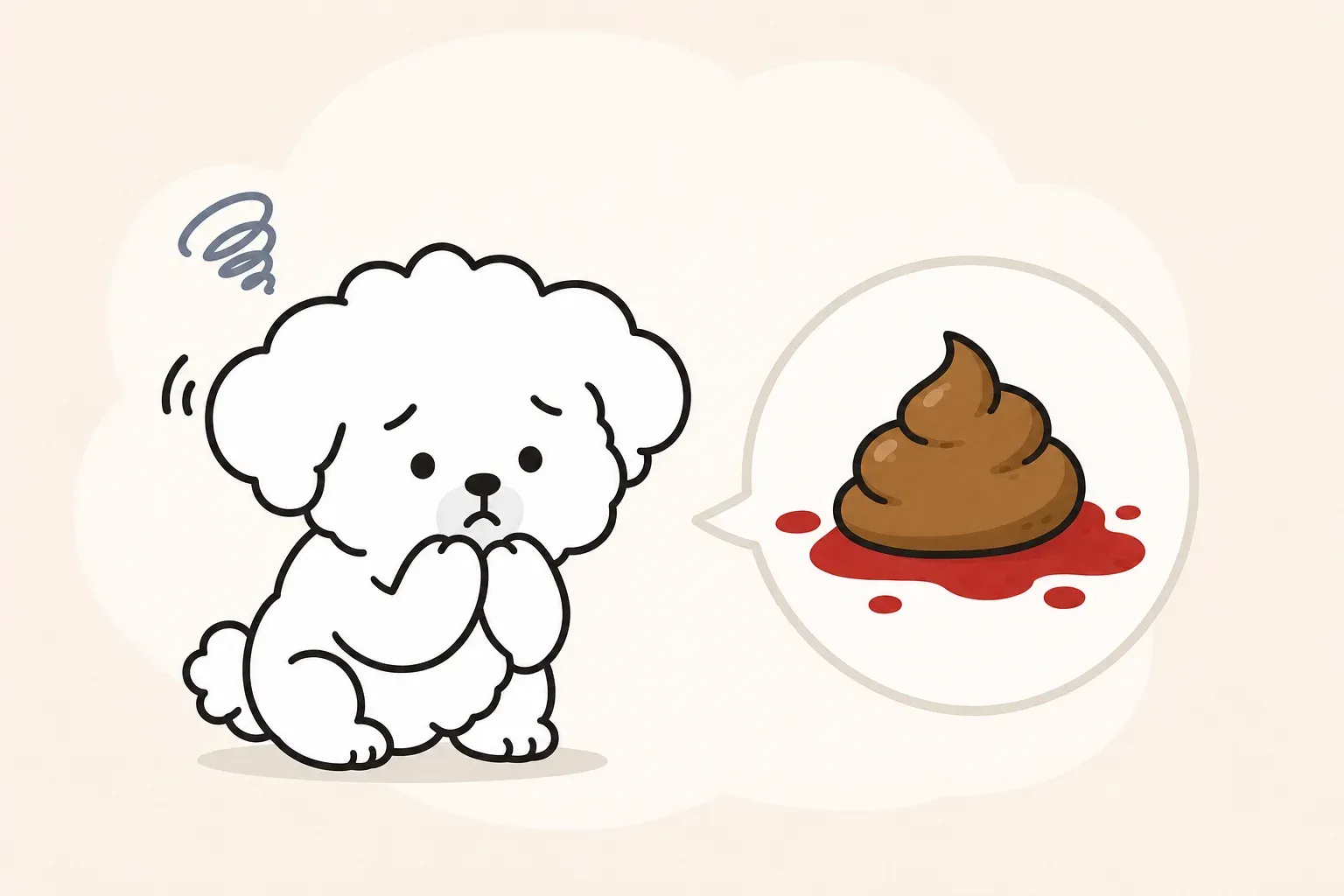
Finding blood in your dog’s stool is alarming. Your instinct to search for answers immediately is the right one — but the correct response depends entirely on what kind of blood you are seeing and what other symptoms are present.
This guide walks through the two types of bloody stool, the eight most common causes, a practical decision framework for when to rush to the emergency vet versus when monitoring at home is reasonable, and what to do before and during a vet visit.
Understanding Bloody Stool in Dogs: Hematochezia vs. Melena
Veterinarians distinguish between two types of blood in dog stool because they originate from different parts of the gastrointestinal tract and carry different levels of urgency.
Bright Red Blood (Hematochezia): Lower GI Bleeding
Hematochezia refers to fresh, bright red blood that has not been digested. Because it has traveled only a short distance from the lower colon or rectum, it retains its red color. You may see it coating the outside of a formed stool, mixed into loose stool, or passed without any stool at all.
Common causes of hematochezia include colitis (inflammation of the colon), intestinal parasites, rectal injuries, and stress. The blood looks alarming but does not automatically mean the situation is critical — though it still warrants prompt evaluation.
Dark Tarry Stool (Melena): Upper GI Bleeding
Melena is digested blood that originated higher in the gastrointestinal tract — the stomach, small intestine, or esophagus. By the time it exits the body, digestive enzymes have broken it down into a dark, tarry, foul-smelling consistency. It is often mistaken for normal dark stool, which is why the smell test matters: melena has a distinctly sharp, metallic odor.
Melena is generally considered more serious than hematochezia because it indicates bleeding in the upper GI tract, which can involve ulcers, tumors, or clotting disorders. If you see dark tarry stool, contact a veterinarian promptly.
Quick Color Comparison Chart
| Characteristic | Hematochezia | Melena |
|---|---|---|
| Color | Bright red | Black or very dark brown |
| Texture | Watery or coating stool | Tarry, sticky |
| Odor | Normal to mildly off | Sharp, metallic |
| Origin | Lower GI (colon, rectum) | Upper GI (stomach, small intestine) |
| Urgency | Variable — assess other symptoms | High — contact vet promptly |
8 Common Causes of Blood in Dog Stool
Acute Hemorrhagic Diarrhea Syndrome (AHDS)
Formerly called hemorrhagic gastroenteritis (HGE), AHDS is one of the most dramatic presentations of bloody stool in dogs. It causes sudden, large-volume bloody diarrhea — frequently described as resembling raspberry jam — in otherwise healthy dogs. The exact cause is not fully understood, but Clostridium perfringens overgrowth and immune-mediated colonic damage are suspected contributors.
AHDS can cause life-threatening dehydration within hours. It primarily affects small and toy breeds (Miniature Schnauzers, Yorkshire Terriers, Dachshunds) but can occur in any dog. Emergency IV fluid therapy is typically required.
Intestinal Parasites: Hookworms, Whipworms, Coccidia
Hookworms (Ancylostoma caninum) attach to the intestinal wall and feed on blood, causing both hematochezia and anemia — particularly dangerous in puppies. Whipworms (Trichuris vulpis) inhabit the large intestine and cause chronic, intermittent bloody mucoid stool. Coccidia, a single-celled protozoan parasite, is especially problematic in young, stressed, or immunocompromised dogs and produces watery to bloody diarrhea.
Routine deworming and parasite prevention is the primary tool for preventing parasite-related bloody stool. Annual fecal exams are recommended even for dogs on regular preventatives, as no single product covers all parasites.
Parvovirus Infection
Canine parvovirus is a severe viral disease that destroys the rapidly dividing cells lining the intestine, resulting in profuse, often bloody diarrhea with a characteristic foul odor. The virus also causes profound lethargy, vomiting, and loss of appetite. It spreads through contact with infected feces and can survive in the environment for months.
Unvaccinated puppies between 6 weeks and 6 months are most vulnerable, but adult dogs with lapsed vaccinations can also be infected. Parvovirus is a veterinary emergency with significant mortality if untreated.
Foreign Object Ingestion
Dogs that swallow sharp objects — bone fragments, sticks, toys, hardware — can suffer lacerations to the esophagus, stomach, or intestines. Smooth objects can cause obstructions that, if prolonged, lead to intestinal necrosis and bleeding. Hematochezia following known or suspected ingestion of a foreign object requires immediate radiographic evaluation.
If your dog has recently consumed something potentially harmful, the dog toxic foods guide covers substances that can additionally cause GI bleeding through toxic mechanisms.
Food Allergies and Sudden Diet Changes
An abrupt switch in diet disrupts the microbial balance in the gut, causing fermentation of undigested nutrients, inflammation, and loose or bloody stool. True food allergies involve an immune-mediated reaction to proteins (commonly beef, chicken, dairy, or wheat) and can produce chronic bloody mucoid stool along with skin symptoms.
Transitions to a new food should occur gradually over 7-10 days, mixing increasing proportions of the new food into the old.
Stress Colitis
The colon is highly sensitive to psychological stress. Boarding, travel, moving to a new home, the arrival of a new family member or pet, or even a thunderstorm can trigger acute inflammation of the colon. The result is typically bright red blood and mucus in otherwise soft stool, often with increased urgency to defecate.
Stress colitis usually resolves within 3-5 days with bland diet and rest, but a vet call is still appropriate to rule out other causes. For dogs with recurring stress-related GI symptoms, addressing the underlying triggers and supporting gut health with appropriate probiotics can help reduce the frequency of flare-ups.
Pancreatitis and Inflammatory Bowel Disease (IBD)
The pancreas sits adjacent to the small intestine; when it becomes inflamed (pancreatitis), digestive enzymes can spill into surrounding tissue, damaging the intestinal lining and triggering bleeding. Pancreatitis typically causes vomiting, abdominal pain, and lethargy alongside GI bleeding. High-fat meals or treats are common precipitating factors.
Inflammatory bowel disease (IBD) involves chronic immune-mediated inflammation of the GI tract. It causes intermittent vomiting, diarrhea, weight loss, and sometimes blood in the stool. IBD diagnosis requires intestinal biopsy. For dogs diagnosed with pancreatitis, the appropriate diet for pancreatitis management is a critical part of ongoing care.
Gastrointestinal Tumors
Tumors in the colon, rectum, or small intestine can bleed as they grow or ulcerate. Colorectal polyps and adenocarcinomas are more common in older dogs and may present as chronic, intermittent bloody stool with or without changes in stool consistency or frequency. Gastric ulcers — which can be caused by prolonged NSAID use, stress, or primary GI disease — cause melena rather than hematochezia.
Any dog over 7 years with new-onset bloody stool should be evaluated for neoplasia.
Emergency vs. Wait-and-See: When to Rush to the Vet
The single most important decision an owner faces when seeing blood in their dog’s stool is whether this is an emergency or a situation that allows for short-term monitoring. Use the framework below.
Red Flags That Require Immediate Veterinary Care
Go to an emergency veterinarian without delay if your dog shows any of the following:
- Large volume of blood — more blood than stool, or blood passing without stool
- Dark tarry stool (melena) — any amount, at any age
- Pale, white, or grayish gums — a sign of anemia or shock
- Collapse, extreme weakness, or inability to stand
- Vomiting alongside bloody stool — especially if vomit contains blood or looks like coffee grounds
- Known or suspected ingestion of a toxic substance or foreign object
- Unvaccinated puppy or recently vaccinated puppy under 16 weeks — parvovirus risk
- Rapid deterioration — symptoms that worsen over 1-2 hours
- Body temperature below 99°F (37.2°C) or above 104°F (40°C) — check with a rectal thermometer
To assess gum color: gently lift the lip and press a finger against the gum for 2 seconds, then release. Gums should return to pink within 2 seconds (capillary refill time). If gums are pale or refill takes longer than 2 seconds, this indicates poor circulation — an emergency.
To check for dehydration: gently pinch the skin on the back of the neck. In a well-hydrated dog, it should spring back immediately. Slow return or skin that stays tented indicates dehydration.
When 12-24 Hour Monitoring Is Acceptable
Watchful waiting at home is reasonable only when all of the following are true:
- A single small streak of bright red blood in otherwise formed stool
- Dog is eating, drinking, and behaving normally
- No vomiting, lethargy, or abdominal tenderness
- Adult dog (1-7 years) with up-to-date vaccinations
- No known exposure to toxins or foreign objects
- No history of clotting disorders or current NSAID use
Even in these cases, contact your veterinarian by phone or through a telehealth service to describe the situation. If a second bloody stool occurs within 24 hours, schedule a same-day appointment.
Owner Emergency Checklist
Before calling the vet or driving to the emergency clinic, quickly note:
- What does the blood look like — bright red or dark/tarry?
- How much blood relative to stool volume?
- When did you last see a normal stool?
- Has your dog eaten, drunk water, or vomited in the past 12 hours?
- Any recent diet changes, new treats, or access to trash/foreign objects?
- Current medications (especially NSAIDs like Rimadyl or Meloxicam)?
- Vaccination and deworming history
- Gum color and capillary refill time
- Current body temperature if possible
First Aid at Home Before the Vet Visit
Home care is appropriate only for mild cases meeting the wait-and-see criteria above. It is not a substitute for veterinary evaluation.
Fasting and Hydration Guidelines
Rest the GI tract by withholding food for 6-12 hours (puppies under 12 weeks should not fast longer than 4 hours due to hypoglycemia risk). During the fast, ensure fresh water is available at all times. Do not force water intake, but watch for signs of dehydration.
After the fasting period, reintroduce food in small amounts — roughly one-quarter of the normal meal size — every 4-6 hours, using a bland diet.
For dogs under 10 lbs: offer 2-3 tablespoons of bland food per feeding. For dogs 10-50 lbs: offer one-quarter to one-third cup per feeding. For dogs over 50 lbs: offer one-half to three-quarter cup per feeding.
Bland Recovery Diet Recipe
A short-term bland diet reduces digestive load and allows gut inflammation to settle.
Basic recipe:
- 1 part plain boiled chicken breast (no skin, no seasoning)
- 2-3 parts plain white rice (well-cooked, no butter or salt)
Mix thoroughly and serve at room temperature. Continue for 2-3 days, then gradually transition back to regular food over 3-5 days by mixing increasing proportions of the regular diet. For ongoing digestive recovery support, a probiotic formulated for dogs can assist in restoring microbial balance.
How to Collect and Store a Stool Sample
A fresh fecal sample is one of the most useful tools a veterinarian has for diagnosing the cause of bloody stool.
- Use a clean plastic bag or an official fecal collection container (available from most vet clinics).
- Collect the sample within 2-4 hours of the vet appointment if possible. If the appointment is later that day, seal the sample and refrigerate it — do not freeze.
- Aim for approximately 1-2 teaspoons worth of stool.
- If the stool has blood or mucus, try to include that portion in the sample.
- Note the time of collection on the container.
Samples older than 24 hours may not yield reliable parasite results.
What Happens at the Vet: Tests and Treatment
Understanding what to expect during the vet visit reduces anxiety and helps owners communicate clearly.
Fecal Exam and Blood Work
A fecal flotation test identifies parasite eggs and cysts. A fecal PCR panel can detect bacterial pathogens (such as Salmonella, Campylobacter, or Clostridium) and viral infections including parvovirus. Blood work — a complete blood count (CBC) and chemistry panel — assesses red blood cell levels (to check for anemia), white blood cell counts (infection and inflammation markers), and organ function. Clotting time (PT/PTT) may be checked if a clotting disorder is suspected.
For a dog presenting in critical condition, IV catheter placement and fluid stabilization will begin before diagnostics are complete.
Imaging: X-Rays and Ultrasound
Abdominal radiographs (X-rays) can identify foreign objects, intestinal obstruction, gas patterns suggesting obstruction or perforation, and abnormal organ size. Abdominal ultrasound provides higher-resolution images of the intestinal wall thickness, lymph nodes, and organ texture — useful for detecting masses, IBD changes, or intussusception (telescoping of the intestine).
Treatment by Cause
| Cause | Typical Treatment |
|---|---|
| AHDS | IV fluids, anti-nausea medication, intestinal protectants |
| Parasites | Appropriate antiparasitic medication based on species identified |
| Parvovirus | Intensive supportive care: IV fluids, antibiotics (secondary infection), nutrition support |
| Foreign object | Endoscopic or surgical removal depending on location and size |
| Stress colitis | Bland diet, probiotics, fiber supplementation, stress reduction |
| Pancreatitis | IV fluids, pain management, low-fat diet, pancreatic enzyme support |
| IBD | Dietary management, immunosuppressants, B12 supplementation |
| Tumor/polyp | Biopsy, surgical resection, oncology consultation |
Approximate cost range for initial evaluation (fecal exam + blood panel + exam fee) in the US: $150-$400. Emergency visits and hospitalization for AHDS or parvovirus can range from $800-$3,000 or more depending on duration and region.
Age-Specific Bloody Stool Risks
The most likely cause of bloody stool differs significantly based on a dog’s life stage.
Puppies: Parvo and Parasites
Puppies under 6 months carry the highest risk of parvovirus and intestinal parasites. Their immune systems are immature, their vaccination series may be incomplete, and they are more likely to explore the environment orally. Any bloody stool in a puppy — particularly one accompanied by vomiting, lethargy, or loss of appetite — is an emergency until parvovirus is ruled out.
Puppies are also at higher risk for life-threatening dehydration from bloody diarrhea because they have less fluid reserve than adult dogs. Do not wait 24 hours to seek care in a puppy.
Adult Dogs: Foreign Bodies and Dietary Issues
Adult dogs (1-7 years) most commonly develop bloody stool from stress colitis, dietary indiscretion (eating garbage, rich food, or foreign material), food allergies, or AHDS. They have more resilient immune systems and greater fluid reserves, making 12-24 hour monitoring more defensible in mild cases.
However, adult dogs that raid the trash, chew household items, or have access to outdoor spaces where they might ingest toxic plants or chemicals require evaluation. Dog vomiting causes often co-occur with GI bleeding in these cases and provide additional diagnostic clues.
Senior Dogs: Tumors and Chronic GI Disease
Dogs over 7 years have a meaningfully higher risk of colorectal tumors, gastric ulcers (particularly if on long-term NSAIDs for arthritis), and IBD. New-onset bloody stool in a senior dog should prompt a full workup including imaging, even if the dog appears otherwise stable.
Senior dogs may also be on medications that increase GI bleeding risk, including aspirin, meloxicam, carprofen, and prednisone. Report all current medications to the veterinarian.
Preventing Bloody Stool: Daily Care Tips
Not all causes of bloody stool are preventable, but consistent daily care reduces the most common risks significantly.
Regular Deworming and Vaccinations
Follow your veterinarian’s recommended vaccine schedule, which should include core vaccines (distemper-parvovirus combination) updated on time. Annual or biannual fecal exams allow early detection of parasites before they cause significant disease. Monthly heartworm preventatives with broad-spectrum deworming activity (such as those covering hookworms and whipworms) provide ongoing parasite control.
Safe Diet Transitions
Whenever changing your dog’s food — whether switching brands, moving from puppy to adult formula, or transitioning to a prescription diet — allow 7-10 days for the transition. Start with 25% new food mixed into 75% old food, and increase the proportion by roughly 25% every 2-3 days. Abrupt changes are one of the most preventable causes of bloody stool in dogs.
Stress Management
For dogs prone to stress colitis, identifying and minimizing environmental triggers makes a measurable difference. This includes maintaining consistent daily routines, providing adequate mental and physical enrichment, using pheromone diffusers (such as Adaptil) during high-stress periods, and speaking with a veterinarian or veterinary behaviorist about anxiety management if triggers are unavoidable. Supporting the gut-brain axis through appropriate gut health care can also reduce stress-related GI flare-ups.
Knowing your dog’s baseline — how their normal stool looks, how they behave when healthy — makes it far easier to identify when something is truly wrong. When in doubt, a call to your veterinarian costs nothing and can provide clarity when the situation is unclear. For urgent situations involving multiple symptoms alongside bloody stool, the dog emergency first aid guide outlines what to do while en route to the clinic.
References
FAQ
Is blood in my dog's stool always an emergency?
Can stress cause bloody stool in dogs?
How much blood in dog stool is too much?
What does hemorrhagic gastroenteritis look like in dogs?
Can I give my dog anything at home for bloody stool?
Related Articles

Dog Diarrhea Causes: Color Guide and Day-by-Day Home Care
Dog diarrhea causes explained by stool color, with a day-by-day home care protocol, vet warning signs, and weight-based pumpkin dosages.
Why Is My Dog Throwing Up? Causes by Vomit Color and When to See the Vet
Learn the most common dog vomiting causes by vomit color, breed risk factors, emergency warning signs, and a step-by-step home care protocol from hours 0–24.
What Should You Feed a Dog with Pancreatitis? A Diet Management Guide
A phase-by-phase guide to pancreatitis diet for dogs: acute fasting protocols, low-fat food selection criteria, safe vs. unsafe ingredient tables, treat alternatives, and long-term management.