 Cirius Petpedia
 Dog Car Sickness: Causes, Symptoms, and 7 Proven Prevention Tips
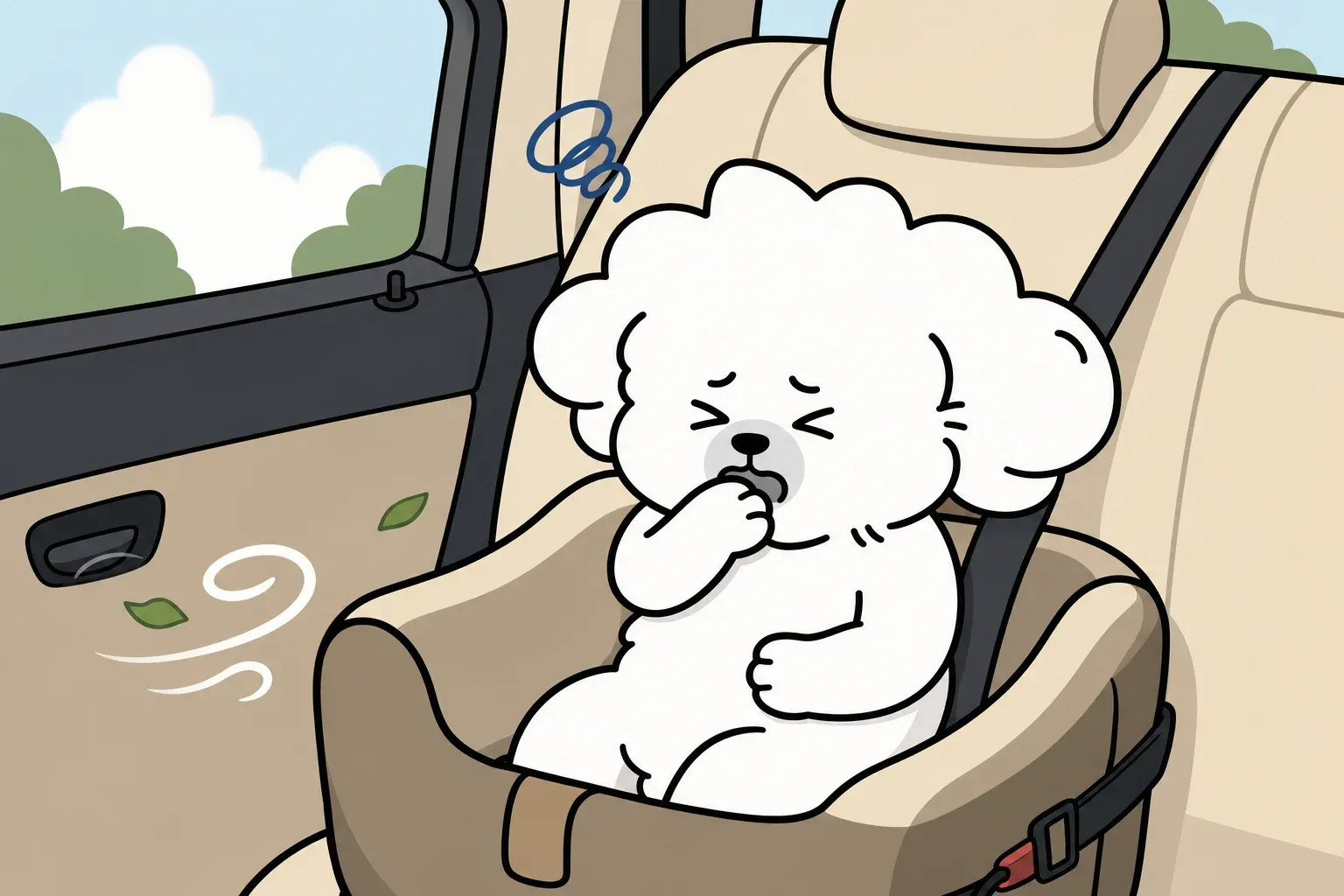
You packed the dog bag. Loaded the crate. Mapped the rest stops. Ten minutes into the highway, your dog is drooling heavily, whining, and — if you’ve experienced this before — you know what comes next.
Dog car sickness is one of the most common travel frustrations for pet owners, yet most solutions offered online stop at “don’t feed them before the trip.” The reality is more nuanced: car sickness in dogs has both physical and psychological roots, and effective prevention requires addressing both simultaneously.
This guide covers the vestibular science behind dog motion sickness, how to recognize it before the vomiting starts, and seven evidence-backed strategies — including a structured desensitization protocol and a medication comparison table — that can genuinely change your dog’s relationship with car travel.
How Common Is Dog Car Sickness?
Car sickness affects dogs at a significantly higher rate than most owners realize. While precise prevalence data is limited, veterinary behaviorists estimate that motion sickness is among the top five reasons dog owners seek advice about travel. Puppies are disproportionately affected, with many experiencing nausea on nearly every car ride before 12 months of age.
The good news: most dogs can be meaningfully improved with the right combination of behavioral conditioning and, where necessary, veterinary support.
Puppies vs Adult Dogs: Why Age Matters
The single biggest predictor of car sickness is age. Puppies — particularly those under 6 months — have an underdeveloped vestibular system, the network of structures in the inner ear responsible for detecting motion and maintaining balance. Because this system is still maturing, it sends conflicting signals to the brain during vehicle movement, triggering the classic nausea response.
As the vestibular system matures (typically complete by 12–18 months), many dogs naturally experience fewer symptoms. However, if a puppy repeatedly vomits during car rides without intervention, a secondary problem emerges: the dog begins to associate the car with feeling sick. This learned fear can persist long after the physical cause has resolved, which is why early desensitization training is so important.
The Science Behind Dog Motion Sickness (Vestibular System)
Motion sickness occurs when there is a sensory mismatch between what the vestibular system detects and what the eyes report. In a moving car, a dog’s inner ear senses motion, acceleration, and vibration — but if the dog is looking at the interior of the vehicle (or is too low to see the horizon), the visual information doesn’t align with the vestibular input. The brain interprets this conflict as potential poisoning and triggers the vomiting reflex as a protective mechanism.
The relevant anatomy: the vestibular apparatus consists of the semicircular canals (detecting rotational motion) and the otolith organs (detecting linear acceleration and gravity). In puppies, the hair cells lining these structures are still developing, making the mismatch signals more intense than in adult dogs.
This same mechanism explains why dogs positioned lower in the vehicle — particularly small breeds on the seat or floor of a compact car — experience more severe symptoms than larger dogs riding with a higher sightline.
Dog Car Sickness Symptoms: What to Watch For
One of the most useful things you can do as an owner is learn to recognize nausea before it reaches the vomiting stage. Dogs display a reliable progression of symptoms, and catching them early gives you time to intervene — pull over, open windows, offer reassurance, or stop the trip if necessary.
Early Warning Signs: Yawning, Lip Licking, Restlessness
The first stage of nausea in dogs often goes unnoticed because the signs are subtle and easily mistaken for normal behavior. Watch for:
- Repeated yawning (not sleepy yawning — stress yawning is more deliberate and frequent)
- Lip licking or tongue flicking without food present
- Restlessness: shifting positions, inability to settle, pacing within the confined space
- Fixed staring or a “glazed” look
- Hypervigilance: tracking every sound, muscle tension across the body
These are early parasympathetic stress signals. If you see two or more of these within the first 10 minutes of a ride, the dog is already experiencing significant nausea.
Progressive Symptoms: Drooling, Whining, Nausea
As nausea intensifies, the symptoms become harder to miss:
- Hypersalivation (excessive drooling): the body begins producing saliva in preparation for vomiting
- Whining or vocalizing
- Swallowing repeatedly (borborygmi — audible intestinal sounds — may be present)
- Seeking contact with owner or attempting to climb toward the front seat
- Loss of interest in treats that the dog normally accepts readily
At this stage, pulling over and allowing fresh air — and ideally, a brief walk — can interrupt the cycle before vomiting occurs.
Severe Signs: Vomiting, Trembling, Urination
The most acute stage includes:
- Active vomiting (often bile or partially digested food)
- Trembling or shaking (distinct from cold — associated with anxiety and physical distress)
- Loss of bladder or bowel control in severe cases
- Complete behavioral shutdown: refusing to interact, pressing into a corner
Dogs that reach this stage on multiple trips are at high risk of developing a conditioned fear response to the car itself — meaning they may begin vomiting due to anxiety alone, even before the engine starts.
What Causes Dog Car Sickness?
Understanding the specific cause driving your dog’s symptoms helps you choose the right intervention. Car sickness is rarely just one thing.
Physical Causes: Immature Vestibular System, Inner Ear Sensitivity
As described above, the primary physical cause in puppies is an underdeveloped vestibular system. In adult dogs, some individuals simply have heightened inner ear sensitivity — a variation in how strongly the vestibular-to-vomiting pathway responds to sensory conflict. This is similar to the variation seen in humans: some people can read in moving vehicles without difficulty, while others feel ill within minutes.
Underlying ear infections (otitis interna or otitis media) can also dramatically worsen motion sickness by directly affecting vestibular function. If a previously car-tolerant adult dog suddenly develops severe motion sickness, a veterinary exam to rule out ear pathology is warranted.
Psychological Causes: Negative Associations, Anxiety
Dogs learn quickly through association. A dog that has vomited in the car multiple times begins to associate the sight, smell, and sounds of the vehicle with feeling unwell. This conditioned anxiety can itself trigger the physiological nausea response — the anticipatory stress elevates cortisol and activates the same neural pathways that cause physical motion sickness.
This is why some dogs begin drooling in the driveway before the car has moved, or refuse to enter the vehicle entirely. The psychological component often requires dedicated desensitization training regardless of whether medication is also used.
Noise phobia and anxiety-based behavioral issues follow a similar conditioning pattern and often benefit from comparable counter-conditioning approaches.
Breed and Size Factors
Several structural factors influence susceptibility:
- Brachycephalic breeds (French Bulldogs, Pugs, Bulldogs, Boston Terriers): the compressed nasal anatomy creates higher baseline respiratory effort, and these dogs tend to aerophagia (air swallowing) under stress, which worsens nausea and distension
- Small breeds under 10 lbs: their lower center of gravity means a greater proportion of their body experiences the vehicle’s motion relative to their visual horizon — they physically experience more movement than larger dogs
- Working breeds (Border Collies, German Shepherds): often less affected due to extensive car exposure during working life, but can still develop anxiety-based sickness if early experiences were negative
- Individual variation exists across all breeds — breed is a risk factor, not a determinant
7 Proven Ways to Prevent and Treat Dog Car Sickness
Effective management combines behavioral approaches (which address both the physical and psychological components) with targeted environmental modifications and, when necessary, veterinary medication. Here is a structured framework.
1. The 4-Phase Desensitization Protocol
Desensitization is the most durable long-term solution for dogs with established car anxiety or conditioned nausea. The goal is to systematically rebuild the dog’s emotional association with the car from neutral or negative to positive.
This protocol requires 2–4 weeks of consistent daily practice. Do not rush phases — moving too quickly resets progress.
Phase 1: Passive Exposure (Days 1–5)
- Feed meals, give high-value treats, and engage in play near (but not in) the car with the engine off
- Goal: the car’s presence predicts good things happening
- Session length: 5–10 minutes, twice daily
Phase 2: Entry Without Travel (Days 6–10)
- Open the car door and encourage the dog to explore voluntarily — never force entry
- Once the dog enters willingly, reward heavily and end the session
- Progress to: sitting calmly in the stationary car with the door closed, engine off (1–2 minutes, increasing gradually)
- Key indicator: dog shows relaxed body language (loose muscle tone, soft eyes, willing to accept treats)
Phase 3: Engine On, No Movement (Days 11–14)
- Start the engine while the dog is comfortable in the car
- Reward calm behavior; end the session if significant stress signs appear
- Gradually extend engine-on duration to 5–10 minutes
Phase 4: Short Trips with Positive Destinations (Days 15–28)
- First trips: 2–3 minutes only, ending at somewhere the dog enjoys (park, friend’s yard)
- Increase trip duration by 5-minute increments as tolerance builds
- Always end trips on a positive note — never the first experience of vomiting
For dogs with severe conditioned anxiety, veterinary anti-anxiety medication during the early desensitization phases can significantly accelerate progress by keeping the dog below the panic threshold while new associations form.
2. Pre-Trip Fasting Window (2–3 Hours Before)
An empty or near-empty stomach substantially reduces vomiting risk. The vestibular-triggered nausea reflex has less material to expel, and gastric distension (which worsens nausea) is minimized.
- Withhold food for 2–3 hours before the trip
- Water access is fine and should not be restricted
- For small breeds and puppies, limit the fast to 2 hours maximum to avoid hypoglycemia
- A small, bland snack (plain rice or a few low-fat treats) 4–6 hours before departure is preferable to a full meal close to departure
Avoid feeding immediately after arrival at the destination if the dog has been stressed — wait 30 minutes for the stress response to normalize.
3. Optimal Car Positioning (Back Seat Floor, Center)
Where in the vehicle your dog rides matters more than most owners realize.
The back seat floor, centered between the two rear doors, is the lowest-motion position in most vehicles. Here’s why:
- Less visual motion at floor level reduces the sensory mismatch the vestibular system experiences
- Center position minimizes the side-to-side swaying that is most disruptive to inner ear equilibrium
- Facing forward (when using a secured crate or car seat) allows the dog to orient to the direction of motion, partially compensating for the vestibular conflict
Positioning to avoid: rear cargo area (most vibration and lateral movement), rear-facing positions, elevated booster seats that increase sightline to fast-moving exterior scenery in dogs with established motion sickness.
4. Ventilation and Temperature Control
Fresh air has a documented calming effect on nausea symptoms and is frequently recommended by veterinary behaviorists for managing motion sickness in dogs.
- Crack the rear windows 2–4 inches during travel — enough to allow airflow without creating dangerous pressure differentials
- Maintain cabin temperature between 65–72°F (18–22°C); overheating significantly worsens nausea
- Avoid air fresheners, perfumes, and strong odors in the vehicle — an already-nauseated dog’s olfactory sensitivity makes strong smells acutely unpleasant
- For warm-weather travel, a battery-powered fan directed toward the dog’s face can help
5. Crate Training for Car Rides
A properly sized, familiar crate serves dual purposes: it provides physical security (reducing the lateral sway a loose dog experiences), and for a crate-trained dog, the crate itself is a pre-loaded positive association that can offset some car-related anxiety.
The crate should:
- Allow the dog to stand, turn around, and lie down comfortably — not excessively large
- Be secured so it does not slide during braking or cornering
- Contain familiar bedding with the dog’s scent
If your dog is not yet crate trained, a systematic introduction is worth completing before focusing on car travel conditioning — the crate becomes a tool that supports travel comfort long-term.
Cover three sides of the crate with a blanket during car travel; reducing visual stimulation further decreases the sensory mismatch contributing to nausea.
6. Rest Stops on Long Trips (Every 1–2 Hours)
For trips over 60–90 minutes, scheduled rest stops allow the vestibular system to recalibrate and give the dog a genuine break from the motion inputs driving nausea.
- Stop every 1–2 hours, minimum 10 minutes per stop
- Allow the dog to walk (leashed), sniff, and eliminate
- Offer water; withhold food until the trip is complete for nausea-prone dogs
- Avoid high-excitement play immediately before re-entering the vehicle — a slightly elevated heart rate increases nausea susceptibility
For dogs planning longer road trips — including travel to vacation rentals or cabins — thoughtful route planning with adequate rest stops can be the difference between a manageable trip and a miserable one.
7. Veterinary Medications: Cerenia, Dramamine, and More
When behavioral and environmental approaches are insufficient, veterinary medication provides reliable symptom control. Always consult a veterinarian before using any medication — dosing errors and drug interactions can cause serious harm.
Medication comparison:
| Medication | Type | Effectiveness | Notes |
|---|---|---|---|
| Cerenia (maropitant citrate) | Prescription, FDA-approved for dogs | High — blocks the NK1 receptor pathway that triggers vomiting | Gold standard; approved for motion sickness in dogs ≥ 16 weeks. Oral tablet given 2 hours before travel. Minimal sedation. |
| Dramamine (dimenhydrinate) | OTC, antihistamine | Moderate | Off-label use in dogs; human formulation may contain xylitol (toxic). Must use plain formulation only. Sedating. Vet guidance required for dosing. |
| Benadryl (diphenhydramine) | OTC, antihistamine | Low-moderate for motion sickness | Primarily used for mild cases/travel anxiety. Sedation is the main mechanism. Plain formulation only — avoid combination products. |
| Meclizine | OTC, antihistamine | Moderate | Longer-acting than Dramamine; less sedating. Occasionally used by vets for motion sickness. Vet guidance required. |
| Alprazolam / Trazodone | Prescription, anti-anxiety | Variable | Used when anxiety is the primary driver; addresses psychological component rather than vestibular nausea. Often combined with Cerenia for severe cases. |
| Ginger (natural) | OTC supplement | Low-moderate for mild cases | Some antiemetic evidence. Safe in small amounts for most dogs. Does not replace prescription options for moderate-severe cases. |
Key clinical points:
- Cerenia is the only FDA-approved option specifically indicated for motion sickness in dogs — it is the most reliable choice when medication is needed
- Antihistamines (Dramamine, Benadryl, meclizine) work via sedation and vestibular suppression; they do not directly block the vomiting reflex with the same precision as maropitant
- Never give Dramamine formulations labeled “non-drowsy” or those containing other active ingredients — check the label carefully for xylitol and other additives
- Medication alone does not resolve conditioned anxiety — combining Cerenia with desensitization training produces the most durable results
Dog Car Sickness by Age and Breed
Puppies Under 6 Months
This is the highest-risk group. The vestibular system is most immature before 6 months, making every car ride a significant nausea risk without intervention. Priorities for this age group:
- Keep initial car rides extremely short (under 5 minutes) with immediate positive reward on arrival
- Begin desensitization from the first week in the home — don’t wait until the puppy is symptomatic
- Pre-trip fasting is important but limit to 2 hours maximum due to hypoglycemia risk
- Cerenia is approved for puppies 16 weeks and older; discuss with your vet for puppies under 16 weeks
Early positive car experiences established before 6 months can prevent the conditioned fear pattern from developing at all.
Small Breeds (Under 10 lbs)
Small breeds face a double challenge: their body position in the vehicle creates heightened vestibular stimulation, and their smaller stomach empties more rapidly — meaning both physical and psychological nausea triggers are more acute.
- Secure crate on the back seat floor is especially important for small breeds
- Consider a forward-facing, crash-tested carrier to maintain stable orientation
- Fasting window: 2 hours (lower hypoglycemia threshold than large breeds)
- Brachycephalic small breeds (Chihuahua mixes, Shih Tzus, Pugs): monitor closely for respiratory distress in addition to nausea symptoms
Medium to Large Breeds
Medium to large breeds generally have a more favorable vestibular maturation rate and higher seating positions relative to vehicle motion. That said:
- Working breeds with car anxiety due to negative early experiences need the same desensitization protocol as smaller dogs
- Large, deep-chested breeds (Labrador Retrievers, Great Danes, Standard Poodles) may benefit from the fasting window more than others, as gastric distension from a full stomach increases bloat risk on top of nausea
- For travel planning with larger dogs, ensuring correct car restraint is foundational
Senior Dogs
Senior dogs that have traveled without issues for years can develop motion sickness due to age-related changes in vestibular function. If an older dog suddenly becomes car sick, a veterinary exam is the first step — idiopathic vestibular syndrome (old dog vestibular disease) can present with acute disorientation, nausea, and head tilt, and is often misidentified as car sickness.
For genuinely age-related car sensitivity:
- Shorter, less frequent trips
- Extra padding in the crate for joint comfort during travel
- Cerenia is appropriate for senior dogs; discuss concurrent medication interactions with your vet
When to See a Vet
Not every case of vomiting in the car is straightforward motion sickness. Several situations warrant veterinary evaluation.
Motion Sickness vs Underlying Health Issues
Seek veterinary assessment if:
- A previously car-tolerant adult dog develops sudden, severe motion sickness (may indicate vestibular disease, ear infection, or other neurological issue)
- The dog vomits even on extremely short (under 5-minute) trips at low speeds
- Symptoms occur outside the car on any movement — in elevators, boats, buses, subways, or when being carried (dogs that vomit on any vehicle may struggle with public transit rides as well)
- Blood is present in vomit
- Vomiting is accompanied by severe disorientation, head tilt, or loss of balance at rest
- The dog shows signs of abdominal pain alongside vomiting
If your dog also vomits outside of travel contexts, reviewing the range of vomiting causes can help you determine whether a car-specific trigger is actually present.
Chronic Vomiting Red Flags
Dogs that vomit on every car ride despite behavioral intervention and appropriate medication may have an underlying sensitivity that requires a full workup. Chronic untreated nausea causes significant welfare concerns — dogs that dread travel cannot join family trips, vet visits become traumatic, and the quality of life impact is real. A veterinarian can create a customized management plan combining behavioral protocols with appropriate pharmacological support.
If motion sickness also occurs during air travel, the same vestibular principles apply, though airline-specific restrictions on medication timing add an additional layer of planning.
References
FAQ
Can I give my dog Dramamine for car sickness?
Is car sickness the same as motion sickness in dogs?
Do dogs outgrow car sickness?
Can I give my dog ginger for car sickness?
Should I feed my dog before a car ride?
Related Articles

Planning a Car Trip With Your Dog? Essential Safety Rules You Need to Know
Complete guide to dog car travel safety: crash-tested restraint options, desensitization training, motion sickness solutions, hot car laws, and emergency protocols.
Why Is My Dog Throwing Up? Causes by Vomit Color and When to See the Vet
Learn the most common dog vomiting causes by vomit color, breed risk factors, emergency warning signs, and a step-by-step home care protocol from hours 0–24.

How to Crate Train Your Dog: A Step-by-Step Guide from First Introduction to Calm Alone Time
Learn how to crate train a dog with a 5-step protocol, age-based time limits, and troubleshooting for crying, crate aversion, and accidents.