 Cirius Petpedia
 Dog Digging Behavior: Why Dogs Dig and How to Manage It
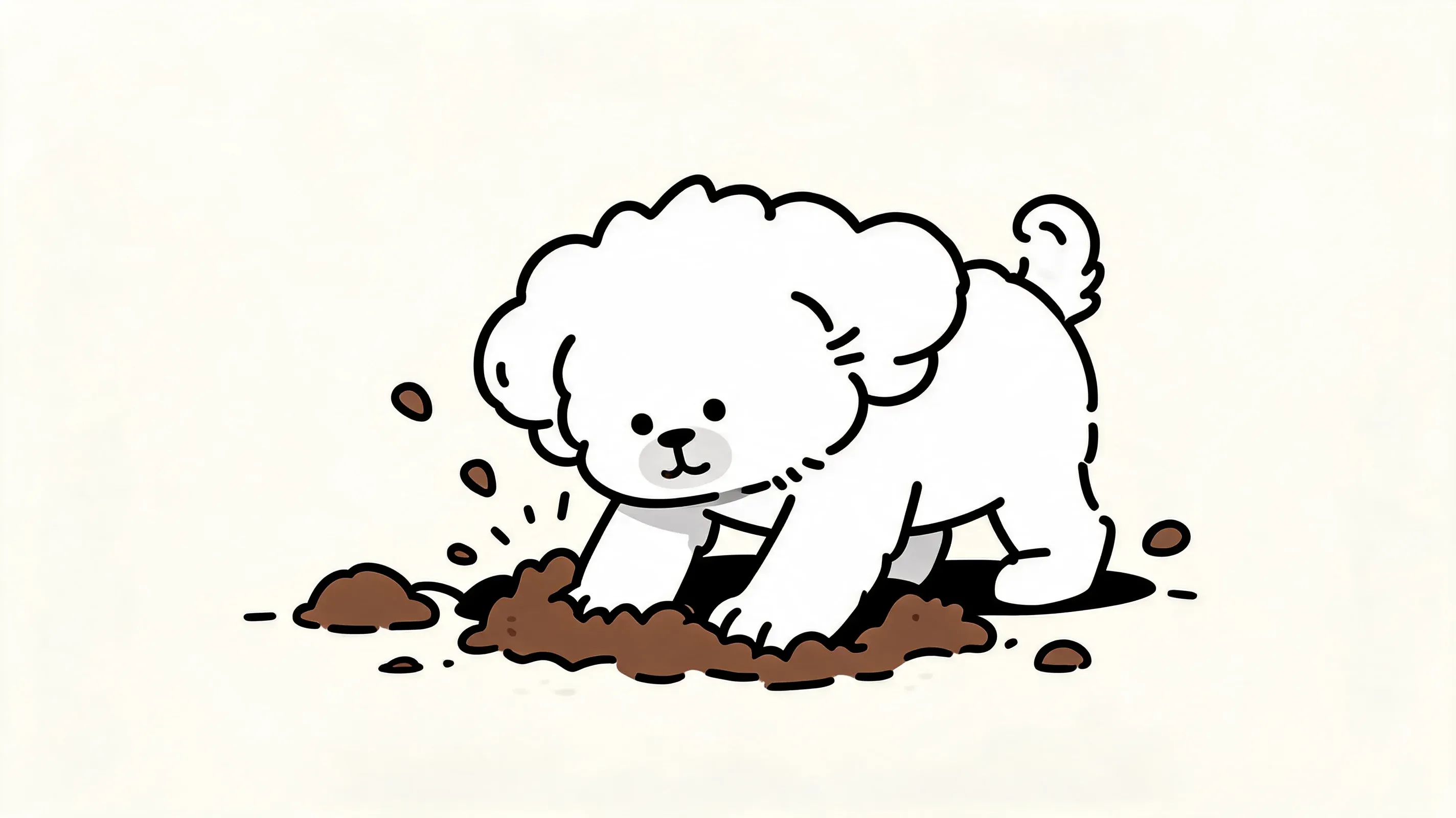
Dog Digging Behavior — It’s Not Just a Bad Habit
Holes in the backyard. Frantic scratching at the corner of the couch. Circular pawing at the bed before finally settling. If any of these scenes look familiar, you are watching a behavior that connects your dog to tens of thousands of years of canid ancestry — not a character flaw you failed to train away.
Dog digging behavior is one of the most searched and most misunderstood canine topics, largely because the same underlying drive expresses itself across completely different surfaces and contexts. A Labrador excavating a trench under the back fence, a Dachshund spinning on the bedroom duvet, and a Beagle pawing relentlessly at the couch cushion are all doing versions of the same thing.
Understanding why your dog digs — not just that they dig — is what separates effective management from an exhausting game of whack-a-mole.
The Wild Ancestry of Digging
Wild canids dig for reasons that are straightforward and practical: to escape temperature extremes, to cache food, to create a den for whelping, to flush out prey, and to escape predators or confined spaces. These functions were adaptive for thousands of generations. Domestic dogs retain the hardware even when the ecological reasons for it no longer exist.
The Norwegian Lundehund was bred specifically to dig puffins from cliff burrows. The Jack Russell Terrier was developed to follow foxes underground. The Siberian Husky scraped hollows in Arctic snow to sleep. The fact that these dogs now dig in suburban gardens and on memory foam mattresses is not confusion — it is the same inherited motor program running in a new environment.
Digging, Scratching, and Pawing — Same Instinct, Different Surfaces
What reads as “my dog is destroying the yard” outdoors becomes “my dog is scratching the bed” indoors. The behavior looks different on grass versus fabric, but the motor sequence, the neurological drive, and the function are largely the same. This unified perspective matters for management: solutions that ignore the underlying drive rarely hold.
One note on nomenclature: throughout this guide, “digging” refers to the full spectrum — yard excavation, floor scratching, bed pawing, and couch padding — unless a specific context is named.
7 Reasons Dogs Dig
Most cases of dog digging behavior fall cleanly into one of seven categories. Identifying which one applies to your dog is the first step toward an effective response.
Breed Instinct — Why Terriers, Dachshunds, and Huskies Dig More
Some dogs don’t just have a tendency to dig — they were purpose-built for it. Selective breeding for digging-intensive work amplified the drive to a level that cannot be trained away, only redirected.
| Breed Group | Examples | Digging Drive | Original Function |
|---|---|---|---|
| Terrier | Jack Russell, Cairn, Scottish, Airedale | Very High | Flush and follow quarry underground |
| Scent Hound | Beagle, Dachshund, Basset Hound | High | Track and pursue burrowing prey |
| Nordic Sled | Husky, Malamute, Samoyed | High | Excavate sleeping hollows in snow |
| Retriever | Labrador, Golden Retriever | Moderate | Caching and retrieval behaviors |
| Herding | Border Collie, Australian Shepherd | Moderate | Redirected from excess energy |
| Toy | Chihuahua, Yorkshire Terrier | Moderate | Nesting; amplified in small spaces |
If your dog is a Jack Russell Terrier or a Dachshund that digs obsessively, this is not a training failure. The behavior is woven into their genetics. Providing an appropriate outlet (see the dig zone guide below) is the realistic and humane response.
Temperature Regulation — Cool Dirt in Summer, Warm Blankets in Winter
Dogs are thermoregulatory digging machines. In warm weather, they excavate a few inches of soil to reach the cooler earth beneath — a simple, effective cooling strategy that ancestral canids relied on before shaded kennels existed. Dogs most likely to do this: Huskies, Malamutes, Saint Bernards, and any dog kept outdoors without adequate shade or water.
The indoor version plays out on cool tile, in front of air conditioning vents, or under furniture. Dogs scratching at these surfaces in summer heat are often seeking the same thing: a cooler patch to rest on.
In cold weather, the behavior reverses. Dogs scratch and circle at blankets and soft surfaces to trap body heat beneath them — again, an instinctual behavior carried from the wild into the living room.
Practical signal: If your dog only digs during temperature extremes, or specifically seeks out sun-exposed or shaded patches, temperature regulation is the most likely explanation.
Nesting — The Real Reason Dogs Scratch Their Beds
“Why do dogs dig in their beds?” is one of the most frequently searched questions about this behavior, and the answer is surprisingly ancient. Scratching and circling before lying down is a nest-building behavior preserved across domestic dogs, wolves, and most wild canids. The function is to create a body-contoured depression, remove debris, and assess the ground for hidden hazards.
Your dog pawing at the corner of their memory foam bed is running the same motor program their ancestors used on the forest floor. The behavior is almost always benign.
The same behavior appears on couches, on piles of laundry, and directly on the carpet. If your dog digs on beds and couches specifically before resting, nesting is nearly always the explanation.
Hiding Treasures — The Burying Instinct
Wild canids cache food to protect it from scavengers and preserve it for later. Domestic dogs retain this caching instinct even when surplus food is a given. The result: bones buried in yard corners, toys wedged under couch cushions, treats hidden behind furniture cushions.
This behavior is more pronounced in dogs who perceive resource insecurity — whether real or imagined. Dogs who were stray, food-restricted in a shelter environment, or who live with multiple pets and feel their resources are at risk tend to cache more actively.
Caching typically causes minimal damage and requires minimal intervention. If it becomes disruptive (destructive excavation of garden beds, obsessive burying that interferes with other behaviors), enrichment that reduces resource-guarding anxiety is helpful.
Stress and Anxiety — When Digging Is a Coping Mechanism
Digging can function as a self-soothing repetitive behavior, similar to the way anxious people pace, bite their nails, or tap rhythmically. The physical motion provides a sensory rhythm that temporarily reduces arousal.
Common anxiety triggers that produce digging:
- Separation from owners (a hallmark of separation anxiety in dogs)
- Thunderstorms, fireworks, or loud environmental stressors
- New people, pets, or environments
- Changes in household structure or daily schedule
- Inadequate social contact
Anxiety-driven digging often occurs during or immediately after the stressor. The dog may also show other signs: panting without heat, yawning, lip licking, pacing, or excessive vocalization. The behavior rarely stays confined to one surface — anxious dogs often dig at whatever is available.
Boredom and Excess Energy — The Understimulated Digger
This is the most common cause in otherwise healthy dogs, particularly in working and sporting breeds living in low-stimulation environments. When a Border Collie designed to work eight hours a day receives a single 20-minute walk, the unspent energy has to go somewhere. Digging is one of the most physically and cognitively engaging outlets available.
A useful diagnostic question: does your dog dig primarily after long periods of inactivity? Does the digging reduce or disappear after adequate exercise and mental engagement? If yes, boredom is your answer.
Physical exercise alone is often insufficient for high-drive breeds. Mental stimulation — nose work, training sessions, puzzle feeders — can be more draining than additional physical activity, and is frequently the missing element for chronic diggers.
Hunting Drive and Escape Attempts — Digging Under Fences
Digging along fence lines almost always signals one of two things: prey drive (the dog detects something — a rodent, a rabbit, an interesting smell — on the other side) or escape motivation (the dog has a reason to want to be elsewhere, often because they are under-stimulated or in search of social contact).
Beagles and other scent hounds are particularly prone to fence-line digging motivated by odor trails. Terriers may dig at the fence simply because the fence represents an obstacle to getting somewhere interesting.
Both types respond well to management strategies (L-shaped fence footings, concrete barriers at the base) combined with enrichment that provides adequate stimulation within the yard. A dog sufficiently engaged at home has less motivation to excavate an exit.
Outdoor Digging vs Indoor Scratching — Reading the Context
The surface your dog digs on provides useful diagnostic information. Cause, motivation, and response strategy all shift depending on where the behavior occurs.
Yard and Garden Digging
Outdoor digging clusters into three main patterns:
Fence-line excavation — nearly always escape or prey motivation. Look for evidence of the trigger: animal burrows, tracks, or smells on the other side. Management focus: physical barriers at the fence base, increased yard enrichment.
Open-yard holes — typically cooling, boredom, or caching. A dog that digs and then lies in the hole is almost certainly thermoregulating. Scattered holes across the yard suggest boredom or play. Concentrated holes in specific spots suggest caching or prey detection.
Garden bed digging — often opportunistic. Freshly turned soil is irresistible to dogs with active noses or caching instincts. Barriers, citrus peel, or designated dig areas redirect most garden bed diggers effectively.
Floor, Couch, and Bed Scratching
Indoor digging behavior is dominated by nesting and anxiety. A dog who scratches their bed before lying down every night, circles, and then settles is nesting normally. The same behavior that persists for extended periods, cannot be interrupted, or occurs throughout the day without the dog ever settling suggests anxiety.
Couch scratching specifically is common in dogs who treat the couch as their primary resting spot. The behavior is normal but can be managed with designated dog beds in preferred spots combined with positive reinforcement for using them.
Floor scratching at hard surfaces (tile, hardwood) sometimes indicates temperature-seeking, occasionally indicates a pain response where the dog is trying to find a comfortable position due to joint or muscle discomfort.
Pawing at You — What It Means
Dogs paw at their owners for a range of reasons: attention-seeking, play solicitation, and the specific case of pawing that looks like mini-digging directed at a human arm or leg. This behavior often begins as a puppy play pattern and persists through reinforcement. It is rarely instinctual digging and almost always a learned communication pattern — the dog has discovered that pawing at you produces a response.
Normal vs Compulsive — When to Be Concerned
The most important distinction in understanding dog digging behavior is the line between normal, motivated digging and compulsive, self-reinforcing digging that has detached from its original function.
Signs of Healthy Digging
Normal digging behavior shares these characteristics:
- Contextually appropriate: occurs during play, in heat, before resting, after finding an interesting smell
- Interruptible: the dog redirects when called, when offered a treat, or when engaged by something else
- Proportionate: lasts for a reasonable duration, does not dominate the dog’s waking time
- Variable: not rigidly stereotyped in timing, location, or motor sequence
- Not self-injurious: paws and nails are not damaged; the dog does not appear distressed
Red Flags for Compulsive Digging (CCD)
Canine Compulsive Disorder (CCD) is a recognized veterinary behavioral diagnosis. Digging can become a compulsive manifestation in much the same way tail chasing or flank sucking can — see compulsive behaviors in dogs for the broader context. Red flags include:
- Digging occurs even without an identifiable trigger
- Episodes are difficult or impossible to interrupt
- The dog returns to digging immediately after being redirected
- Frequency and duration have increased progressively over weeks or months
- The dog appears distressed, not engaged, during episodes (vacant expression, inability to settle)
- Paws, nails, or the nose are showing physical damage
- The behavior occupies a significant portion of waking hours
Any three or more of these flags together warrant evaluation by a veterinarian or veterinary behaviorist.
When Pain May Be the Hidden Cause
A less obvious trigger for digging — particularly indoor pawing at hard, cool surfaces — is physical discomfort. Dogs with joint pain, arthritis, or other musculoskeletal issues sometimes scratch and reposition repeatedly when trying to find a comfortable resting position. The behavior looks like restless digging but is actually repeated repositioning due to discomfort.
Understanding how dogs signal pain through behavior is useful context: dogs rarely vocalize pain. Behavioral changes — including new or increased digging — are often the first externally visible sign. Additional signals that point to pain as the underlying cause: stiffness when rising, reluctance to climb stairs, posture changes, or flinching when touched in specific areas.
How to Manage Digging by Cause
Effective management matches the response to the root cause. Generic “stop digging” strategies fail because they ignore the motivation driving the behavior.
Increase Exercise and Mental Stimulation
For boredom-driven digging, the primary lever is enrichment volume and quality.
Physical exercise guidelines by type:
| Dog Type | Minimum Daily Active Exercise | Notes |
|---|---|---|
| Low-energy breeds (Basset, Bulldog) | 30–45 min | Adequate for most |
| Medium-energy breeds (Lab, Golden) | 45–60 min | Active, not just walking |
| High-energy breeds (Husky, Border Collie) | 90+ min | Plus mental work |
| Terriers | 45–60 min | High-intensity sessions work better than duration |
“Active” means running, swimming, fetch, or structured play — not slow leashed walking. For breeds with a strong digging drive, increasing exercise volume alone is often insufficient. Mental engagement is the missing component.
Mental stimulation options:
- Nose work and scent-tracking games (15–20 minutes is cognitively equivalent to 30–45 minutes of walking for most dogs)
- Puzzle feeders and food-dispensing toys fed at mealtime instead of bowls
- Training sessions focused on new commands or trick learning
- Snuffle mats that simulate foraging through grass
For structured approaches to mental enrichment that directly reduce excess-energy digging, indoor dog play activities provides a practical framework, and hyperactivity and calm training protocols addresses the behavioral side of excess arousal.
Create a Designated Dig Zone — DIY Setup Guide
A designated dig zone (sometimes called a dig box or sandbox) is the most consistently effective tool for dogs with strong breed-driven or boredom-driven digging. The principle: instead of suppressing the behavior, redirect it to an approved location.
Materials:
- A wooden frame or sandbox (minimum 4 ft × 4 ft for medium-large breeds; a child’s sandpit works for small breeds)
- Clean play sand or a sand-soil mix (avoid beach sand with salt content)
- High-value items to bury initially: preferred toys, bully sticks, stuffed Kongs
Setup steps:
- Choose a shaded area — dogs dig in open sun to reach cool soil, but a designated zone should also be appealing in hot weather.
- Build or place the frame. Fill with at least 10–12 inches of loose sand or sandy soil to allow satisfying depth.
- Before introducing your dog, bury several high-value items just below the surface — visible enough to find quickly at first.
- Lead your dog to the zone and encourage investigation with excited body language. When they begin digging, mark the behavior with a verbal cue (“dig it!”) and high-value praise.
- When your dog digs anywhere not approved, redirect calmly to the dig zone. Do not scold — simply pick up and move.
- Refresh the zone periodically with buried items to maintain novelty.
Most dogs with a genuine digging drive adopt a designated dig zone within 1–3 weeks of consistent redirection. Terrier breeds often need only a few sessions.
Snuffle Mats and Nosework as Alternatives
For indoor dogs where a dig box is not practical, nose work provides a functionally similar outlet. The sniffing and foraging component of digging (detecting buried items, investigating interesting smells) is the behaviorally rewarding element — not the excavation itself for many dogs.
Snuffle mats — fabric mats with layered fabric strips that hide small food pieces — replicate the foraging aspect effectively. Scent-work games where treats or toys are hidden around the home and the dog searches them out extend this further. For a structured approach to nosework training that can redirect digging-related drive, see nosework training for dogs.
Environmental Management and Access Control
When complete prevention of damage is the immediate goal — for example, protecting a garden during the training transition period — environmental management buys time:
Yard management:
- L-shaped rock or concrete footings at the fence base (the most effective fence-digging deterrent)
- Chicken wire buried 6–12 inches and bent outward underground along problem sections
- Motion-activated sprinklers near areas of persistent digging
- Citrus peels or commercial dog-repellent spray on garden beds (less reliable but low-effort)
- Limiting unsupervised yard time until the dig zone is established
Indoor management:
- Dog-proofing access to problem furniture with furniture protectors or simply restricting access temporarily
- Providing an enriching, comfortable crate environment as a safe space when unsupervised — a properly introduced crate (crate training guide) gives anxious dogs a settled, secure alternative to stress-digging
Addressing Anxiety-Based Digging
Anxiety-driven digging requires a different approach from instinct-driven or boredom-driven digging — the goal is reducing the underlying anxiety, not just the behavior.
Identify and reduce the stressor. Keep a log of when digging occurs relative to daily events. Patterns usually emerge within a week: digging peaks when alone, during specific weather events, or after particular interactions.
Increase predictability. Anxious dogs stabilize on predictable routines. Fixed feeding, exercise, and sleep schedules reduce chronic low-level cortisol that predisposes to anxious behaviors.
Create a safe space. A designated bed, crate, or corner with familiar scent items can function as a decompression zone. Many dogs given a secure retreat choose it over stress-digging when the trigger is low-to-moderate.
Consider professional behavioral support. For dogs with significant anxiety, particularly those showing separation anxiety or multi-modal stress responses, a veterinary behaviorist or certified applied animal behaviorist is the appropriate resource. Behavior modification protocols combined with anxiety-reducing tools (including, in some cases, pharmacological support) have strong evidence for this presentation.
When to See a Veterinarian
Most digging is normal and manageable without veterinary involvement. The following criteria define when professional evaluation is warranted:
Schedule a vet visit if:
- Paws are bleeding, nails are broken, or the nose is raw or injured from digging — self-injurious behavior always warrants evaluation
- The behavior started suddenly in an adult dog with no prior digging history — sudden onset suggests a physical or environmental trigger that needs identifying
- Digging is accompanied by other new behavioral changes: restlessness at night, changes in appetite, posture shifts, reluctance to be touched in certain areas (possible pain involvement)
- Digging behavior appears cyclical in an unspayed female dog — pseudopregnancy produces intense nesting and digging in some individuals
- You suspect compulsive digging — episodes that cannot be interrupted, that escalate progressively, or that seem disconnected from any identifiable trigger
What to bring to the appointment:
Video documentation of the behavior (30–60 seconds showing the episode, whether it can be interrupted, and what follows) gives the veterinarian far more diagnostic information than a description alone. A 1–2 week diary of when episodes occur, duration, and what preceded them helps distinguish a behavioral pattern from a medical one.
Learning to read your dog’s broader body language can help you catch subtle signals of discomfort or stress before they escalate into visible behavioral symptoms.
References
- 1. Why Do Dogs Dig? – American Kennel Club
- 2. How to Stop Your Dog from Digging – Humane World for Animals
- 3. Canine Behavior and the Five Freedoms – ASPCA
- 4. Canine Compulsive Disorder – Tufts Animal Behavior Clinic
- 5. Stereotypic and Compulsive Behaviors in Dogs – VCA Animal Hospitals
- 6. Normal vs. Abnormal Repetitive Behaviors in Dogs – Applied Animal Behaviour Science
FAQ
Why does my dog dig in their bed before lying down?
Why is my dog suddenly digging when they never did before?
Can you fully stop a dog from digging?
Do dogs dig when they are happy?
Why does my female dog dig in the house?
Related Articles

Dog Separation Anxiety Guide: Symptoms, Training, and Help
Learn how to identify dog separation anxiety symptoms, follow a vet-backed step-by-step training plan, and know when medication or a specialist is needed.

Is Your Dog in Pain? 7 Subtle Signs Most Owners Miss
Learn the 7 behavioral signs your dog is in pain that are easy to overlook, how to tell acute from chronic pain, and what to do before your vet visit.

Can You Really Read Your Dog? A Complete Guide to Dog Body Language
Master dog body language with a body-part-by-body-part breakdown plus emotion-state cross-reference. Learn calming signals, misread cues, and pain signals.