 Cirius Petpedia
 Is Your Dog's Swollen Belly an Emergency? GDV Bloat Symptoms and Survival Guide
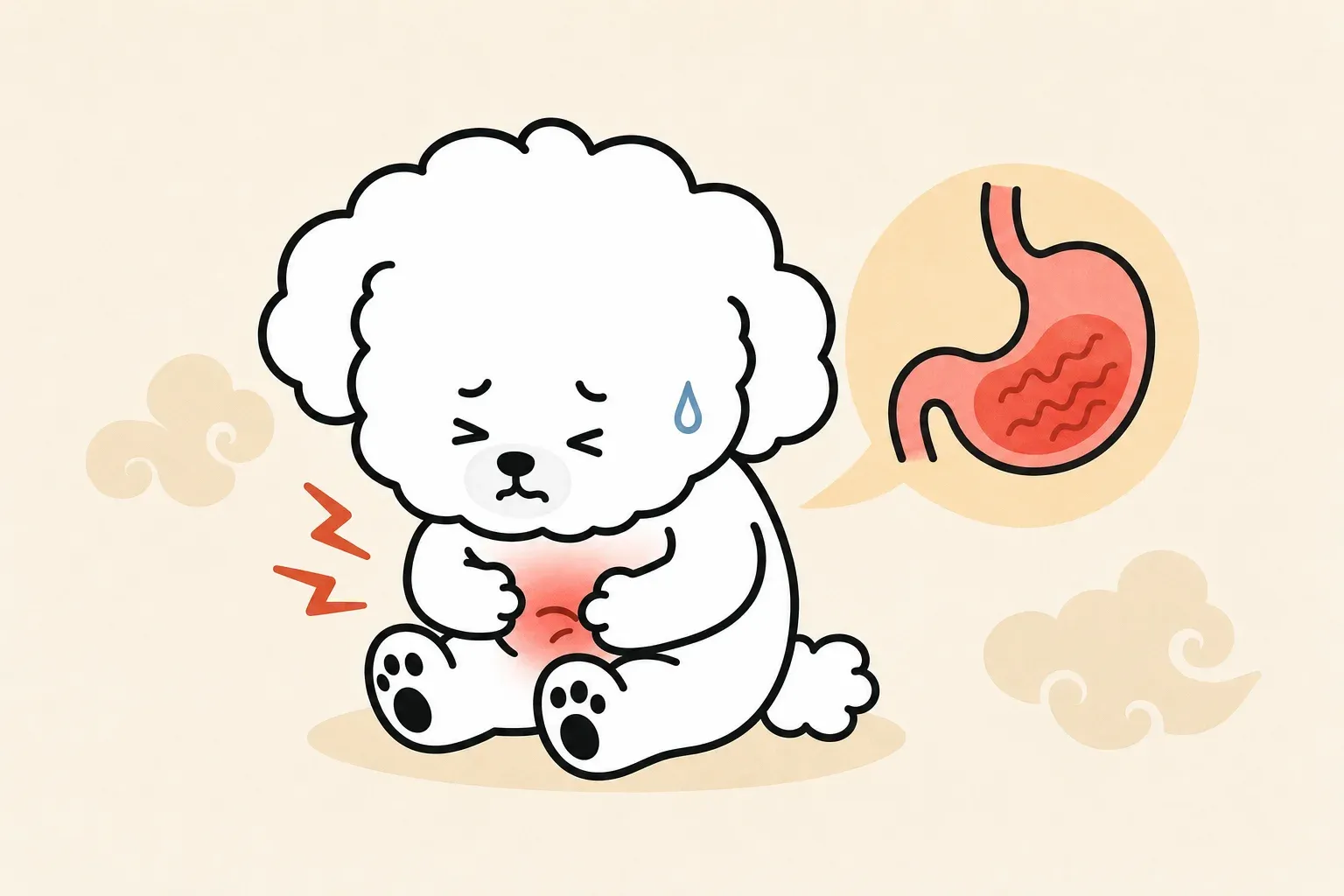
Imagine coming home to find your Great Dane pacing restlessly, retching repeatedly without bringing anything up, and his belly looking visibly larger than normal. You Google the symptoms and see the words “gastric dilatation-volvulus.” Two minutes later, you learn this can kill a dog in under six hours.
Dog bloat — specifically the type that involves the stomach twisting — is one of the most time-critical emergencies in veterinary medicine. This guide covers everything a dog owner needs to know: what GDV actually is, how to recognize it before it’s too late, what happens at the emergency hospital, and what you can do to reduce your dog’s risk.
What Is GDV (Bloat) in Dogs?
Bloat vs. GDV: Understanding the Difference
“Bloat” is a broad, colloquial term that refers to abnormal distension of the stomach, and not all bloat is equal.
Gastric dilatation (GD) occurs when the stomach fills with gas, fluid, or food and stretches uncomfortably. While GD requires veterinary attention, it does not always involve rotation of the stomach — meaning it can sometimes be treated without surgery.
Gastric dilatation-volvulus (GDV) is the life-threatening version. Here, the stomach fills with gas and then rotates along its axis — a phenomenon commonly called a “stomach flip.” Once the stomach twists, the entrance (cardia) and exit (pylorus) become sealed, trapping gas inside with no escape. Blood supply to the stomach wall is cut off, and the enlarged stomach compresses surrounding organs, including major blood vessels.
The two conditions can look identical from the outside. This is why any suspected bloat should be treated as GDV until a veterinarian confirms otherwise via imaging.
What Happens Inside When the Stomach Twists
The cascade of organ damage in GDV develops rapidly:
- The twisted stomach traps gas and expands, pressing on the diaphragm and restricting the dog’s ability to breathe.
- The distended stomach compresses the caudal vena cava (a major vein), reducing blood return to the heart and triggering circulatory shock.
- Gastric tissue begins to die (necrosis) as its blood supply is cut off.
- Toxins released from dying tissue enter the bloodstream, causing systemic inflammation.
- Cardiac arrhythmias (irregular heartbeat) develop, further destabilizing circulation.
- Without intervention, multi-organ failure follows.
This sequence explains the brutal time pressure. The longer the stomach remains twisted, the more tissue dies and the higher the surgical risk. Most emergency veterinarians describe a “golden hour” — though in practice, the window is measured in hours, not minutes.
What Causes GDV and Which Dogs Are at Risk
Anatomical Risk: Deep-Chested Breeds
The single strongest predictor of GDV risk is body conformation — specifically, a deep, narrow chest relative to abdominal width. In dogs with this anatomy, the stomach has more room to swing and rotate when gas accumulates.
A landmark study by Glickman et al. (2000) — the most comprehensive epidemiological analysis of GDV to date — identified large and giant breeds as being at substantially elevated lifetime risk:
| Breed | Estimated Lifetime GDV Risk |
|---|---|
| Great Dane | ~42% |
| St. Bernard | ~12% |
| Weimaraner | ~6% |
| Irish Setter | ~7% |
| Standard Poodle | ~4% |
| German Shepherd | ~3.5% |
| Labrador Retriever | ~1–2% |
The same study found that first-degree relatives of affected dogs had a significantly higher risk, pointing to a strong heritable component.
What many owners do not know: smaller, deep-chested breeds — including Dachshunds, Basset Hounds, and even some Cocker Spaniels — can also develop GDV, though at much lower rates. No breed is entirely immune.
Feeding and Lifestyle Triggers
While anatomy sets the baseline risk, several feeding and behavioral factors can precipitate an acute episode:
- Single large meals: Dogs fed once daily have been shown to have higher GDV risk than those fed twice or more per day (Glickman et al., 2000).
- Rapid eating: Gulping food increases air swallowing (aerophagia), contributing to gastric gas accumulation.
- Vigorous exercise within 1–2 hours of eating: Physical activity immediately after meals is consistently cited as a risk factor in both clinical reports and owner surveys.
- Drinking large amounts of water rapidly after eating: This adds volume to an already full stomach.
- Stress: Dogs in boarding facilities or those experiencing significant environmental stressors have elevated GDV incidence in some studies (Glickman et al., 2000).
The role of elevated food bowls remains genuinely contested in the literature. Some older recommendations promoted elevated bowls to reduce air swallowing; however, the Glickman 2000 study found elevated bowl use was actually associated with increased GDV risk in large breeds. The current mainstream veterinary position is to feed large-breed dogs from floor-level bowls.
Genetic and Environmental Factors
Beyond breed, the Glickman study identified additional risk factors:
- Age: Risk increases significantly with age, particularly after 7 years in large breeds.
- Sex: Male dogs appear to have modestly higher risk than females.
- Temperament: Dogs described by their owners as “fearful” or “anxious” had higher GDV rates than those described as “happy” or “easy-going” — a finding that aligns with the role of stress in gastrointestinal motility.
- Previous abdominal surgery: Any disruption to the normal ligamentous support of the stomach may increase the likelihood of rotation.
5 Emergency Signs of GDV You Should Never Ignore
GDV symptoms develop over minutes to hours. Knowing what to look for — and acting without hesitation — can be the difference between life and death.
Distended, Rigid Abdomen
The most visually obvious sign is a dramatically enlarged belly, particularly behind the ribcage. The abdomen may feel tight and drum-like when tapped. In short-coated breeds this is often obvious; in thick-coated or overweight dogs, you may need to look from above and compare the flank width to the dog’s normal profile.
Not all GDV cases produce dramatic visual distension in the early stages. If your dog shows any combination of the other signs below, do not wait for visible bloating to confirm.
Unproductive Retching
A dog with GDV will typically try to vomit — repeatedly and urgently — without producing anything, or producing only small amounts of foam or saliva. This unproductive retching is a hallmark sign. It occurs because the twisted stomach seals both the entrance and exit, making true vomiting mechanically impossible.
This is distinct from typical vomiting from dietary causes, where food or bile is usually brought up. If your dog is retching repeatedly and producing nothing, treat it as an emergency.
Excessive Drooling and Restlessness
Hypersalivation (excessive drooling) combined with intense restlessness — pacing, inability to settle, seeking attention or trying to hide — reflects abdominal pain and early shock. The dog is uncomfortable and distressed, unable to find a position that provides relief.
Recognizing these pain and distress behaviors early is critical, as dogs do not vocalize pain the way humans expect.
Difficulty Breathing and Pale Gums
As the distended stomach presses on the diaphragm, breathing becomes labored and shallow. The dog may breathe with an open mouth or show obvious effort with each breath.
Check the gum color: healthy gums are pink and moist. In GDV, gums may appear pale, white, grey, or bluish as circulatory shock reduces perfusion. Capillary refill time (press on the gums, release, and count the seconds until color returns) should be under 2 seconds in a healthy dog; in shock, it is prolonged.
Prayer Position and Pain Response
A dog in significant abdominal pain may adopt what is sometimes called the “prayer position” — front legs stretched forward and flat on the ground, hindquarters raised — in an attempt to relieve pressure. This is the same posture sometimes seen with severe pancreatitis. Dogs may also resist being touched on the abdomen, flinch when the belly is palpated, or cry out when picked up.
Note that pancreatitis can present with similar postures and abdominal pain — another reason that prompt veterinary evaluation is essential rather than attempting to distinguish conditions at home.
If your dog shows any combination of these signs, stop reading and call your nearest emergency veterinary hospital immediately. GDV is not a “wait and see” situation.
What to Do If You Suspect GDV
Emergency Do’s and Don’ts
Do:
- Call the emergency vet immediately and tell them you are coming. Describe the symptoms — this allows them to prepare for your arrival.
- Drive directly to the nearest emergency veterinary hospital. If after-hours, look up your nearest 24-hour emergency clinic now — before you need it.
- Stay as calm as possible during transport. Your dog will pick up on your distress.
- Note the time symptoms started. This information helps the surgical team assess severity.
Do not:
- Wait to see if symptoms resolve on their own. They will not.
- Attempt to make your dog vomit. This is dangerous and ineffective in GDV.
- Give food, water, or any medication at home.
- Drive recklessly — an accident helps no one.
- Spend time searching for a regular veterinarian during off-hours. Go directly to an emergency hospital.
There is no safe or effective home treatment for GDV. The condition requires immediate veterinary decompression and surgery.
Getting to the Emergency Vet
Time from symptom onset to surgical intervention is the single most important variable determining outcome. Research by Beck et al. (2006) confirmed that dogs receiving surgery within the first several hours of onset had significantly better outcomes than those arriving later.
Call ahead during your drive. Emergency veterinary hospitals can begin preparing IV fluids, oxygen support, and the surgical suite while you are en route. In communities with multiple emergency hospitals, the dispatcher can sometimes advise which facility has a surgeon immediately available.
For general preparedness, particularly if you own a high-risk breed, it is worth identifying your nearest 24-hour emergency veterinary hospital and saving the number in your phone — tonight, before you need it. A broader dog emergency first aid guide covers the full range of acute scenarios, from choking and CPR to heatstroke, so you are prepared for more than just GDV.
Diagnosis and Surgical Treatment
X-Rays and Blood Work
Upon arrival, the emergency team will assess cardiovascular stability first — establishing IV access, running fluids for shock, and checking blood pressure. Once the dog is minimally stabilized, diagnostic imaging confirms GDV.
An abdominal radiograph (X-ray) in the right lateral position typically shows the classic “double-bubble” sign: the stomach is dramatically distended and compartmentalized by the torsion, creating two distinct gas pockets. This radiographic pattern allows definitive diagnosis of GDV versus simple gastric dilatation.
Blood work (complete blood panel, electrolytes, clotting factors) guides the anesthetic and surgical plan and helps identify concurrent conditions such as elevated liver enzymes, lactate levels that predict tissue damage, and early signs of disseminated intravascular coagulation (DIC — a serious clotting disorder).
Stomach Decompression and Stabilization
Before the dog goes to the operating room, the veterinary team will attempt to decompress the stomach — relieving gas pressure to reduce the risk of cardiac arrest under anesthesia.
Decompression can be attempted by passing a stomach tube (orogastric tube) down the esophagus into the stomach. When successful, this releases trapped gas and provides immediate relief. If the torsion prevents the tube from passing, the veterinarian may perform percutaneous decompression — inserting a large-gauge needle through the abdominal wall into the stomach to release gas.
Decompression does not correct the torsion. It buys time for safer anesthetic induction.
Gastropexy: Types and Procedure
Emergency surgery for GDV involves:
- Exploratory laparotomy: The surgeon opens the abdomen, manually corrects the rotation (untwisting the stomach), and evaluates the stomach, spleen, and surrounding tissue for necrosis.
- Tissue debridement or resection: Any portion of the stomach wall that is non-viable (black, friable tissue indicating necrosis) is surgically removed. Splenic damage may require partial or full splenectomy.
- Gastropexy: The stomach is permanently attached to the inner body wall to prevent future rotation. Without gastropexy, GDV recurs in an estimated 54–76% of cases (Brockman et al., 1995).
The American College of Veterinary Surgeons (ACVS) strongly recommends gastropexy be performed at every GDV surgery. The most common technique is an incisional gastropexy, in which the stomach wall and the inner right abdominal wall are sutured together, creating a permanent adhesion.
Laparoscopic vs. open gastropexy:
| Laparoscopic | Open (traditional) | |
|---|---|---|
| Incision size | 3–4 small ports | Full abdominal incision |
| Recovery time | Faster (3–5 days) | 7–14 days |
| Cost | Often higher | Typically lower |
| Ideal for | Prophylactic (elective) cases | Emergency GDV cases |
| Strength of fixation | Comparable to open | Gold standard |
In an emergency GDV, open surgery is standard because it provides the full surgical access needed to assess and repair damaged tissue. Laparoscopic gastropexy is most appropriate for elective, prophylactic procedures in high-risk breeds.
Post-Surgery Recovery and Complications
Hospital Stay and Recovery Timeline
Most dogs recovering from GDV surgery remain hospitalized for 2–5 days, depending on severity and complication development. The post-operative period is high-risk and requires close monitoring.
| Time Post-Surgery | Typical Care Milestones |
|---|---|
| 0–24 hours | Continuous cardiac monitoring (arrhythmia watch), IV fluids, pain management, NPO (no food/water) |
| 24–48 hours | Cardiac monitoring continues; small amounts of water offered if arrhythmias controlled |
| 48–72 hours | Transition to small amounts of bland food (boiled chicken and rice, or GI prescription diet) |
| 3–5 days | Discharge if stable; restricted activity begins |
| 2 weeks | Suture check; gradual return to normal activity |
| 4–6 weeks | Full recovery; normal diet resumed; exercise restrictions lifted |
Potential Post-Surgical Complications
The most serious complications develop in the first 24–72 hours after surgery:
Cardiac arrhythmias: Ventricular arrhythmias are common after GDV, even when surgery goes smoothly. The ischemia-reperfusion injury that occurs when blood flow returns to previously compromised tissue triggers electrical instability in the heart muscle. Many dogs require antiarrhythmic medication and continuous ECG monitoring for 24–48 hours post-operatively.
Gastric necrosis: If non-viable tissue was not fully identified and removed during surgery, progressive necrosis can lead to stomach wall perforation — a life-threatening emergency requiring immediate reoperation.
Disseminated intravascular coagulation (DIC): The systemic inflammatory response to severe GDV can trigger an abnormal clotting cascade. DIC is diagnosed when the dog simultaneously develops clotting dysfunction and abnormal bleeding — a serious complication with high mortality.
Aspiration pneumonia: Regurgitation under anesthesia or during the recovery period can lead to pneumonia. This is monitored via chest radiographs if respiratory signs develop.
Beck et al. (2006) found that dogs with evidence of splenic necrosis or gastric necrosis at surgery had significantly higher mortality than those without — underscoring the importance of rapid surgical access before tissue death progresses.
Home Care After Discharge
Once your dog is discharged, the recovery phase at home requires discipline:
- Strict rest for at least 2 weeks: no running, jumping, or rough play. Leash walks only for bathroom trips.
- Small, frequent meals: Divide daily food intake into 3–4 small portions. This is a permanent dietary change for any dog that has had GDV, regardless of gastropexy. Refer to a proper feeding schedule guide for portion guidance by weight and activity level.
- Bland diet initially: Your veterinarian will specify when to transition back to the regular diet.
- Monitor the incision: Watch for swelling, discharge, redness, or opening of the wound.
- Watch for relapse signs: Restlessness, retching, or abdominal distension after discharge requires immediate return to the hospital.
- Follow all recheck appointments: The veterinarian will want to confirm cardiac function has normalized and the gastropexy is holding.
Emotionally, this is a difficult period for owners. The fear of recurrence is understandable. Following the dietary and activity guidelines consistently is the most effective thing you can do during recovery.
Preventing GDV: Daily Management Guide
Prevention is never absolute in GDV, but the risk can be meaningfully reduced through practical daily management.
Feeding Practices and Post-Meal Rest
The evidence-based recommendations for high-risk dogs:
- Split meals into 2–3 portions per day rather than feeding once daily.
- Slow down rapid eaters using puzzle feeders, slow-feed bowls, or by spreading kibble on a flat surface.
- Enforce a rest period of 1–2 hours after meals before any vigorous activity. This is the single most actionable behavioral intervention supported by clinical consensus.
- Feed from floor level, not elevated bowls. As noted above, elevated bowls showed association with increased (not decreased) GDV risk in the Glickman 2000 study.
- Avoid allowing large quantities of water immediately after vigorous exercise. Offer small amounts and allow gradual rehydration.
For questions about calculating appropriate daily portions for your dog’s size and activity level, a structured dog feeding amount guide can help establish the right baseline.
Prophylactic Gastropexy for High-Risk Breeds
This is the most important preventive option available — and it remains underutilized in the United States.
Prophylactic gastropexy is an elective surgery that permanently tethers the stomach to the abdominal wall before GDV ever occurs. It does not prevent gastric dilatation (the stomach can still fill with gas), but it prevents the life-threatening rotation.
The ACVS supports prophylactic gastropexy for high-risk breeds. Ideal timing is concurrent with spay or neuter surgery, typically at 6–12 months of age. Laparoscopic gastropexy performed at this age involves only 3–4 small incisions, a brief hospital stay, and rapid recovery.
Cost-benefit perspective for Great Dane owners:
- Prophylactic laparoscopic gastropexy: approximately $400–$1,500
- Emergency GDV surgery: $3,000–$7,500+
- Estimated lifetime GDV risk for Great Danes: ~42%
For owners of Great Danes, Standard Poodles, Irish Setters, Weimaraners, German Shepherds, and other high-risk breeds — a direct conversation with your veterinarian about prophylactic gastropexy timing is one of the most meaningful health decisions you can make for your dog.
Stress Management and Environment
The association between fearful temperament and GDV risk in the Glickman study suggests that chronic stress may be a contributing factor, likely through its effects on gastrointestinal motility and the speed with which dogs eat.
Practical considerations:
- Feed high-risk dogs in a calm, quiet environment, separate from other pets if food competition causes rapid eating.
- If your dog is boarding, alert the facility to their breed’s GDV risk and request that mealtimes be quiet and that food-related stress be minimized.
- Reduce exercise within 1–2 hours of meals, particularly on stressful days (travel, vet visits, changes in routine).
It is also worth being aware of the difference between normal stomach gurgling sounds — which are typically harmless borborygmi (digestive sounds) — and the distension and retching that signal GDV. Familiarity with your dog’s baseline helps you recognize when something is genuinely wrong.
References
- 1. Glickman LT et al. Non-dietary risk factors for gastric dilatation-volvulus in large and giant breed dogs. JAVMA. 2000
- 2. Brockman DJ et al. Canine gastric dilatation-volvulus. Part 1: Historical, biological, and clinicopathological overview. Compend Contin Educ Pract Vet. 1995
- 3. Beck JJ et al. Risk factors associated with short-term outcome and development of perioperative complications in dogs undergoing surgery because of gastric dilatation-volvulus. JAVMA. 2006
- 4. ACVS - Gastric Dilatation-Volvulus (American College of Veterinary Surgeons)
- 5. VCA Animal Hospitals - Bloat: Gastric Dilatation and Volvulus in Dogs
- 6. AAHA - Understanding Canine Bloat (GDV): A Medical Emergency
FAQ
What is the survival rate for dogs with GDV?
Can GDV recur after surgery?
Can small dogs get GDV?
When should high-risk dogs have prophylactic gastropexy?
How much does GDV surgery cost?
Related Articles
Dog Stomach Gurgling: Causes, Warning Signs & Home Remedies
Dog stomach gurgling: learn the 6 main causes, how to tell normal from dangerous, when to call the vet, and safe home remedies. Vet-reviewed guide.
Dog First Aid: 7 Emergencies Every Owner Must Handle
Dog first aid for 7 emergencies: CPR, choking, bleeding, fractures, poisoning, heatstroke, and seizures. Size-specific steps and first aid kit checklist.
Why Is My Dog Throwing Up? Causes by Vomit Color and When to See the Vet
Learn the most common dog vomiting causes by vomit color, breed risk factors, emergency warning signs, and a step-by-step home care protocol from hours 0–24.